
What the Research Actually Shows
The link between spending time outdoors and feeling better emotionally isn't just intuition - it's backed by a growing body of research. Studies published in journals including Environmental Health and Preventive Medicine and Frontiers in Psychology have found that time in green spaces is associated with lower cortisol levels, reduced rumination, and improved self-reported mood. Attention restoration theory proposes that natural environments give our directed attention a chance to recover, reducing mental fatigue that often underlies irritability and low mood.
Physical movement tells a similar story. The relationship between exercise and emotional well-being is one of the most replicated findings in health psychology. Even light-to-moderate activity - a brisk walk, a bike ride, gardening - is consistently associated with reduced symptoms of anxiety and depression in large observational studies. The NIH notes that exercise may influence mood through several pathways, including changes in serotonin and endorphin activity, though researchers continue to refine exactly how these mechanisms work.
Observational Research Has Limitations
Much of what we know about nature, movement, and mood comes from observational studies, which track patterns in large groups without controlling all variables. These findings are meaningful and worth taking seriously - but they describe associations, not guaranteed personal outcomes. Your experience may differ from population averages, and that's completely normal.
It's worth noting that most studies in this area are observational, meaning they track associations rather than proving direct cause and effect. People who spend more time outdoors or exercise regularly may also differ in other lifestyle factors. That doesn't make the findings less useful - it just means healthy skepticism is warranted alongside enthusiasm.
When Nature and Movement Combine
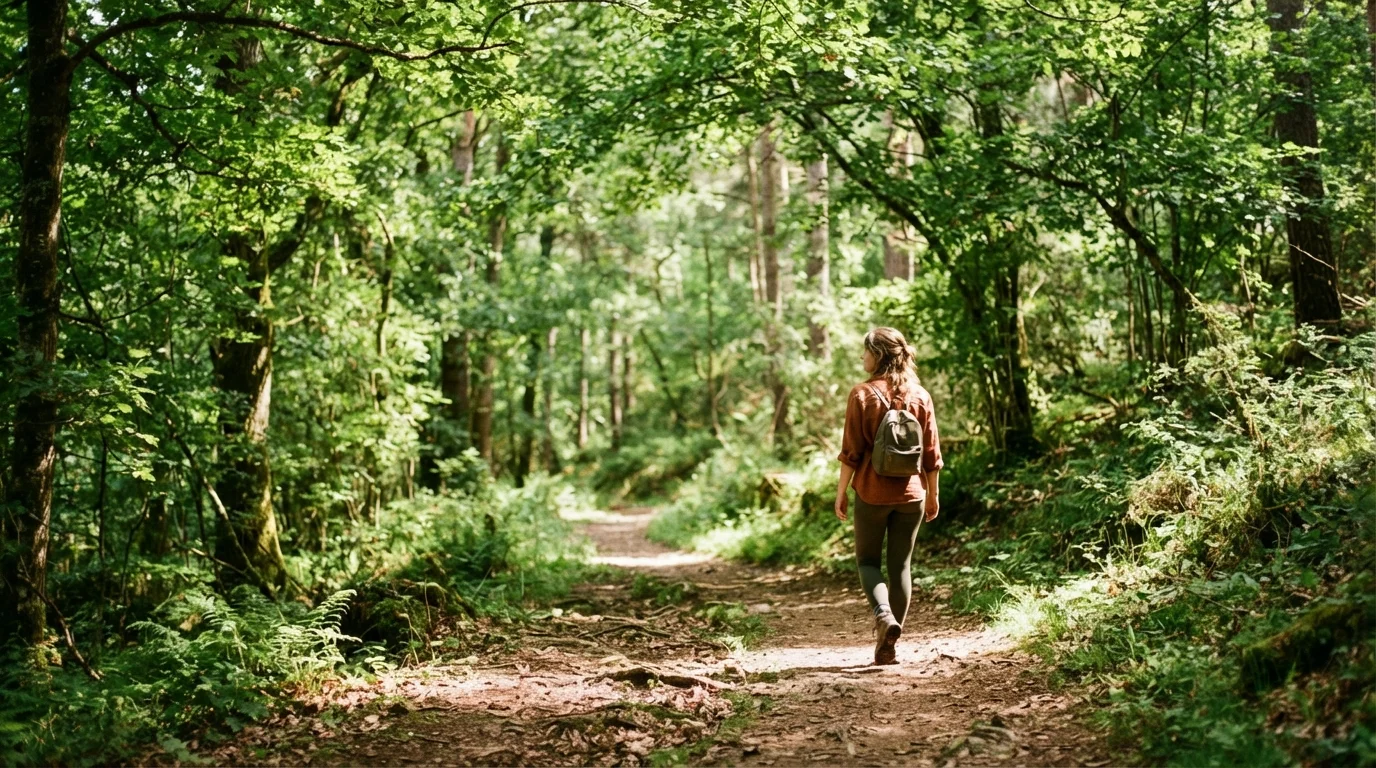
Some of the most interesting findings emerge when researchers look at outdoor exercise specifically. A review in the journal Environmental Science and Technology found that exercising in natural environments - compared to indoors - was associated with greater feelings of revitalization, increased energy, and larger decreases in tension and anger. Participants also reported higher enjoyment and greater intention to repeat the activity.
This matters practically: enjoyment is one of the strongest predictors of whether someone sticks with a habit. If a walk in a local park feels more appealing than a treadmill session, that preference is worth honoring. See our guide to using your outdoor home space for fitness for ideas that don't require leaving your property. And if structured exercise isn't your thing, everyday movement like yard work or active commuting still counts.
Small, Consistent Steps Work Best
You don't need to overhaul your routine to experience benefits. Even short, frequent outdoor walks or movement snacks throughout the day can add up meaningfully. Prioritize consistency over intensity, and choose activities you genuinely enjoy - that's the habit most likely to last.
Where the Gaps and Limits Are
Good research literacy means acknowledging what we don't yet know. Several questions in this area remain open. Dose-response relationships - how much nature or movement produces how much mood benefit - aren't precisely established and likely vary by individual. Access equity is also a real issue: not everyone has safe, convenient green spaces nearby, and acknowledging that gap matters.
It's also important not to overstate these findings as universal solutions. Mood is complex, shaped by sleep, relationships, life circumstances, and biology. Time outdoors and movement are genuinely useful tools - but they work best as part of a broader picture of well-being. For example, sleep plays a deeply intertwined role with emotional health that deserves equal attention. Similarly, social connection shapes mental well-being in ways that nature exposure alone doesn't address.
If you're managing significant anxiety, depression, or other mental health concerns, please reach out to a qualified healthcare professional. Outdoor walks and movement are supportive habits - not substitutes for care when care is needed.
This article is for general informational and educational purposes only and does not constitute medical or mental health advice. Always consult a qualified healthcare professional for guidance specific to your health situation.