Why Your Backyard Is Already a Gym
For many young homeowners, a gym membership adds cost, commute time, and one more scheduling obligation to an already full week. What often goes unrecognized is that the outdoor space attached to your home - even a modest patio or small yard - offers genuine fitness potential without any of that overhead.
Flat grass accommodates bodyweight training. A single deck stair functions as a step-up platform. A fence post provides balance support during single-leg exercises. And research consistently shows that outdoor physical activity is associated with lower perceived exertion, meaning moderate effort outdoors can feel easier than the same effort indoors - a meaningful advantage when motivation is limited.
If your yard is currently more storage area than training space, a quick declutter can open things up considerably. Our home organization hub has practical strategies for reclaiming outdoor areas. And if space inside is truly at a premium, our article on equipment-free strength moves for small homes shows what's possible indoors too.
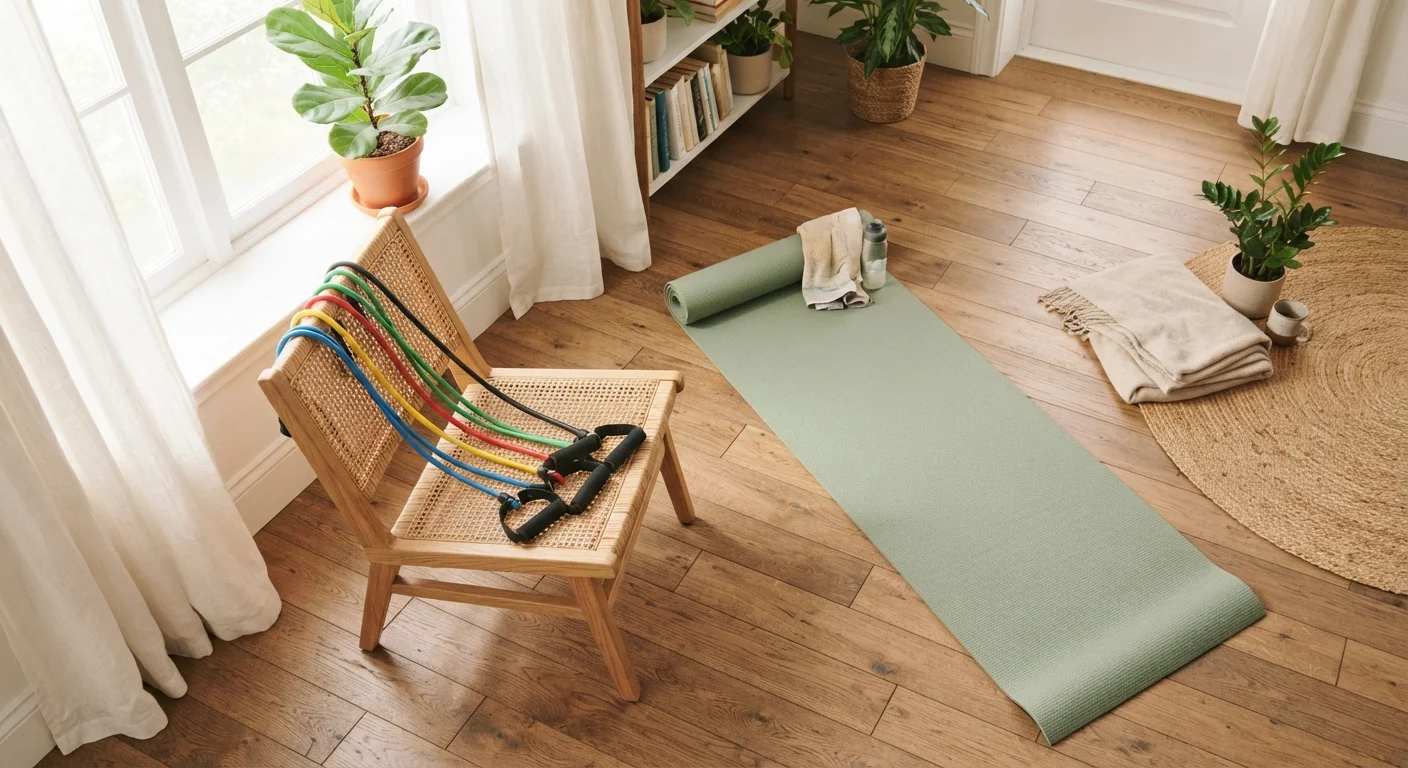
Exercise mat or yoga mat
Provides cushioning and grip for ground-based movements like push-ups and stretching on hard or rough surfaces.
Jump rope
Delivers effective cardio intervals on any flat outdoor surface with no setup required.
Resistance bands
Lightweight and portable, they add load to bodyweight movements without requiring weights or machinery.
Sturdy step, stair, or low retaining wall
A fixed elevated surface already in your yard can substitute for a plyo box for step-ups and incline push-ups.
Getting Started: What You Need and How to Structure Sessions
The good news for anyone intimidated by fitness routines: outdoor home training requires very little. The essentials are supportive footwear, a safe surface, and your own bodyweight. Everything else is optional. Before your first session, take a few minutes to assess your space and gather what you'll need.
What you will need
Mind the Surface and Weather Conditions
Uneven terrain, wet grass, and extreme heat or cold can increase injury risk during outdoor exercise. Always check the ground surface before training, stay hydrated in warm weather, and dress appropriately for temperature. On very hot days, move your session to early morning or evening to reduce heat-related risk.
Once your space is ready, follow the step-by-step guide below to set up and execute an effective outdoor session. Whether you have 15 minutes or 45, the same structure applies - adjust the number of circuit rounds to fit your available time.
Survey Your Space and Remove Hazards
Walk your yard before every session. Look for sprinkler heads, stones, pet waste, or slippery patches of moss that could cause a trip or fall. Identify a flat area at least 10 feet by 10 feet for movement work, and note any elevated structures - stairs, a deck step, a low garden wall - you can use intentionally.
Warm Up With Low-Intensity Movement
Spend five minutes easing into activity: walk briskly around the perimeter of your yard, do arm circles, hip rotations, and leg swings. Warming up prepares your joints and muscles for more demanding effort, which matters especially on cool mornings when muscles are tighter.
Build a Simple Yard Circuit
Choose four to six movements that use your available space and features. A beginner-friendly example:
- Lap jog or brisk walk around your yard boundary - 1-2 minutes
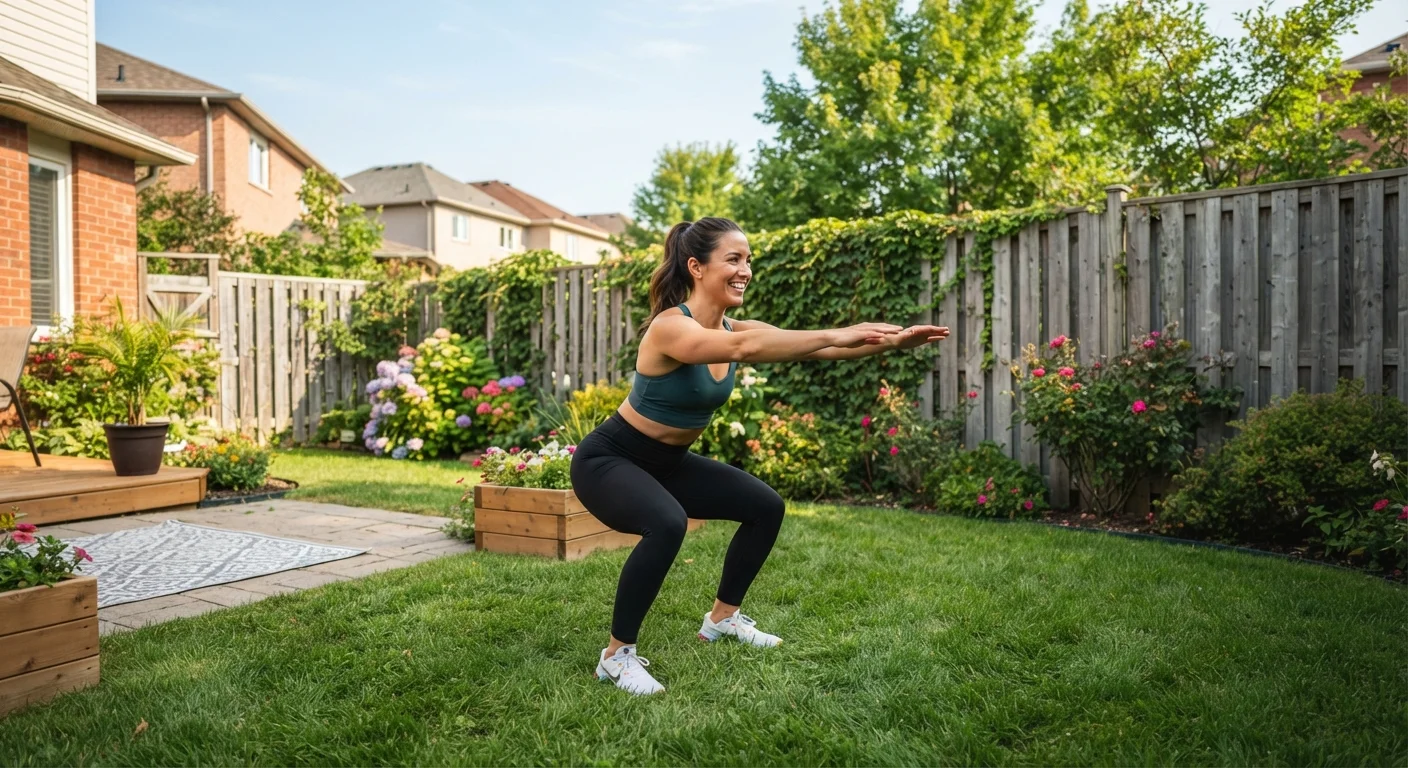
- Bodyweight squats on flat grass - 10-15 reps
- Incline push-ups on a deck step or retaining wall - 8-12 reps
- Step-ups on a sturdy stair - 10 reps each leg
- Reverse lunges on level ground - 10 reps each leg
Complete the circuit two to three times with a short rest between rounds. For a comparison of equipment-light approaches, see our guide on resistance bands vs. bodyweight training.
Incorporate Yard Work as Intentional Activity
Gardening, mowing, raking leaves, and shoveling snow are legitimate forms of moderate physical activity according to public health guidelines. Treat these tasks as movement sessions: maintain good posture, engage your core, and switch sides when raking or digging to keep the load balanced across your body. Research suggests outdoor physical activity may also carry mood benefits beyond those of equivalent indoor exercise - something worth keeping in mind when the grass needs cutting anyway. Read more in our article on nature, movement, and mood.
Cool Down and Stretch
After your circuit, slow your pace for two to three minutes - walk the yard perimeter again at a relaxed tempo. Then spend five minutes on static stretches: hamstring stretch on the grass, standing quad stretch, chest opener with hands clasped behind your back, and a seated hip flexor stretch. Cooling down helps your heart rate return to baseline gradually and supports recovery.
Build Consistency by Anchoring to Your Routine
The most effective workout schedule is one you'll actually follow. Consider pairing your outdoor session with an existing habit - right after you let the dog out in the morning, just before you start weekend yard maintenance, or immediately after remote-work lunch breaks. If your homeowner schedule makes consistency hard, building a weekly routine around a homeowner's schedule offers a practical framework for structuring activity across a busy week.
Pair Outdoor Movement With Your Existing Chores
You don't need a dedicated workout window every day. Folding yard work into your routine - mowing with intention, hauling mulch bags, or doing a few step-ups on the porch stairs before you head inside - can meaningfully add to your weekly movement. See our piece on movement snacks for more ideas on fitting activity into a packed day.
This Is General Guidance, Not Medical Advice
The information in this article is intended for general educational purposes only and is not a substitute for personalized advice from a qualified healthcare professional. If you have an existing health condition, injury, or concern about starting a new fitness routine, please consult your doctor or a certified fitness professional before beginning.
As your outdoor routine becomes familiar, you can layer in variety: add a jump rope for cardio intervals (cardio without a treadmill covers several options), or explore how everyday movement counts toward your health if structured circuits don't appeal to you.
This article is for general informational and educational purposes only and does not constitute medical advice. Always consult a qualified healthcare professional before starting a new exercise program, particularly if you have any health conditions or injuries.