Strength Training Without the Square Footage Problem
Many young homeowners assume building strength requires a gym membership, a dedicated room, or at minimum a collection of dumbbells. In practice, a cleared patch of floor roughly the size of a yoga mat - about 6 by 2 feet - is enough space to perform a complete, progressive strength routine. Bodyweight training is supported by a substantial body of research showing it can meaningfully improve muscular strength and endurance when exercises are performed consistently and with sufficient challenge.
The moves below require no equipment, make minimal noise, and can be done in a living room, bedroom, or any other room where you can briefly clear the floor. If you're thinking about how to weave these sessions into a busy week, building a weekly exercise routine around a homeowner's schedule offers a practical framework for doing exactly that.
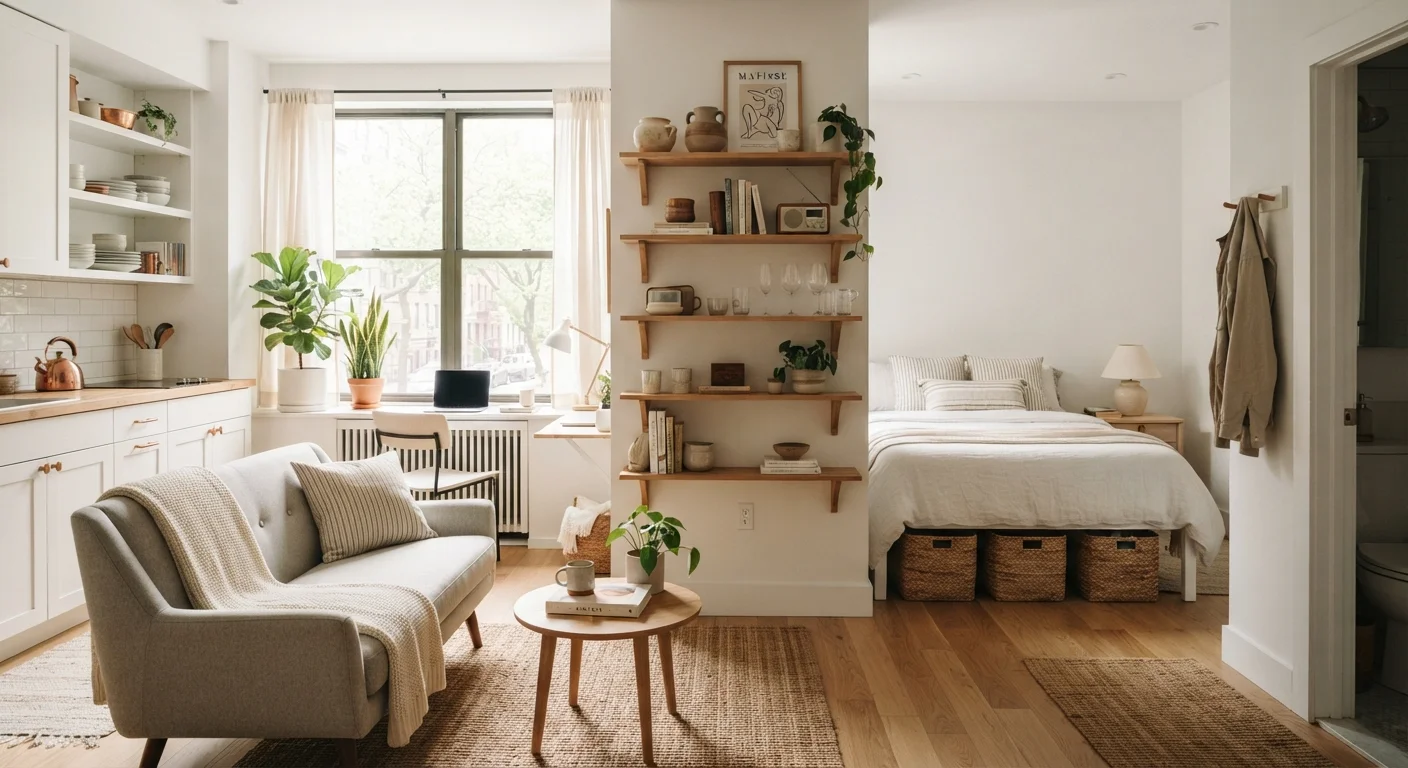
Make Space Part of Your Routine
You don't need a dedicated home gym - just a consistent clearing habit. Rolling back a rug, shifting a coffee table, or using a bedroom corner makes your workout space ready in under a minute. If limited square footage is a broader challenge in your home, small-space organization strategies can help you reclaim floor space across every room.
Pushup Variations
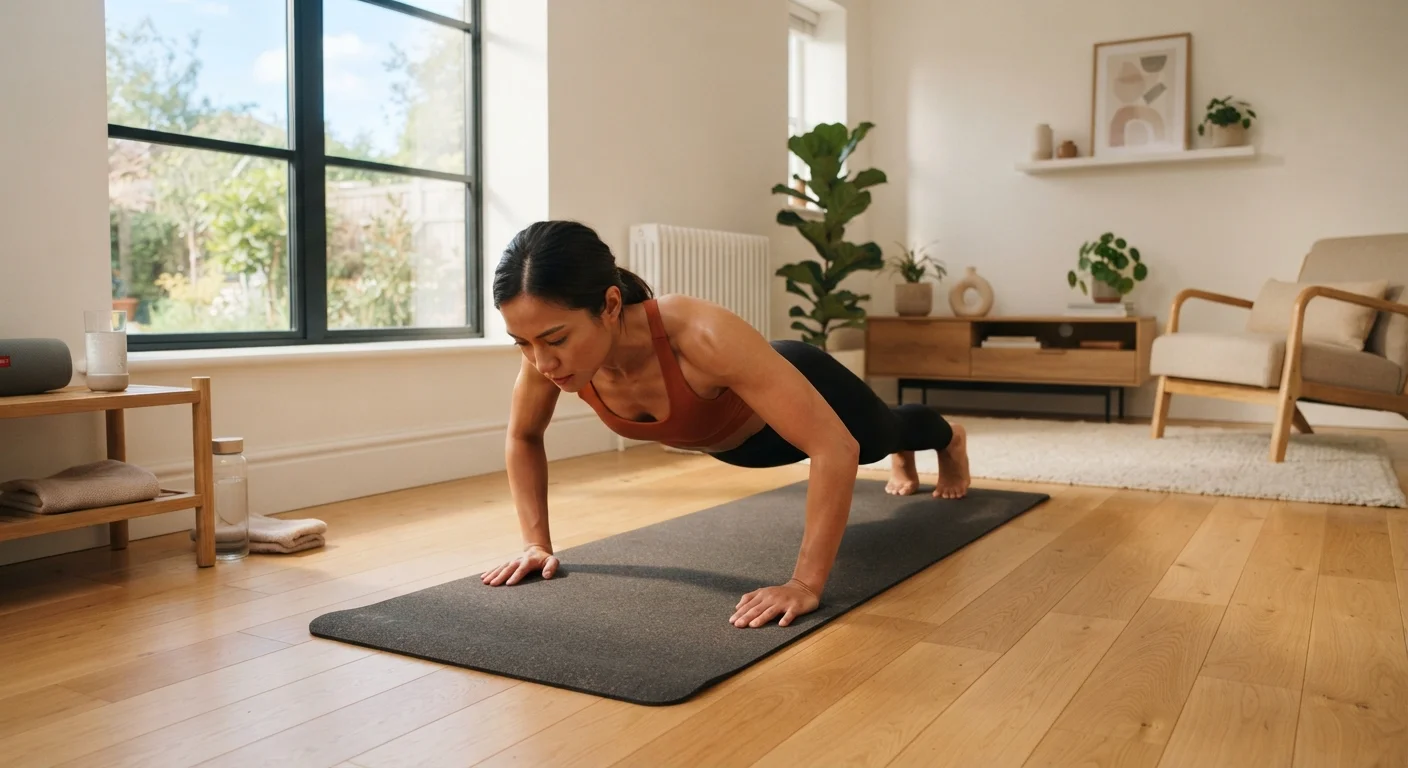
The classic pushup is one of the most researched bodyweight movements, engaging the chest, shoulders, triceps, and core simultaneously. If a standard pushup feels too challenging at first, an incline variation - hands on a sturdy counter or low table - reduces load while maintaining the full movement pattern. As strength improves, progressing to a narrow-grip or slow-tempo pushup adds meaningful challenge without any equipment.
Aim for controlled, deliberate repetitions over rushing through high counts. A slower lowering phase (roughly 3-4 seconds down) increases muscular demand and is a well-supported technique for building strength with bodyweight alone.
Slow, controlled pushup reps build surprising upper-body strength with zero equipment needed.
Bodyweight Squats and Single-Leg Progressions
Squats train the quadriceps, hamstrings, glutes, and stabilizing muscles of the lower body - all essential for everyday function like carrying groceries or climbing stairs. A standard squat needs nothing but floor space roughly the size of a yoga mat. Focus on keeping your chest upright, knees tracking over your toes, and lowering until thighs approach parallel to the floor.
Once two-legged squats feel comfortable, Bulgarian split squats (rear foot elevated on a chair) or simple single-leg sit-to-stand from a low chair dramatically increase difficulty and balance demand. These progressions keep your routine fresh and continuously challenging without adding any equipment.
Single-leg squat progressions rival gym machines for building lower-body strength and balance.
Plank Holds and Core Stability Work
A plank is deceptively demanding. Holding a straight-body position - supported on forearms and toes - activates deep abdominal muscles, the lower back, shoulders, and glutes together. Research consistently supports anti-extension exercises like the plank for developing functional core stability, which supports posture and reduces low-back discomfort for many people.
Progress by extending hold time gradually, or introduce side planks to challenge lateral stability. A plank-to-pushup transition - moving from forearms to hands and back - adds an upper-body and coordination component. All of this happens within roughly a 6-foot stretch of floor.
Planks build functional core stability that supports posture and everyday movement.
Glute Bridges and Hip Thrusts
Lying on your back with knees bent and feet flat, pressing your hips toward the ceiling is a remarkably effective glute and hamstring exercise. Glute bridges are low-impact, quiet - an important consideration for apartment dwellers - and accessible to most fitness levels. They also help counteract the hip-flexor tightness that accumulates from long hours of sitting.
A single-leg variation, where one foot lifts off the floor, roughly doubles the load on the working side and adds a core stability challenge. For those looking to understand how this fits alongside mobility habits, what the evidence says about mobility work provides useful context on hip flexibility and movement health.
Glute bridges are quiet, low-impact, and highly effective - ideal for apartment living.
Tricep Dips Using a Chair
A sturdy, non-wheeled chair becomes useful training equipment for tricep dips. Sitting at the edge, placing hands beside your hips, and lowering your body toward the floor by bending the elbows is a reliable way to isolate the back of the upper arm. This movement also engages the anterior shoulder and requires core bracing throughout.
Extend your legs further from the chair to increase difficulty, or keep feet closer to reduce load. Ensure the chair is stable on a non-slip surface before beginning. This is one of those exercises where a brief setup check pays off.
A sturdy chair turns any room into a capable upper-body training station.
Mountain Climbers for Full-Body Conditioning
Starting in a high plank position and alternating driving knees toward the chest in a running motion, mountain climbers combine core stability, shoulder endurance, and cardiovascular demand in a single compact movement. They require no more floor space than a pushup and can be scaled in pace - slower for strength and coordination focus, faster for conditioning.
Mountain climbers make an efficient addition to any home session, particularly when you want a movement that bridges strength and cardio. If you're building a broader indoor cardio approach, cardio alternatives that work without a treadmill offers practical companion strategies.
Mountain climbers deliver full-body conditioning in the same floor space as a single pushup.
Hollow Body Hold
Borrowed from gymnastics conditioning, the hollow body hold has athletes lying on their backs, lower back pressed firmly into the floor, arms extended overhead and legs raised at a low angle. It creates intense, sustained demand on the deep core muscles and is widely used in gymnastics and strength training for its effectiveness-to-space ratio.
For beginners, keeping knees bent or arms at the sides reduces difficulty significantly. The goal is maintaining a neutral spine with the lower back in full contact with the floor - not holding your breath or tensing your neck. Progress gradually by lowering the leg angle over several weeks.
The hollow body hold is one of the most space-efficient core exercises borrowed from gymnastics.
Putting It Together: Making These Moves Work for You
No single exercise covers every muscle group, so combining a few of these movements into short sessions creates balanced stimulus across the body. A simple approach: choose one pushing movement (pushup), one lower-body movement (squat or bridge), and one core movement (plank or hollow body hold), and rotate through 2-4 rounds with brief rest between sets. This takes under 20 minutes and covers the major functional movement patterns.
If you're curious how bodyweight training compares to adding minimal equipment like resistance bands, resistance bands vs. bodyweight training walks through the tradeoffs clearly. And if traditional exercise formats feel uninspiring on some days, know that everyday movement counts too - these structured moves are one tool among many.
A Note on Form and Safety
These exercises are described as general movement education, not personalized fitness prescriptions. If you have a pre-existing injury, chronic condition, or any concern about your physical readiness to begin a new exercise routine, please consult a qualified healthcare professional or certified fitness professional before starting. Proper form is foundational - consider learning movement patterns slowly before adding repetitions or intensity.
This article is for general informational and educational purposes only and does not constitute medical or fitness advice. Individual needs vary - please consult a qualified healthcare or fitness professional before beginning any new exercise program, especially if you have an existing health condition or injury.