Why Small-Space Organization Requires a Different Mindset
Organizing a studio apartment or compact home isn't simply a scaled-down version of organizing a larger house. The margin for error is much smaller - a single category of items without a home can visually overwhelm an entire room. The goal shifts from storing more to owning less and placing everything deliberately.
Visual noise matters as much as physical clutter. Open shelves with too many mismatched items, exposed cords, and surfaces covered in small objects create a sense of chaos even when everything is technically put away. Reducing what's visible - through consistent containers, closed storage where possible, and a limited color palette in storage solutions - does as much for the feel of a space as the organization itself.
If you're new to building these systems from scratch, the foundational habits for first-time homeowners covers the core thinking that underlies everything in this guide. And if your home includes roommates or a partner with different habits, organizing shared spaces addresses the friction that small shared homes create.
Don't Buy Storage Before You Declutter
Purchasing bins, shelves, or organizers before reducing what you own almost always leads to wasted money and more clutter. Declutter first, then measure and shop for storage solutions that fit your actual remaining belongings. Buying storage to contain excess is one of the most common small-space mistakes.
The approach here differs from a full room-by-room overhaul. For those tackling a larger home or wanting a comprehensive walkthrough of each specific room type, the room-by-room organization guide is a strong companion resource.
What You'll Need Before You Start
Successful small-space organization depends on going in prepared rather than improvising as you go. Review the prerequisites below and gather your tools before beginning - this prevents mid-process trips to the store that interrupt momentum.
What you will need
Tape measure
Measure wall space, furniture footprints, and storage niches before purchasing any organizers or furniture.
Command strips or adhesive hooks
Mount lightweight organizers, hooks, and accessories on walls without permanent drilling.
Stackable storage bins with lids
Contain and label categories of items in closets, under beds, and on shelves.
Over-door organizers
Add storage to the backs of doors - ideal for pantries, bathrooms, and bedroom closets.
Label maker or adhesive labels
Label every container so items are returned to the correct spot consistently.
Vacuum storage bags
Compress seasonal clothing and bedding to a fraction of their original volume for under-bed storage.
Check Rental Agreements Before Wall Mounting
If you rent your apartment, review your lease before drilling into walls or making permanent modifications. Many landlords restrict wall anchors beyond a certain size or require written approval. Freestanding shelving units, over-door organizers, and tension-rod solutions are reliable alternatives that leave no damage.
Step-by-Step: Organizing Your Compact Space
Follow these steps in order. Each one builds on the last - skipping straight to buying organizers or rearranging furniture before decluttering and auditing will produce results that don't last.
Declutter before organizing anything
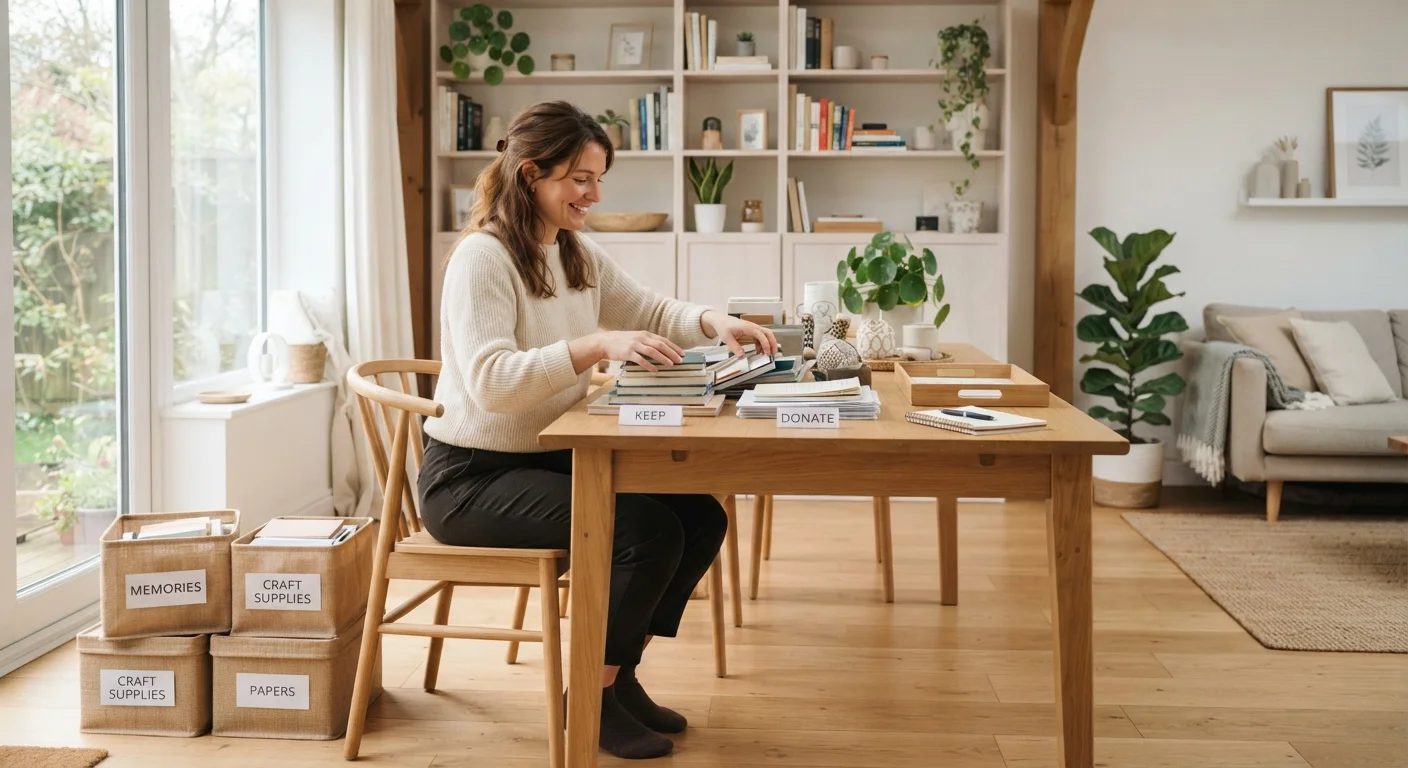
Organization only works on what you actually need. Go room by room - or zone by zone in an open-plan space - and sort every item into keep, donate, or discard. Be honest: in a compact home, rarely used duplicates and aspirational items cost you space every single day.
If you're unsure where to start, the decluttering method that fits your personality can make the process feel less overwhelming.
Audit and map your available storage
With a tape measure in hand, document every storage opportunity in your home: closet dimensions, wall lengths without obstructions, the clearance under your bed, and the depth of any alcoves. Knowing your actual numbers prevents the common mistake of buying storage furniture that doesn't fit or can't hold what you need it to.
Note which surfaces are permanent (walls, built-ins) versus flexible (furniture you could swap out). This distinction shapes your strategy in the next steps.
Go vertical on every available wall
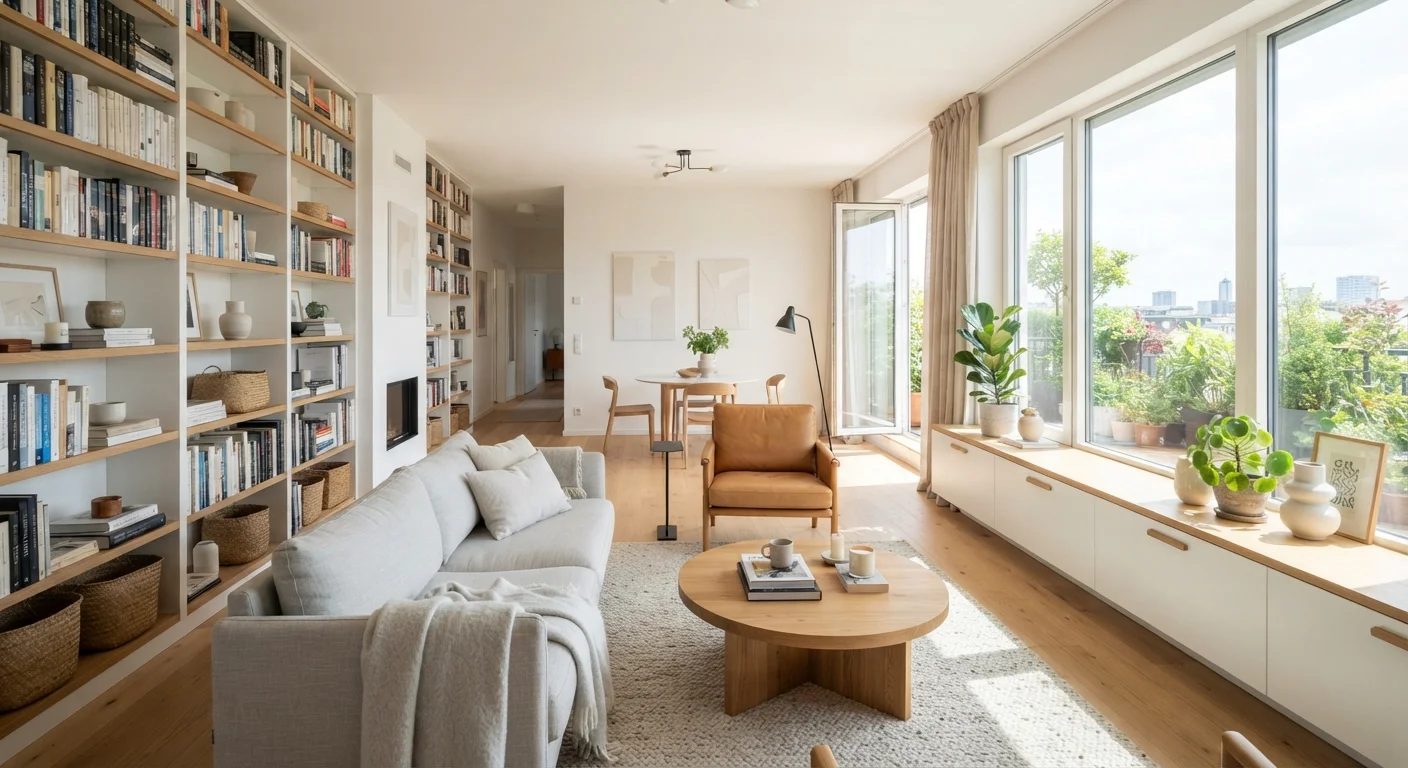
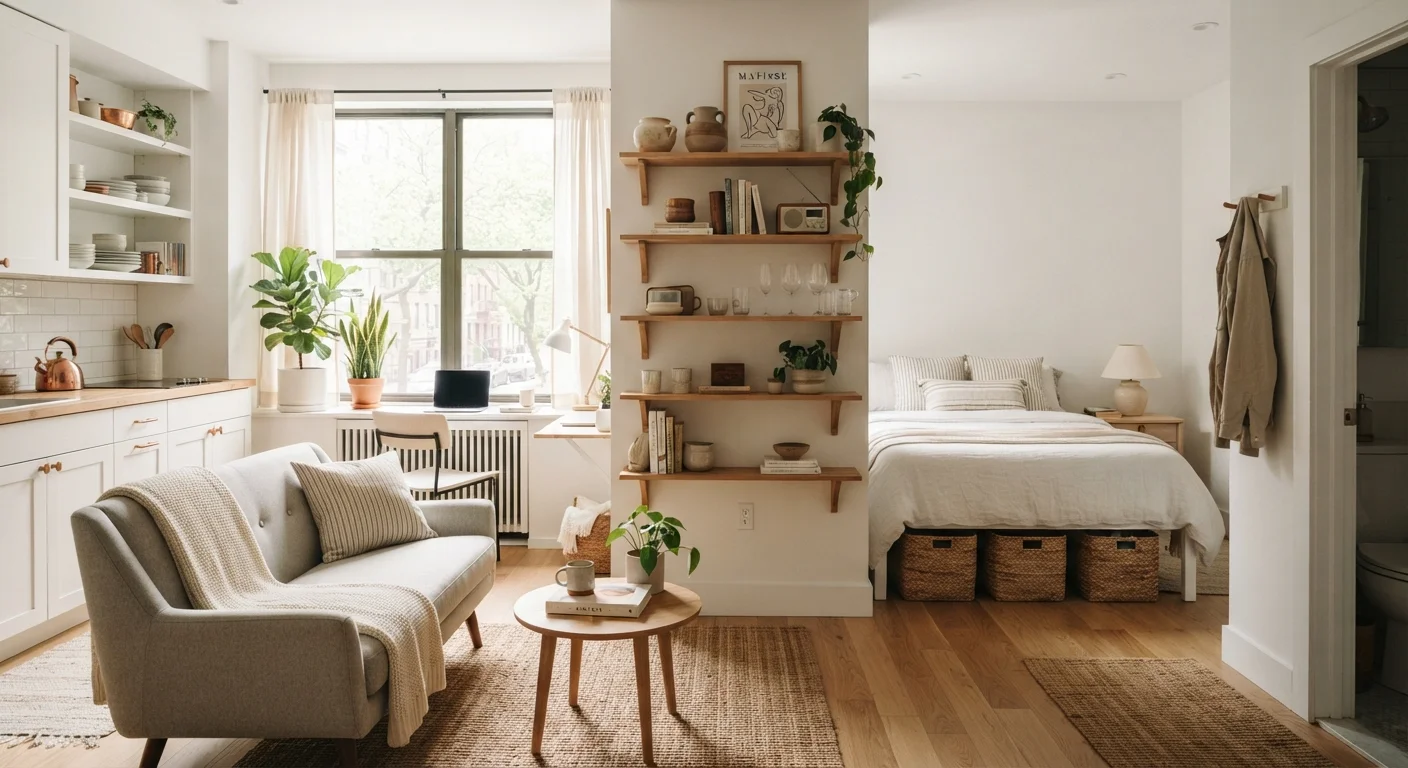
Floor space is a premium in small homes - wall space is often overlooked. Install floating shelves, wall-mounted pegboards, or tall freestanding bookcases that draw the eye upward and keep the floor clear. In kitchens, a mounted magnetic knife strip or wall rail with hooks frees up an entire drawer's worth of counter space.
For a deeper look at how vertical and horizontal storage strategies compare, see our guide on vertical vs. horizontal storage. The ceiling-to-floor principle applies in bedrooms, bathrooms, and living rooms alike.
Replace single-use furniture with multifunctional pieces
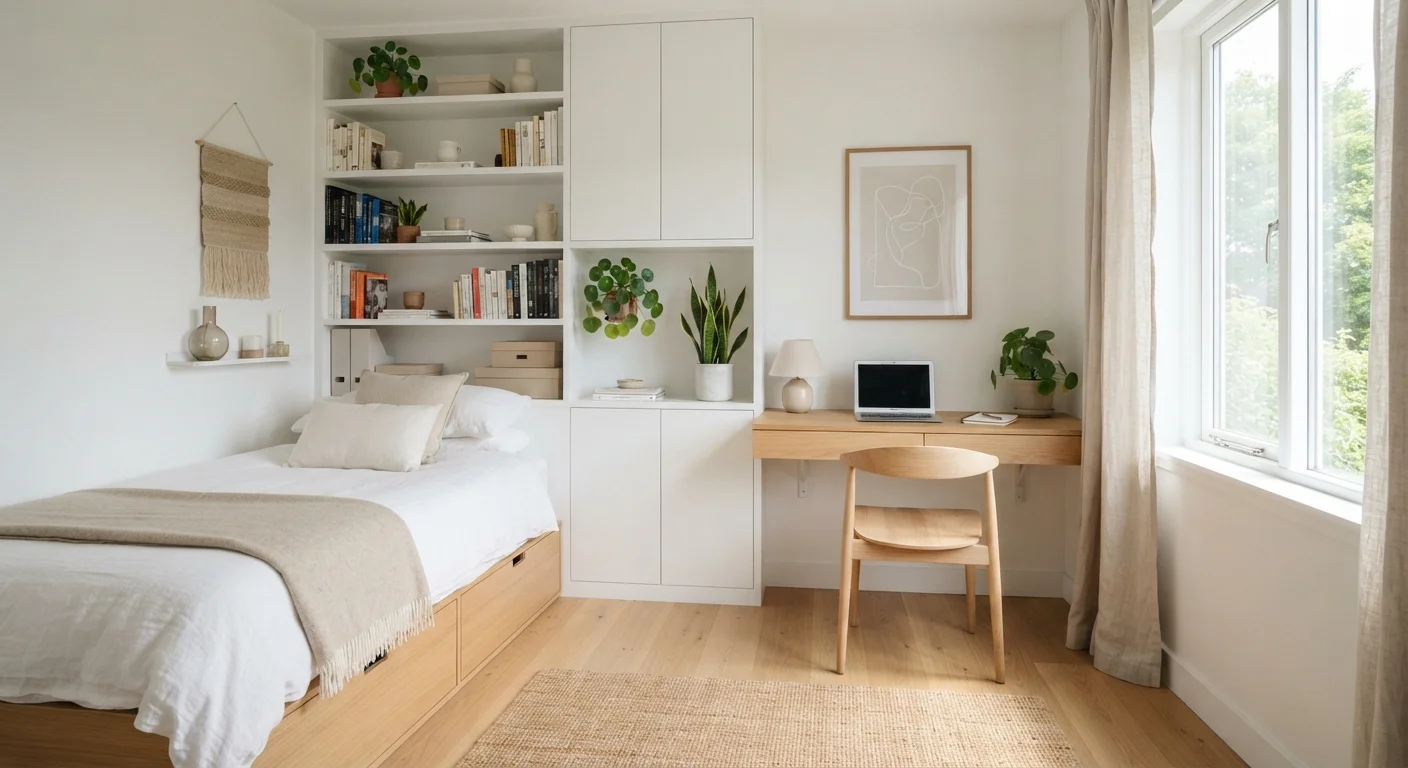
Every piece of furniture in a small home should ideally serve at least two purposes. An ottoman with interior storage replaces both a coffee table and a storage bin. A bed frame with built-in drawers eliminates the need for a separate dresser. A dining bench with a hinged lid stores table linens or extra pantry items.
Before purchasing anything new, ask: does this piece solve two problems, or just one? Pieces that serve only a single purpose are a luxury small spaces generally can't afford. For upgrade ideas with realistic cost context, our article on storage upgrades that make rooms feel bigger covers built-in and modular options worth considering.
Assign a permanent home to every item
Clutter in small spaces accumulates because items don't have a designated location - they land wherever there's surface space. Once you've decluttered and set up storage, assign every remaining item a specific, consistent home. Label containers, drawer dividers, and shelf zones so that putting things away requires no decision-making.
Pay special attention to high-traffic entry points - the front door, kitchen counter, and bathroom vanity are notorious problem zones. The systems for high-traffic areas approach works especially well in small homes where those zones have almost no buffer room.
Build a short daily reset habit
Small spaces show disorder faster than larger homes - a few misplaced items can make an entire room feel chaotic. A 10-minute daily reset (returning items to their assigned homes, wiping surfaces, processing incoming mail or bags) prevents accumulation from becoming a weekend-long project.
Pair this habit with natural transitions: before bed, after dinner, or when you arrive home. The goal isn't perfection - it's maintaining just enough baseline order that the space continues to feel livable and calm.
Use a 'One In, One Out' Rule
In a small space, every new item displaces something else. Committing to the one-in, one-out rule - where bringing in something new means removing something old - keeps volume naturally in check. Apply this especially to clothing, kitchen tools, and decorative items, which tend to accumulate silently.
Once your systems are in place, revisit them seasonally. Needs change, and a system that worked in summer may need adjustment when winter gear arrives. A quick reality check on common organization myths can also help you avoid habits that feel productive but actually make maintenance harder over time.