Why Shared Spaces Break Down
When people with different tidiness thresholds share a home, the problem is rarely laziness - it's mismatched mental models of what "clean enough" actually means. One person sees a clear counter as a baseline; another sees it as optional. Without a shared reference point, neither person is wrong by their own standards, but the friction compounds quickly.
Research into how clutter affects the mind suggests that visual disorder creates background stress, even for people who say they don't mind a messy space. In a shared home, that stress often gets attributed to the other person rather than the environment itself - which is where resentment tends to start.
The fix isn't getting everyone to adopt one person's standards. It's designing systems that are easy enough for the least organized person to follow and satisfying enough for the most organized person to accept. That's the design challenge at the center of every functional shared home.
Start With the Loudest Pain Point
If you're not sure where to begin, focus on the area generating the most daily friction first - typically the kitchen or entryway. Solving one visible problem builds momentum and goodwill for tackling the rest of the home. Small wins matter when you're asking multiple people to change their habits.
What You'll Need Before You Start
Before you rearrange anything, gather the inputs that make the planning stage actually useful.
What you will need
Once you have a clear picture of who uses what space and how, you can design a system that fits real behavior - not an idealized version of it. See our guide for first-time homeowners for a broader foundation if you're starting from scratch.
Labeling system (label maker or masking tape and marker)
Clearly marks where shared items belong so everyone knows where to return them.
Storage bins or baskets
Corrals loose items in shared zones so surfaces stay clear without requiring perfect organization.
Hooks or wall-mounted organizers
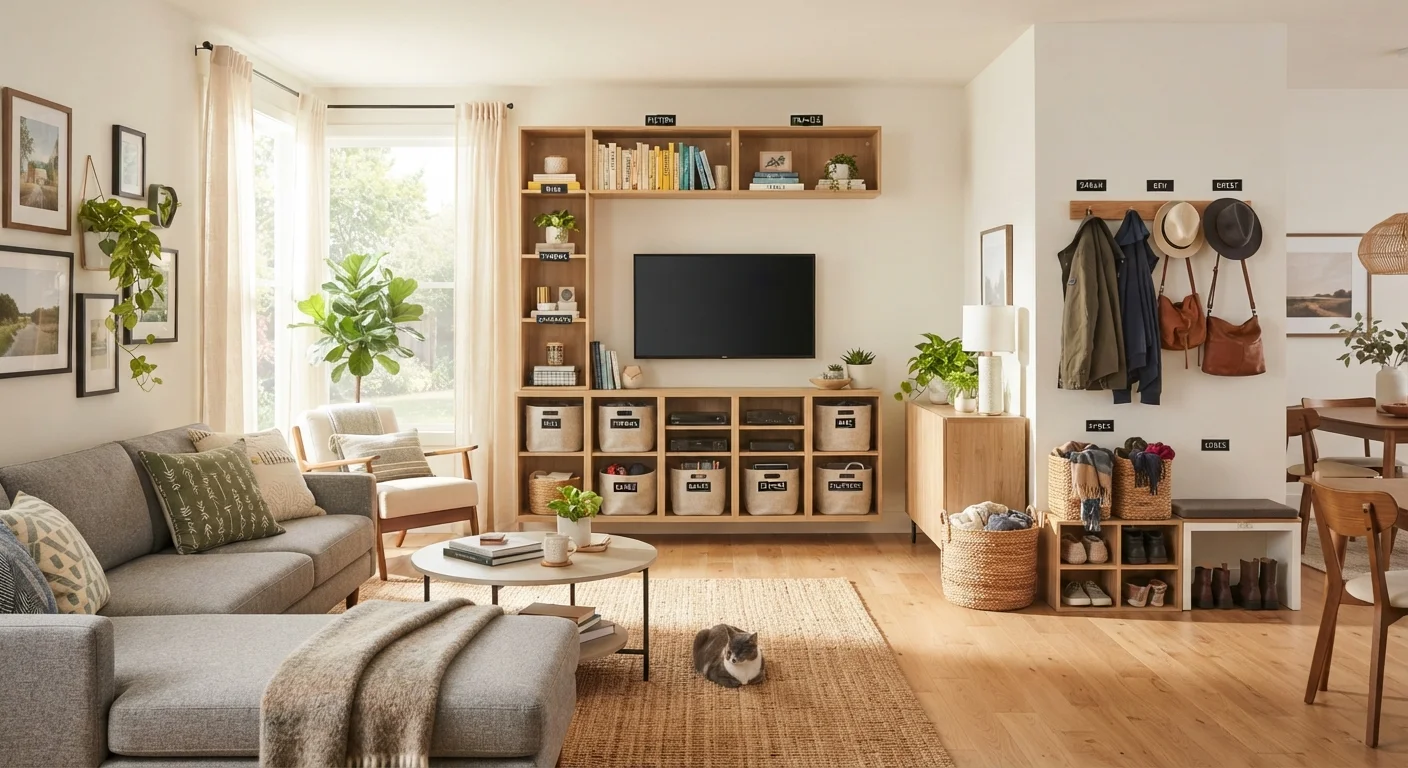
Creates dedicated landing spots for frequently moved items like bags, keys, and jackets near entry points.
Shared digital calendar or household task app
Tracks rotating chores and organization check-ins so responsibility is distributed fairly and visibly.
Step-by-Step: Building a System That Sticks
The steps below move from conversation to structure to maintenance. Skipping the early stages and going straight to buying storage bins is one of the most common mistakes - and one worth avoiding. For more on why that impulse backfires, see organization myths that make homes harder to manage.
Hold an honest household conversation
Before moving a single item, sit down with everyone who shares the space. Ask each person to name their two biggest frustrations with how shared areas currently function - not what others do wrong, but what makes their daily routine harder. Keep it specific and solution-oriented.
This conversation sets the tone for everything that follows. Agreements made collaboratively are far more likely to stick than systems one person designs and imposes on others.
Map shared vs. personal zones
Walk through the home together and categorize each area: fully shared (kitchen, living room), semi-shared (bathrooms), and personal (individual bedrooms or desk areas). This mapping exercise surfaces assumptions that often go unspoken.
Personal zones are where individual habits can operate freely. Shared zones are where agreed-upon systems apply. Drawing this boundary explicitly reduces a significant source of household friction.
Design simple, low-friction homes for shared items
Every item that lives in a shared zone should have an obvious, easy-to-reach home. The test: could a tired person returning from work return this item to its place in under 10 seconds? If not, the system is too complicated.
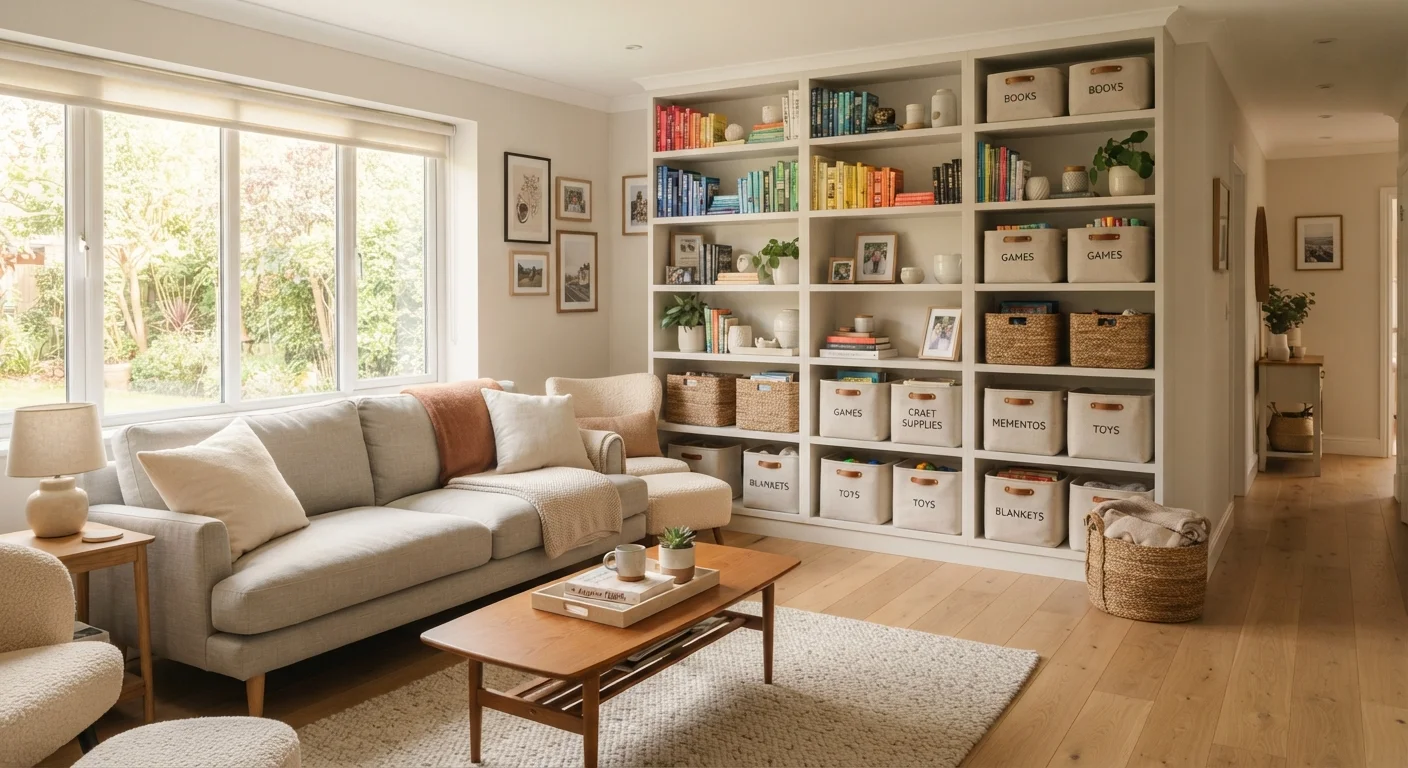
Use open containers for frequently used items, clear labels for anything that might be ambiguous, and avoid systems that require multiple steps to complete (e.g., items that need to be sorted before they can be put away). For inspiration on storage approaches, see open shelving vs. closed cabinets and vertical vs. horizontal storage.
Assign rotating responsibilities - not permanent roles
Divide recurring shared tasks (taking out trash, wiping counters, restocking bathroom supplies) by rotating them on a weekly or biweekly schedule rather than assigning them permanently. Permanent assignments tend to calcify into grievances over time, especially when one task feels heavier than another.
Post the rotation somewhere visible - a whiteboard, the fridge, or a shared app - so there's no ambiguity about whose week it is.
Build in a monthly reset habit
Schedule a brief monthly check-in - 15 to 20 minutes - where the household reviews what's working and what's drifting. This is the moment to adjust systems before small friction points become big conflicts.
Think of it less like a household meeting and more like a brief systems audit. What areas have gotten cluttered? What storage solution isn't being used? Are tasks being completed or quietly ignored? Adjust accordingly and move on.
Don't Design a System for Your Ideal Self
It's tempting to build an elaborate organization system based on the tidiest version of your household. But systems designed for ideal conditions fail under real ones. Test any new arrangement for two weeks before investing in permanent fixtures, labels, or storage hardware - what looks logical in theory may not match how people actually move through the space.
Maintaining the System Over Time
Even a well-designed system drifts without occasional resets. Life changes - new jobs, new schedules, new people in the home - and your organization approach should adapt accordingly. Build a habit of brief monthly check-ins (15 minutes is enough) where household members can flag what's working and what's creating friction.
High-traffic zones deserve particular attention. Entryways, kitchen counters, and bathroom vanities are the areas most likely to accumulate clutter under pressure. Our guide on high-traffic areas that need a dedicated system covers specific approaches for these hotspots. For the longer game, maintaining an organized home after the initial declutter offers routines that keep tidiness sustainable without requiring heroic effort from anyone.