
Why Organization Feels Different as a Homeowner
Renting a smaller space with fewer possessions is a very different organizational challenge than owning a full home. As a homeowner, you're suddenly managing more square footage, more storage areas, seasonal equipment, tools, maintenance supplies, and paperwork that didn't exist before. The stakes are also higher - a disorganized home can mean missed maintenance tasks, lost documents, or unnecessary spending on things you already own but can't locate.
The mindset shift worth making early: organization isn't about aesthetics. It's about making your home functional so it supports your life rather than adding friction to it. When your home has clear systems, you spend less mental energy on basics - and more on the things that actually matter to you.
Zone-based organization
A system that divides your home into areas by function, ensuring every item has a designated location that matches how and where it's actually used.
Decluttering
The process of sorting through your belongings and removing items you no longer need, use, or want - before setting up any storage system.
Daily reset
A short routine - typically 5 to 15 minutes - of returning items to their proper zones at the end of each day to prevent disorder from accumulating.
One in, one out rule
A household guideline where every new item brought into the home is offset by removing an existing item, keeping total possessions from growing over time.
Home records
A collection of documents related to your property - such as inspection reports, warranties, repair receipts, and permits - stored so they can be found when needed.
Start with a Zone-Based Mindset
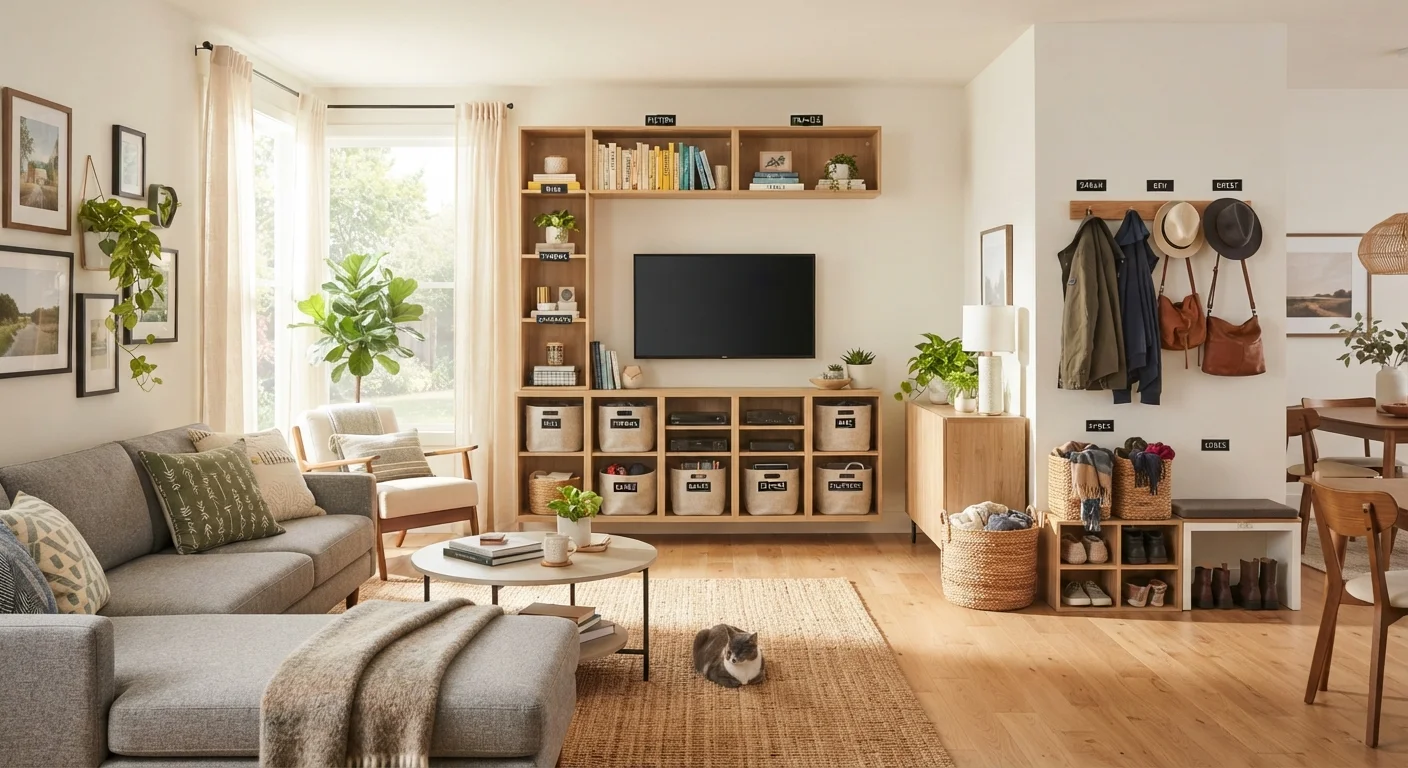
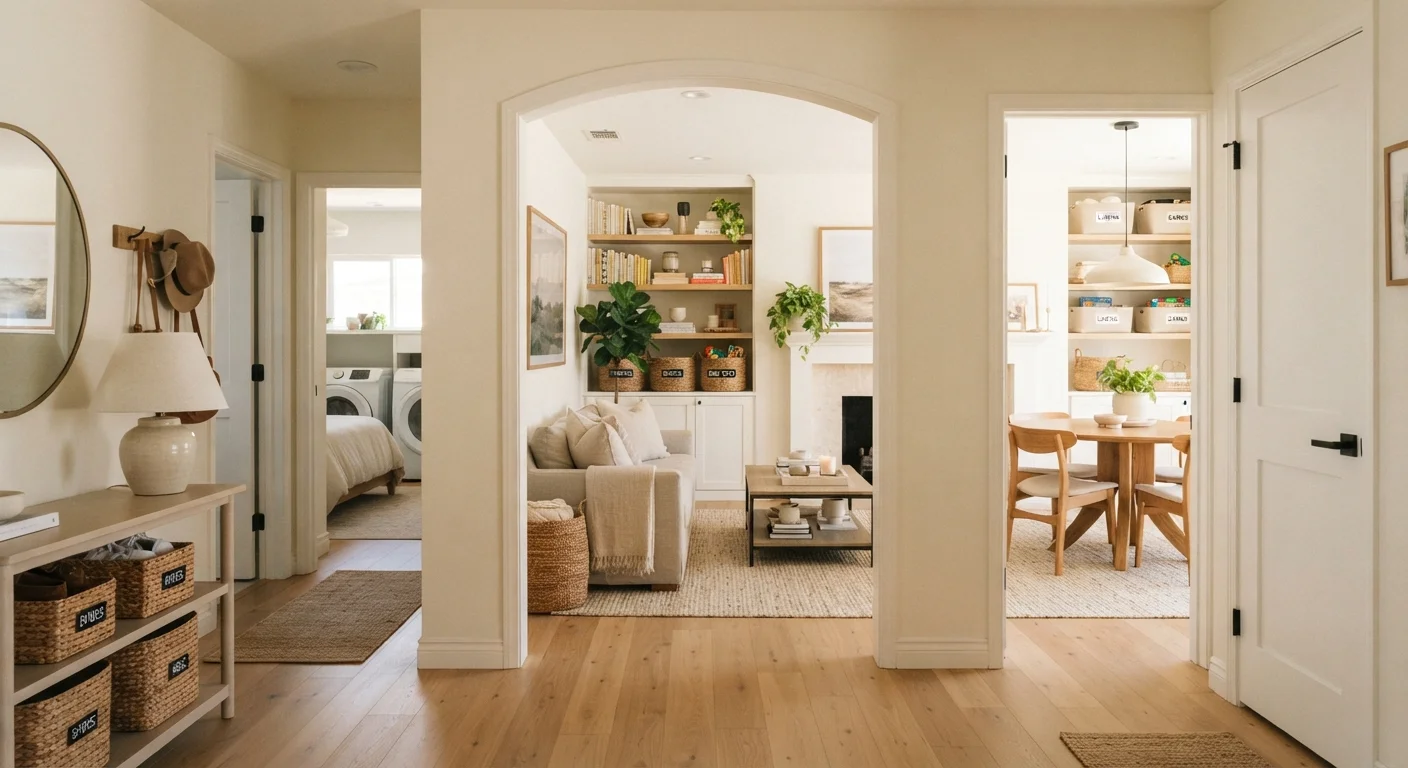
Zone-based organization means dividing your home into functional areas and ensuring everything in that zone belongs there by purpose. The entryway handles incoming and outgoing items. The kitchen stores food and cooking tools. A utility closet holds cleaning supplies. When every category has a designated zone, you stop making daily decisions about where things go - they simply go where they live.
Start by walking through your home and naming the primary function of each room or area. Then ask: does everything currently in this space support that function? Items that don't belong get moved to their correct zone - or evaluated for removal entirely.
For a detailed room-by-room breakdown, see our complete room-by-room organization walkthrough. If square footage is limited, our guide on small-space living and organization offers strategies scaled to compact homes.
Map Your Zones Before Moving In
If you haven't fully moved in yet, this is the ideal moment to establish zones - before habits form around where things land. Walk through the empty or partially furnished home and assign a function to each area. Deciding intentionally now is far easier than reorganizing around established patterns later.
The Declutter-First Rule
Before buying a single storage bin or drawer divider, declutter. This rule protects you from one of the most common first-time homeowner mistakes: purchasing storage solutions for items you don't actually need or want. Storage bought before sorting often just relocates the clutter rather than resolving it.
A practical approach is to move through each zone with three categories in mind: keep, donate or sell, and discard. Be honest about items carried over from a previous place that no longer serve a purpose in your new home. Furniture, duplicates, and novelty items are frequent offenders.
Once you know what you're keeping and in what quantities, you can shop for storage intentionally - choosing containers that match actual volumes and dimensions rather than guessing.
Don't Buy Storage Before You Sort
It's tempting to shop for attractive bins and baskets as a first step - but doing so before decluttering almost always leads to wasted money. You may purchase containers in the wrong size, quantity, or style for what you actually keep. Sort first, measure the volume you're working with, then shop with precision.
Building Systems That Stick
A system is only sustainable if it's easy enough to follow on a tired Tuesday evening - not just on a motivated Saturday morning. The most durable organizational systems share a few characteristics: they're simple, visible, and low-friction to reset.
- Label generously. Labels remove ambiguity, especially in shared spaces. Clear labeling means anyone in the household can put something away correctly without asking.
- Use the 'one in, one out' rule. When a new item enters the home, an equivalent item leaves. This prevents gradual accumulation over time.
- Build a daily reset habit. Ten minutes before bed - returning items to their zones - prevents small disorder from becoming large disorder. Consistency matters more than duration.
- Reassess quarterly. Seasons change what you need accessible. A quarterly review lets you rotate items and catch organizational drift before it becomes overwhelming.
If others share your home, systems need household buy-in to work. The article on organizing shared spaces with different habits addresses this directly.
Organizing Paperwork and Home Records
Physical and digital paperwork is one area first-time homeowners consistently underestimate. From the day you close on a property, you begin accumulating documents that matter - inspection reports, appliance warranties, permit records, insurance policies, and repair receipts. Without a system, these pile up or disappear exactly when you need them most.
Set up a dedicated home records folder - physical, digital, or both - with clearly labeled categories: Mortgage & Title, Insurance, Repairs & Receipts, Appliance Manuals & Warranties, and Permits & Inspections. When a receipt arrives or work is completed, file it immediately rather than letting it accumulate on a counter.
Good record-keeping also supports your finances. Paired with a solid household budget, it helps you anticipate upcoming maintenance costs rather than react to them. Our monthly budget setup checklist for first-time homeowners is a useful companion here. For the broader picture of home upkeep, explore our first-year homeowner maintenance roadmap to stay ahead of the tasks that matter most.