Why a Room-by-Room Approach Works
Whole-home organization projects frequently stall because they feel enormous. The room-by-room method breaks the project into discrete, completable units - each with a clear start, finish, and visible result. That visible result is motivating, and motivation is what keeps the project moving.
The approach also respects that different rooms have different functions, traffic patterns, and storage demands. A system that works brilliantly in a kitchen closet is irrelevant in a bathroom. Treating each space on its own terms produces more durable results than applying a single formula everywhere.
If you're new to homeownership and building these habits from scratch, the foundational guide for first-time homeowners is a useful companion to this walkthrough. For households with multiple people and competing tidiness styles, organizing a shared home covers how to build systems everyone can follow.
Entryway: Set the Tone from the Door
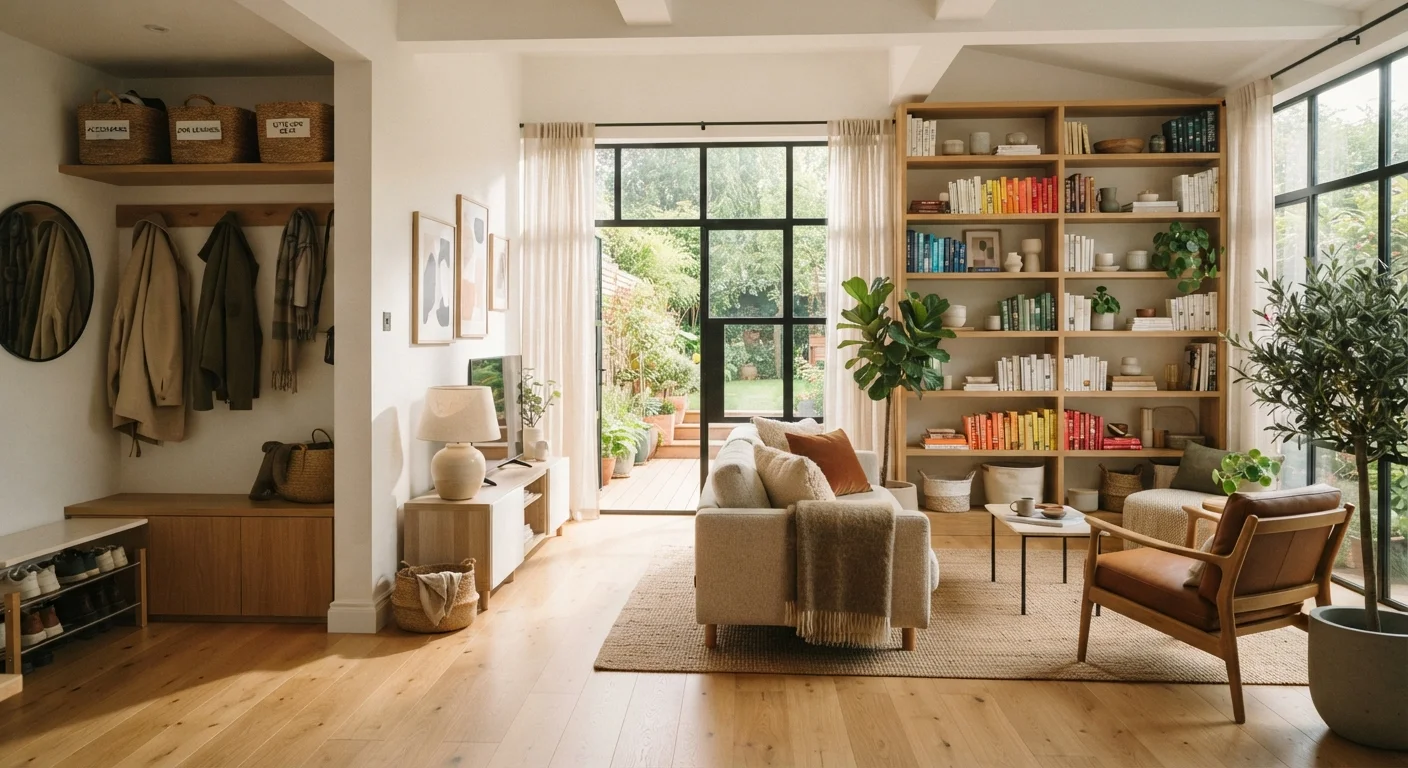
The entryway is the first room you experience every time you come home and the last before you leave. Clutter here creates immediate friction. The goal is a drop zone that absorbs incoming items - keys, bags, shoes, mail - and routes them to their correct place before they drift into the rest of the house.
- Hooks at eye level for bags, coats, and leashes keep these items off the floor.
- A tray or dish for keys, wallets, and everyday carry items eliminates the morning search.
- Shoe storage - a bench with cubbies, a low shelf, or a cabinet - should fit your household's realistic shoe rotation, not an aspirational minimum.
- A mail station with a slot for incoming mail and a recycling bin nearby prevents paper from piling up.
Design your entryway system around what your household actually does, not what looks good on a mood board. If shoes always end up on the floor, add a floor-level rack - don't fight the behavior, redirect it.
Systems that match real behavior patterns are used consistently; ones that require behavioral change tend to fail within weeks.
When organizing a kitchen, time yourself making a common meal and note every time you have to walk more than three steps for an item. That friction map tells you exactly what to reorganize first.
Kitchen organization is most effective when it reduces movement during actual cooking tasks, not just when it looks tidy with the cabinets closed.
Limit the entryway to items that leave the house daily. Everything else belongs in a closet or another room.
Kitchen and Pantry: Function Over Aesthetics
Kitchens accumulate clutter faster than any other room because they serve so many simultaneous functions - cooking, eating, homework, charging devices, and storing paperwork that has no business being there. Organization here starts with protecting the counter.
Countertops should hold only what you use daily. Everything else - the rarely used appliance, the decorative bowl - needs a cabinet, a shelf, or a new home entirely. Inside cabinets, group items by task: baking supplies together, everyday dishes at arm's reach, infrequently used items on higher shelves.
In the pantry, apply the same logic. Group by category (canned goods, grains, snacks, baking), place newer items behind older ones to reduce waste, and use shelf risers or bins to make items in the back visible. Clear containers help, but they're a finishing touch - not the foundation.
Organize Your Pantry Before Grocery Shopping
Auditing pantry contents before each grocery run prevents duplicate purchases and wasted food. It also keeps categories consolidated - so items don't gradually migrate to random shelves. A five-minute pantry check before you shop pays dividends in both organization and budget.
Living Room and Common Areas
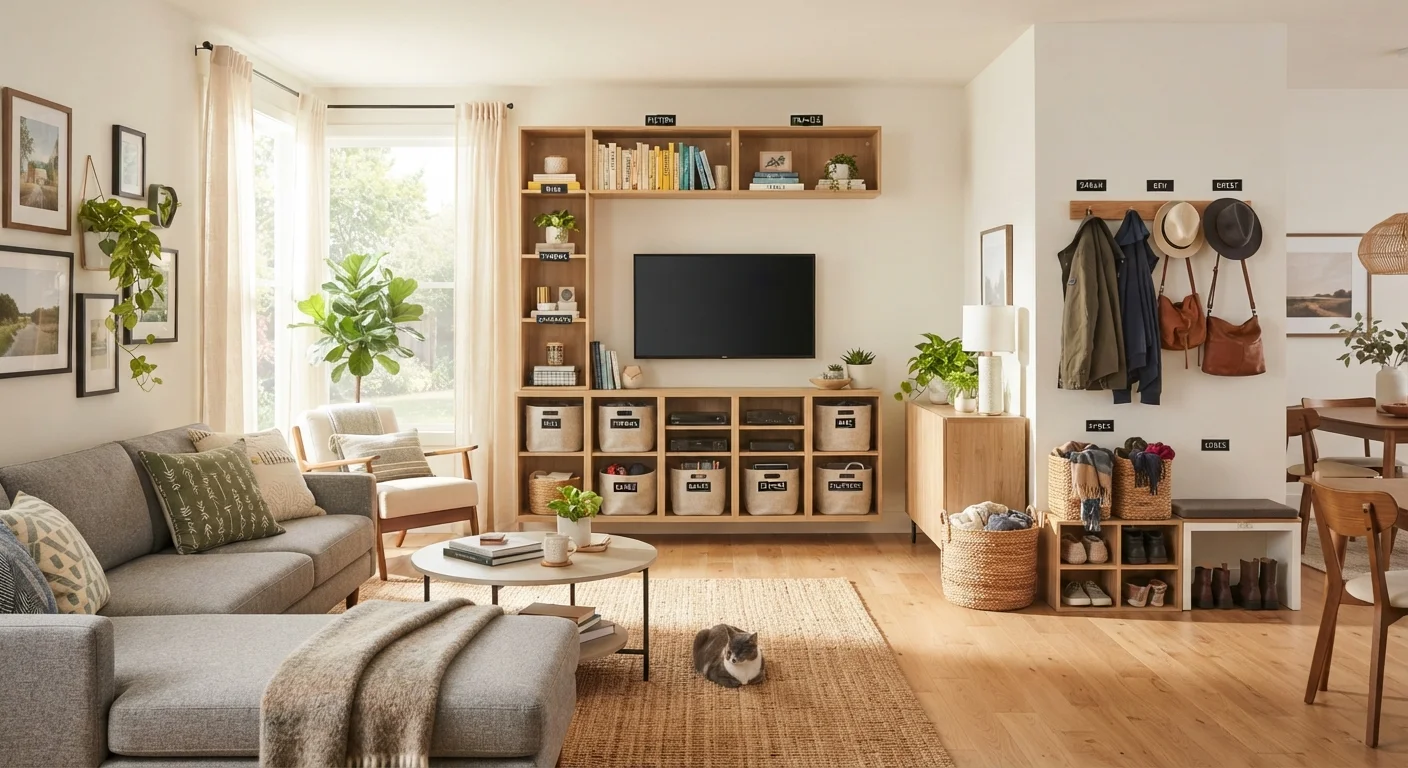
Living rooms tend to become catch-all spaces because they're central and comfortable. The organizing principle here is defined homes for recurring clutter. Remotes go in one spot. Blankets fold into a basket. Books have a shelf. When every frequently-used item has a designated place, tidying takes minutes rather than a half-hour.
Media consoles and shelving units benefit from the same zone logic used in kitchens: group by use, keep everyday items accessible, and store seasonal or occasional items out of sight. Cable management - routed behind furniture or through simple cord covers - dramatically reduces visual noise without any structural changes.
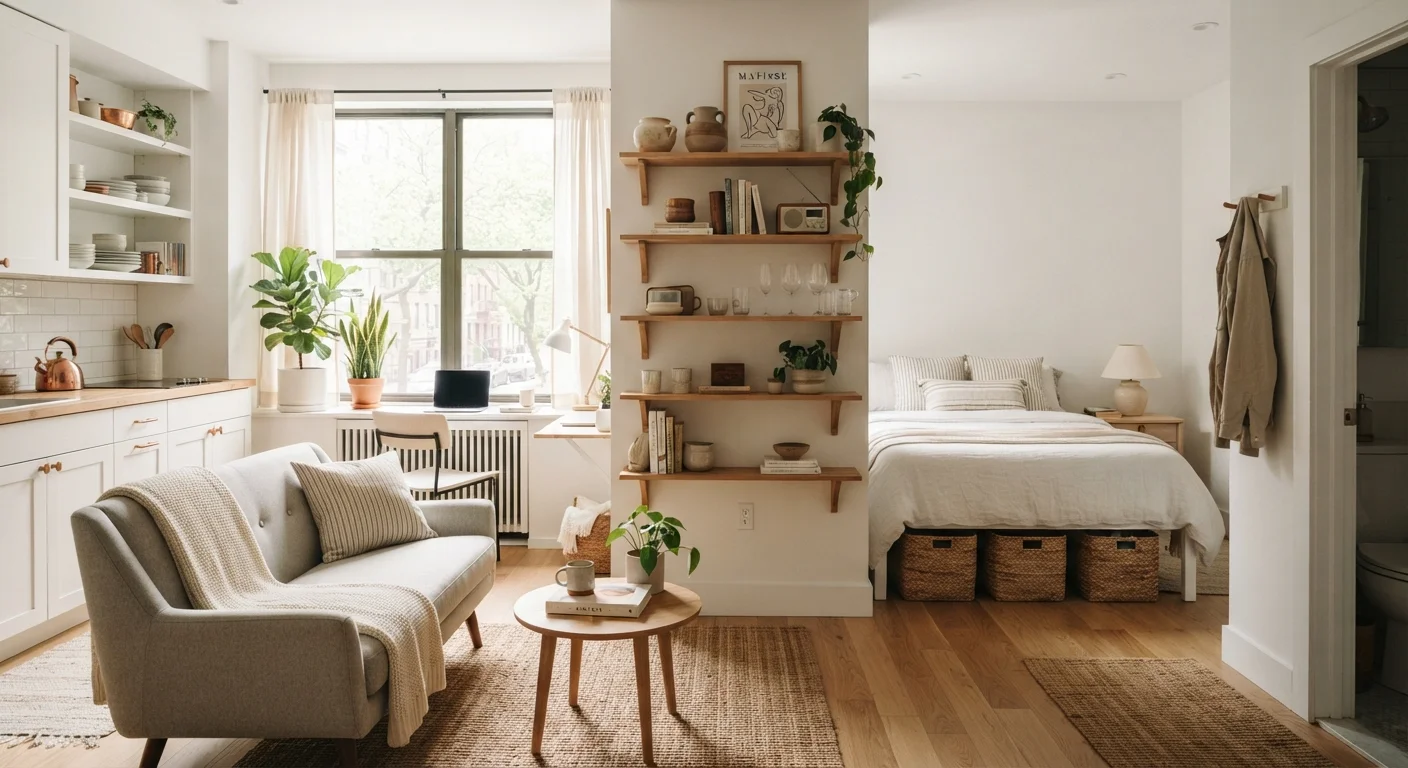
For compact living situations where every square foot matters, the small-space organizing guide offers targeted strategies for making shared living areas feel larger and calmer.
80%
Of clutter is items with no designated home
Professional organizers widely cite the absence of a defined 'home' for items as the root cause of most household clutter accumulation.
10-15 min
Daily reset time to maintain an organized home
Home organization experts generally recommend a brief daily tidying routine over infrequent deep-cleaning sessions as a more sustainable long-term habit.
Bedrooms and Closets
A bedroom functions best as a low-stimulation space, which means storage should minimize visible clutter. The closet is the primary tool for achieving this. A functional closet system doesn't need to be expensive - it needs to match your actual wardrobe habits: how many hanging items you own, whether you fold or hang, and which items you access daily versus seasonally.
Start with a closet audit: remove everything, donate or discard what you don't wear, and then organize what remains by category (shirts, pants, dresses) and frequency of use. Seasonal clothing stored in labeled bins on upper shelves frees prime real estate for everyday pieces.
In the bedroom itself, keep surfaces intentional. Nightstands hold a lamp, a book, and perhaps a charging cable - not a secondary storage unit. Under-bed storage works well for off-season items in flat, lidded containers.
Bathrooms: Small Space, High Traffic
Bathrooms offer limited storage and high daily use, which means organization here relies on eliminating the unnecessary rather than adding more containers. Expired medications, nearly-empty bottles, and products you've stopped using are the primary culprits. Clear those first.
Under-sink space is often wasted due to plumbing obstacles. Stackable bins, a tension rod for hanging spray bottles, or a small shelf unit can double usable under-sink storage without any permanent modifications.
Keep daily-use items - toothbrush, face wash, moisturizer - accessible on the counter or in a single drawer. Store everything else in cabinets or a linen closet. If your bathroom lacks storage entirely, that's a structural question worth exploring - the bathroom remodel planning guide addresses realistic options for adding built-in storage.
Garage, Basement, and Storage Zones
Garages and basements become dumping grounds precisely because they're out of the main living flow. The fix is the same as every other room: zones with defined purposes. Garden tools in one area. Sporting equipment in another. Holiday decor on a dedicated set of shelves. Power tools near an outlet, stored safely.
Wall-mounted systems - pegboards for hand tools, hooks for bikes, overhead racks for bulky seasonal items - recover floor space and keep items visible. Label everything. Bins without labels become mystery storage within weeks.
Before organizing a garage that's slated for renovation or improvement work, the pre-renovation room prep checklist helps you clear and protect items efficiently. For broader home upkeep context, the home maintenance hub covers seasonal tasks that intersect with storage and organization.
Maintaining Organization Long-Term
Organization is not a one-time event - it's a set of ongoing habits. The most effective maintenance strategy is the daily reset: a 10-15 minute end-of-day routine where items return to their designated homes. This prevents the slow drift that leads to a full re-organization project three months later.
Seasonally, revisit each room for a brief audit. Did the system hold? Did habits change? Is there a category of item that keeps ending up in the wrong place? That's a signal that the system needs adjustment, not that the person using it is failing.
When organizing breaks down - and it will, at some point - resist the urge to overhaul everything. Identify the specific point of failure, adjust that one thing, and move on. Lasting organization is built through small, consistent corrections rather than periodic heroic efforts.