Why Certain Spaces Keep Falling Apart
Every home has at least one space that seems to resist order no matter how many times it's reset. Mail piles up on the kitchen counter. Shoes multiply near the front door. The bathroom vanity disappears under an avalanche of products. These aren't signs of carelessness - they're signs that a space lacks a system designed around how it's actually used.
High-traffic areas are uniquely vulnerable because they serve as transition points: places where people move quickly, drop things temporarily, and rarely pause to make deliberate decisions. Without a structure that channels that behavior, clutter fills the vacuum. The fix isn't more motivation or a bigger cleanout - it's a system that makes the organized choice the easiest choice.
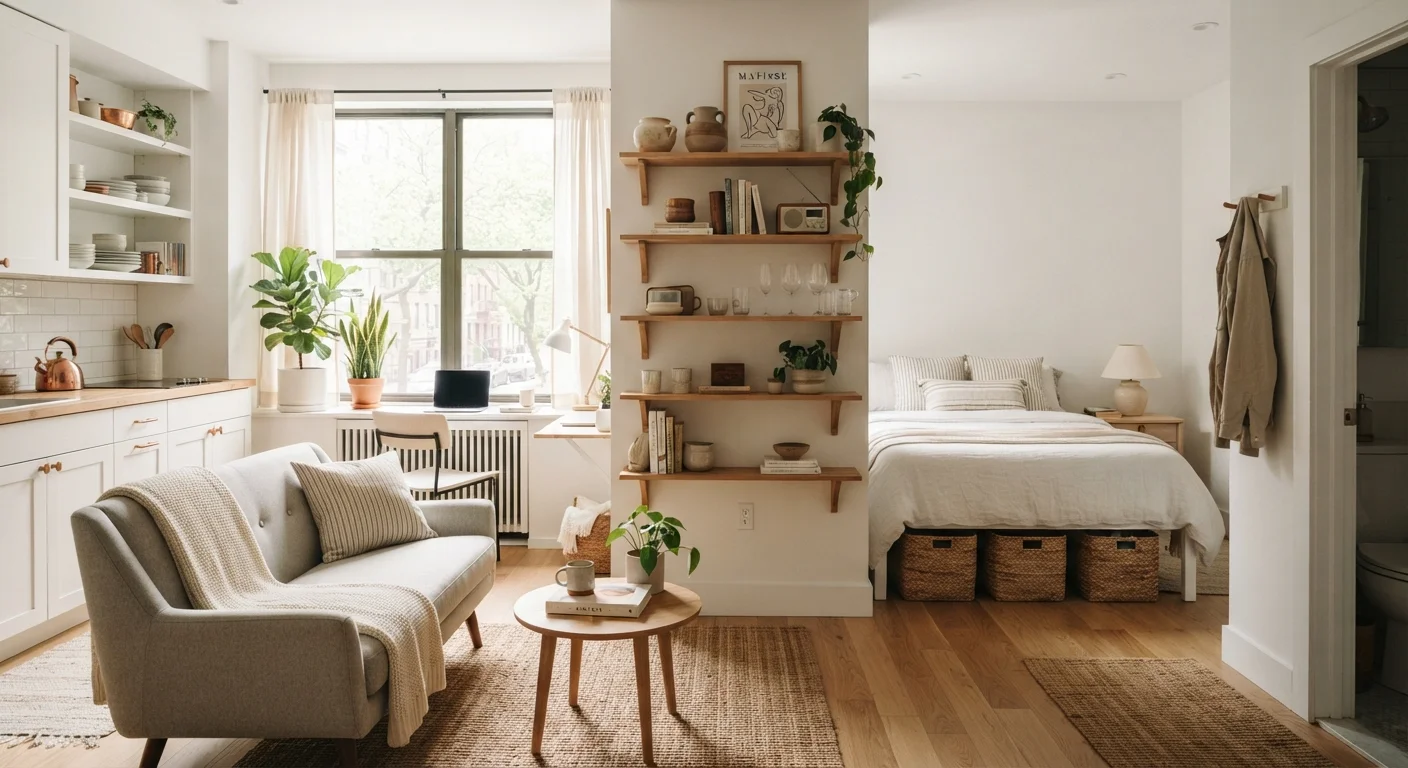
If you're navigating limited square footage on top of this, see our guide to organizing small spaces for strategies that apply even when every inch counts.
The Entryway
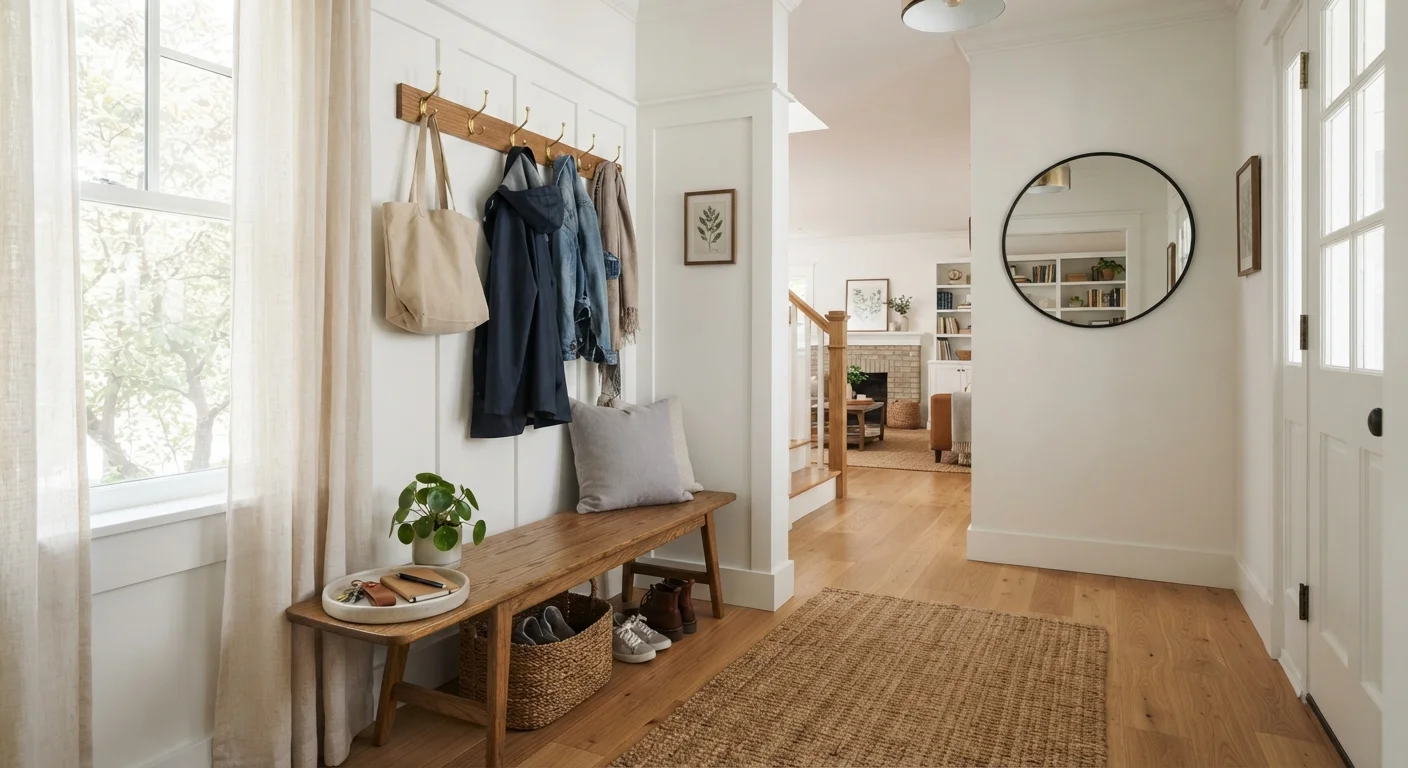
The entryway is the first and last space anyone passes through, which makes it the most reliably chaotic spot in the home. Bags, shoes, coats, mail, keys, and miscellaneous items accumulate here because people are always either rushing out or unwinding on arrival - neither state is conducive to deliberate putting-away.
An effective entryway system works by creating an obvious, frictionless home for each category of item. Wall-mounted hooks at multiple heights handle coats and bags without requiring a closet door to be opened. A shallow tray or bowl near the entry captures keys and small items reliably. A dedicated slot or basket for incoming mail prevents it from migrating to the kitchen counter. Shoe storage - whether a rack, cubbies, or a bench with interior compartments - eliminates the floor pile by making it just as easy to store shoes properly as to drop them.
The guiding principle: every item that regularly appears in this space needs a pre-assigned spot that requires zero thought to use.
An obvious, frictionless home for each item category beats any amount of tidying resolve.
Kitchen Counters
Kitchen counters are the default landing zone for almost everything that enters the home - groceries, mail, medications, chargers, homework, and leftovers from other rooms. The problem is compounded by the fact that counters are large, flat, and highly visible, which makes them feel like usable space even when they're covered in unrelated items.
The most effective counter system starts with a strict rule about what actually belongs there: only items used daily (coffee maker, dish drying rack) earn permanent counter space. Everything else needs a home elsewhere. From there, small organizers - a mounted rail for frequently grabbed tools, a charging station tucked to one end, a produce bowl as the single acceptable decorative item - reduce the number of objects that have no designated spot.
For miscellaneous items that resist categorization, our piece on why junk drawers keep coming back explains why these items pile up and how to actually address the root cause.
Only items used daily should earn permanent counter space - everything else needs a home elsewhere.
Bathroom Vanities
Bathroom vanities suffer from a specific organizational problem: the products stored there multiply slowly over time, and most people don't notice until the surface is completely overwhelmed. Skincare, haircare, medications, and daily tools all compete for the same limited real estate.
A working vanity system separates daily-use items from occasional-use items. Daily items - face wash, toothbrush, a few key products - stay on or immediately inside the vanity in easy-reach organizers. Occasional items (backup supplies, specialty treatments) move to a drawer, cabinet shelf, or under-sink storage. Drawer dividers and small bins prevent items from sliding into disorganized heaps every time the drawer is opened.
Critically, a bathroom system needs a regular editing step: expired products, nearly-empty containers, and items that drifted in from other rooms should be removed on a consistent schedule rather than allowed to accumulate indefinitely.
Separate daily-use items from occasional ones - that single distinction transforms vanity organization.
Laundry Transition Zones
The area around a washer and dryer - whether a dedicated laundry room or a closet-sized alcove - is chronically disorganized because it handles items in transition: dirty, clean, folded, and unfolded laundry often occupy the same small space simultaneously. The result is a pile that's hard to sort mentally, let alone physically.
An effective laundry system starts with separation at the point of input. Multiple hampers or a divided hamper (darks, lights, delicates) eliminate the pre-wash sorting step. Shelving above the machines creates storage for detergent and supplies without leaving them scattered. A folding surface - even a simple counter-height shelf - gives clean laundry a defined destination before it reaches bedrooms, breaking the cycle of the clean pile living on top of the machine for days.
Multiple hampers and a dedicated folding surface break the cycle before laundry has a chance to pile up.
Home Office or Desk Areas
Home office spaces and household desks accumulate paper, cords, office supplies, and random objects at an extraordinary rate - particularly in homes where a single desk serves multiple purposes (working from home, bill-paying, kids' homework). The problem is structural: a desk is a flat surface associated with active tasks, so items migrate to it because it feels like a place where things get done.
A functional desk system uses vertical space aggressively. Wall-mounted shelving, pegboards, and monitor risers with storage underneath free up the surface itself. An inbox/outbox system for paper prevents documents from spreading. Cable management - clips, channels, or a simple box to hide power strips - reduces visual noise dramatically without requiring ongoing effort.
If your desk area is part of a broader storage challenge, smart storage upgrades covers built-in and vertical options that make a real difference in tight rooms.
Vertical storage frees the desk surface - the one organizational move that holds up under daily use.
Mudrooms and Back-Door Entries
In homes with a back or side entry - often the most-used door in the house - the informal zone just inside becomes a catch-all for anything that doesn't make it further into the home. Sports equipment, reusable bags, pet supplies, seasonal gear, and outerwear pile up because this space is used constantly but rarely given organizational attention.
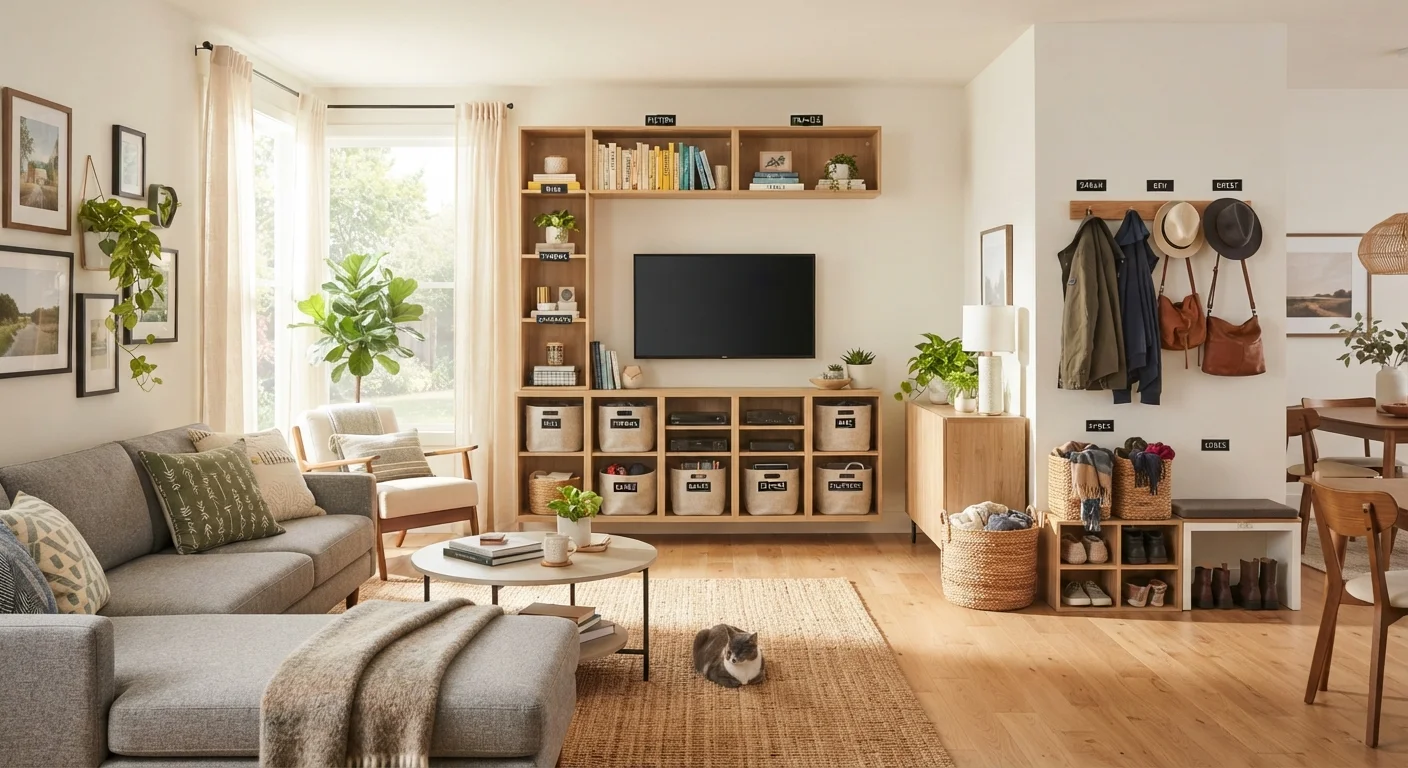
The key is treating this zone with the same intentionality as a formal entryway. Designated bins or cubbies by user (especially in households with children) reduce shared pile-up. Hooks sized and positioned for the actual items used - heavier hooks for backpacks and coats, smaller ones for leashes and bags - make it fast to hang things rather than drop them. A floor mat or boot tray contains dirt and moisture and defines the zone visually.
For households navigating different tidiness habits among family members, shared space organization strategies offers practical approaches to getting everyone working with the same system.
Per-person cubbies transform a chaotic back entry into a space everyone can actually use consistently.
Building Systems That Actually Hold
The spaces below share one trait: they're used constantly, by multiple people, under time pressure. That combination makes them almost impossible to keep tidy through effort alone. What works instead is reducing the number of decisions required in the moment - a hook in the right place beats a good intention every time.
Start With One Space, Not All of Them
It's tempting to overhaul every problem area at once, but that approach tends to stall out quickly. Pick the single space that causes the most daily friction and build a functional system there first. Once that system is working reliably without active maintenance, move to the next. Sustainable organization is built incrementally, not in a single weekend.
Once you've addressed the worst offenders, the harder challenge is keeping them that way. Our article on maintaining organization after the initial declutter walks through the habits and routines that make tidiness sustainable rather than a recurring project. And if your household includes multiple people with different habits, organizing shared spaces addresses how to build systems that everyone can actually follow.