Why Storage Strategy Changes Everything in a Small Room
In a small room, clutter doesn't just look messy - it physically shrinks the space. When surfaces are covered and floors are crowded, the eye has nowhere to rest, and the room feels compressed. The good news is that most small rooms have more usable storage potential than their owners realize. The problem isn't square footage; it's how that footage is organized.
This list walks through practical, proven storage upgrades - ranging from no-drill solutions to more involved built-in projects - with notes on complexity and which rooms benefit most. For a broader room-by-room perspective, see our complete home organization walkthrough.
Floor-to-Ceiling Shelving Units
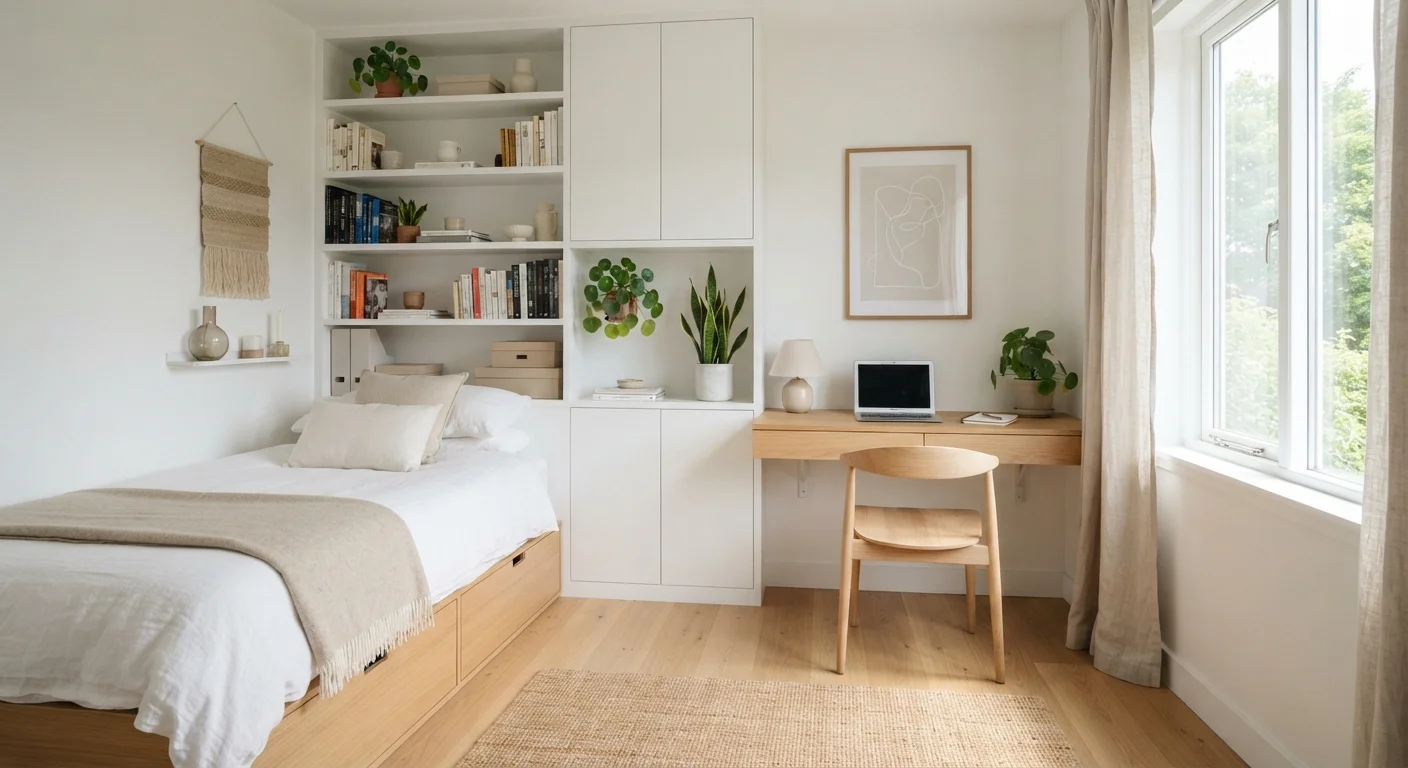
Most rooms have 8-10 feet of wall height, but the average bookcase uses only the bottom five. Installing tall shelving - either freestanding units anchored to the wall for safety or custom built-ins - captures that wasted vertical zone for books, bins, and seasonal items.
Best for: Living rooms, home offices, and bedrooms. Complexity: Low to moderate (freestanding) or higher (built-in). Approximate cost range: $50-$600+ depending on materials and whether you DIY or hire out. Always anchor tall units to wall studs to prevent tipping - this is a non-negotiable safety step.
For a deeper dive into the logic behind vertical storage, see vertical vs. horizontal storage strategies.
Most rooms have 8-10 feet of wall height - floor-to-ceiling shelving captures the half that's usually wasted.
Under-Bed Storage Drawers or Bins
The space beneath a bed is typically 7-12 inches of clear volume - enough to store off-season clothing, extra bedding, or shoes. Low-profile rolling drawers designed for this space keep items accessible without requiring you to lift a mattress. Bed risers can increase clearance if your frame sits low.
Best for: Bedrooms, especially in apartments or smaller homes. Complexity: Very low - no tools required. Cost range: $20-$150 for quality rolling bins or fabric drawers. Use labeled containers to keep contents findable without pulling everything out.
The space under a bed often holds more than an entire dresser drawer - it just needs the right containers.
Floating Wall-Mounted Shelves
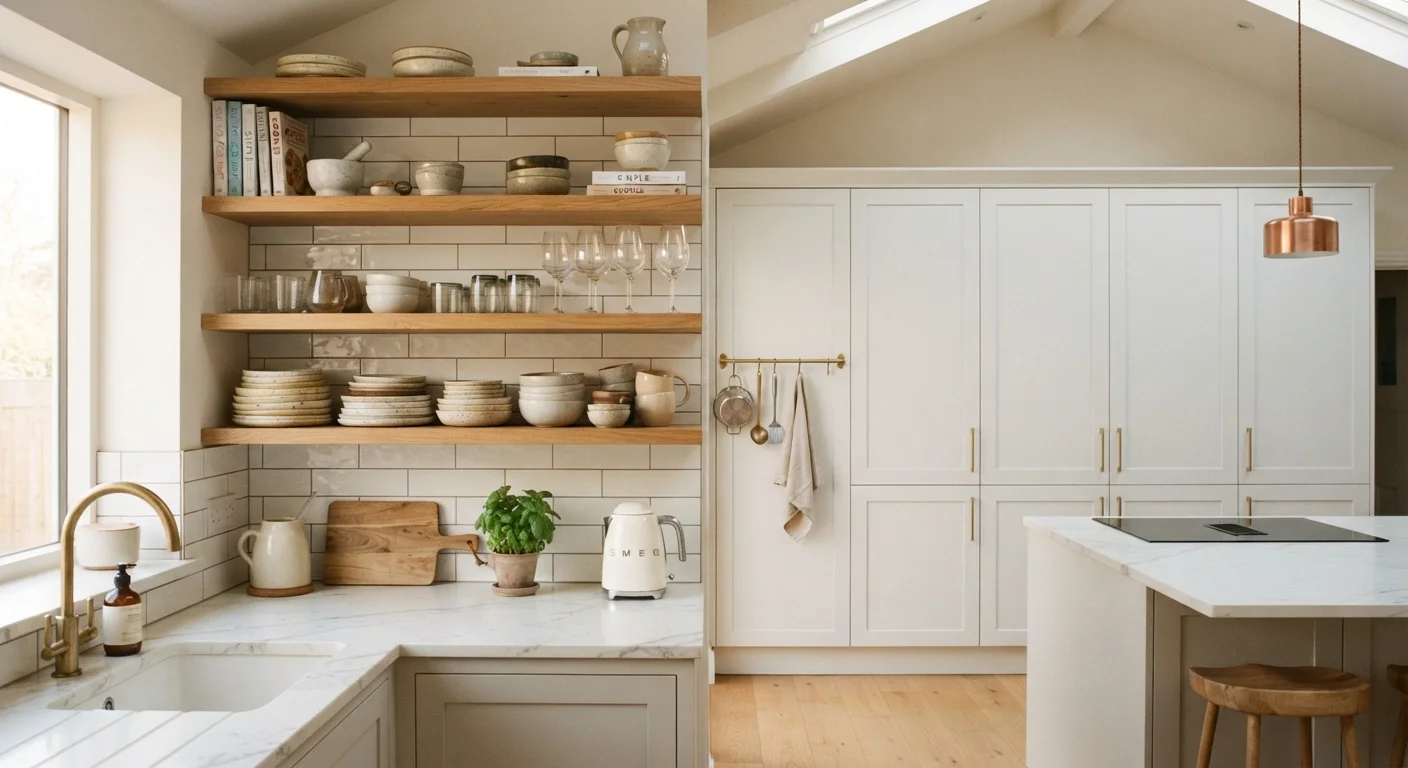
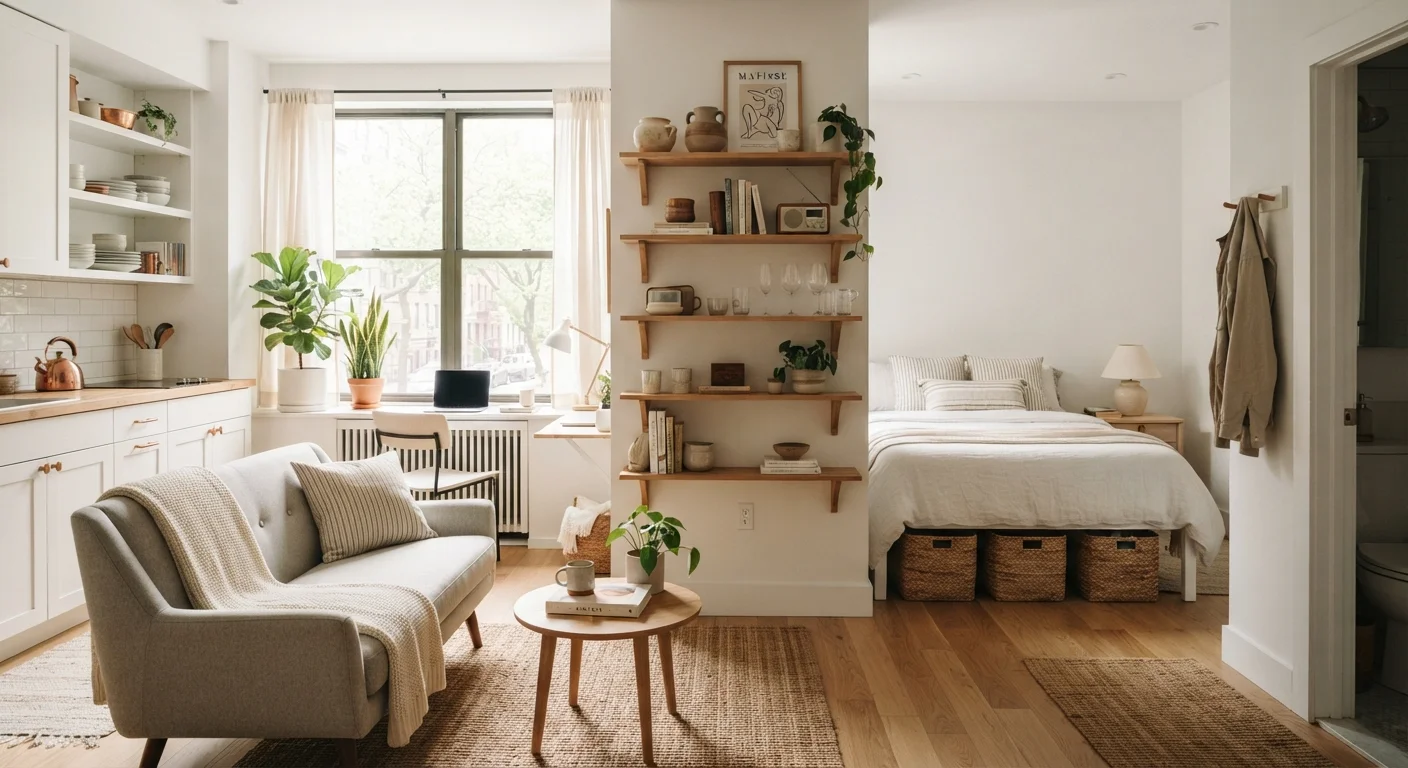
Floating shelves free up floor space entirely by moving storage to the wall. In a bathroom, a row of shelves above the toilet can replace a bulky cabinet. In a kitchen, floating shelves above the counter keep everyday items within reach without consuming counter space. Mounting requires locating wall studs and using appropriate anchors for the wall material.
Best for: Bathrooms, kitchens, and entryways. Complexity: Low to moderate - basic drilling and stud-finding skills needed. Cost range: $15-$200 per shelf depending on material and bracket style. If you're renting, check your lease before drilling.
Floating shelves eliminate the furniture footprint entirely - storage appears without touching the floor.
Multifunctional Furniture with Hidden Storage
An ottoman that opens to store blankets, a bed frame with built-in drawers, or a bench at the foot of the bed with a hinged lid - these pieces earn their square footage by doing two jobs at once. In a small living room, a storage coffee table can absorb remote controls, gaming accessories, and throw blankets that would otherwise sit on surfaces.
Best for: Living rooms, bedrooms, and entryways. Complexity: None - furniture assembly only. Cost range: Highly variable, from $80 for a basic storage ottoman to $500+ for quality bed frames with drawers. Prioritize pieces where the storage is genuinely accessible in daily use.
Every piece of furniture in a small room should justify its footprint - storage built into it doubles its value.
Built-In Closet Organizers
A standard single-rod closet wastes enormous space above and below the hanging clothes. A modular closet system - with double-hang rods, shelves, and drawers configured to your actual wardrobe - can effectively double a closet's capacity without physically expanding it.
Best for: Bedroom closets, linen closets, and entryway coat closets. Complexity: Moderate - involves measuring, cutting (for some systems), and anchoring to walls. Cost range: $100-$800+ for DIY modular kits; higher for custom installs. This upgrade has a strong impact-to-cost ratio for bedrooms that feel perpetually cluttered. For managing high-traffic areas like entryway closets, our article on high-traffic spaces that need a dedicated system offers useful framing.
Reconfiguring a standard closet with a modular system can effectively double its usable capacity.
Door-Mounted and Over-Door Organizers
The back of a door is a frequently overlooked storage surface. Over-door organizers work well for pantry doors (spices, foil, bags), bathroom doors (toiletries, hair tools), and bedroom doors (shoes, accessories). Tension-rod designs require no hardware; hook-based systems need a door thick enough to accommodate the hardware without blocking the frame.
Best for: Pantries, bathrooms, and bedrooms. Complexity: Very low - typically no tools required. Cost range: $15-$70. Measure door clearance before purchasing to ensure the door closes fully with the organizer installed.
The back of a door is prime real estate - over-door organizers add storage with zero floor or wall impact.
Putting It All Together
You don't need to tackle every upgrade at once. Start with the room that causes the most daily friction - usually a bedroom, bathroom, or entryway - and identify one or two changes from this list that fit your budget and skill level. Small, targeted improvements compound quickly.
If you're deciding between open and concealed storage as you plan, our guide on open shelving vs. closed cabinets can help you weigh the tradeoffs. And if you're working with extremely limited square footage across your whole home, the strategies in small-space living and compact home organization go deeper into habits and systems that make a lasting difference.
Start With a Declutter Pass First
Storage upgrades work best when you're only organizing items you actually use and need. Before investing in new systems, go through the room and remove anything broken, redundant, or unused. Organizing clutter just means finding it more neatly later - and that wastes both money and effort.