The Core Trade-Off: Visibility vs. Concealment
The open shelving vs. closed cabinets debate comes down to one central question: do you want your stored items visible or hidden? Both approaches are legitimate - the problem arises when homeowners choose based purely on what they've seen in design content rather than how they actually live.
Open shelving puts everything on display. That's an advantage when items are well-organized and intentionally arranged, but a liability when daily life creates disorder. Closed cabinets, by contrast, act as a visual reset button - close the door, and the mess disappears. This distinction matters most in high-traffic areas like kitchens, bathrooms, and home offices, where things are constantly moved in and out.
Common organization myths often lead homeowners to believe that open shelving automatically creates a tidier space because everything is visible. In practice, visibility without consistent curation tends to produce the opposite effect - a cluttered surface that's hard to ignore.
| Criterion | Open Shelving | Closed Cabinets |
|---|---|---|
| Visual effect | Airy, display-forward | Clean, contained |
| Dust & grease exposure | High - items exposed | Low - items protected |
| Daily maintenance demand | High - constant curation needed | Low - periodic wipe-downs |
| Access speed | Instant visual access | One extra step to open door |
| Clutter tolerance | Low - mess is always visible | High - doors hide disorder |
| Best room fit | Living rooms, home offices | Kitchens, bathrooms, utilities |
| Installation complexity | Generally simpler | More involved; may need professionals |
| Small-space suitability | Good - reduces visual mass | Moderate - can feel heavy |
Maintenance Realities: What Each System Demands
One of the most underestimated differences between these two systems is the ongoing maintenance burden. Open shelves collect dust, grease, and airborne particles continuously. In kitchens especially, a shelf above the stovetop can accumulate a sticky film within weeks. Decorative items on open shelves in living areas need regular dusting - typically more often than items stored behind closed doors.
Closed cabinets aren't maintenance-free, but the workload is lower and less frequent. Interior cabinet surfaces need periodic wiping, and cabinet doors benefit from occasional cleaning around handles, but the items inside are largely protected. This is a meaningful advantage for households where cleaning time is limited.
2-4×
More frequent dusting required for open shelves
Home organization professionals generally recommend dusting open shelves at least twice as often as cleaning cabinet interiors, with kitchen shelves needing attention even more frequently due to cooking residue.
60%
Of homeowners report kitchen clutter as their top visual stress
Surveys from home organization researchers consistently find kitchens are the most cited source of visual clutter, making storage decisions in that room particularly consequential.
For households with multiple people and varying tidiness habits, the maintenance gap widens further. Organizing shared spaces effectively often means choosing systems that don't rely on every person maintaining the same visual standard - and closed cabinets make that much easier to manage.
Where Each System Works Best Room by Room
Neither storage type is universally superior - context determines which performs better.
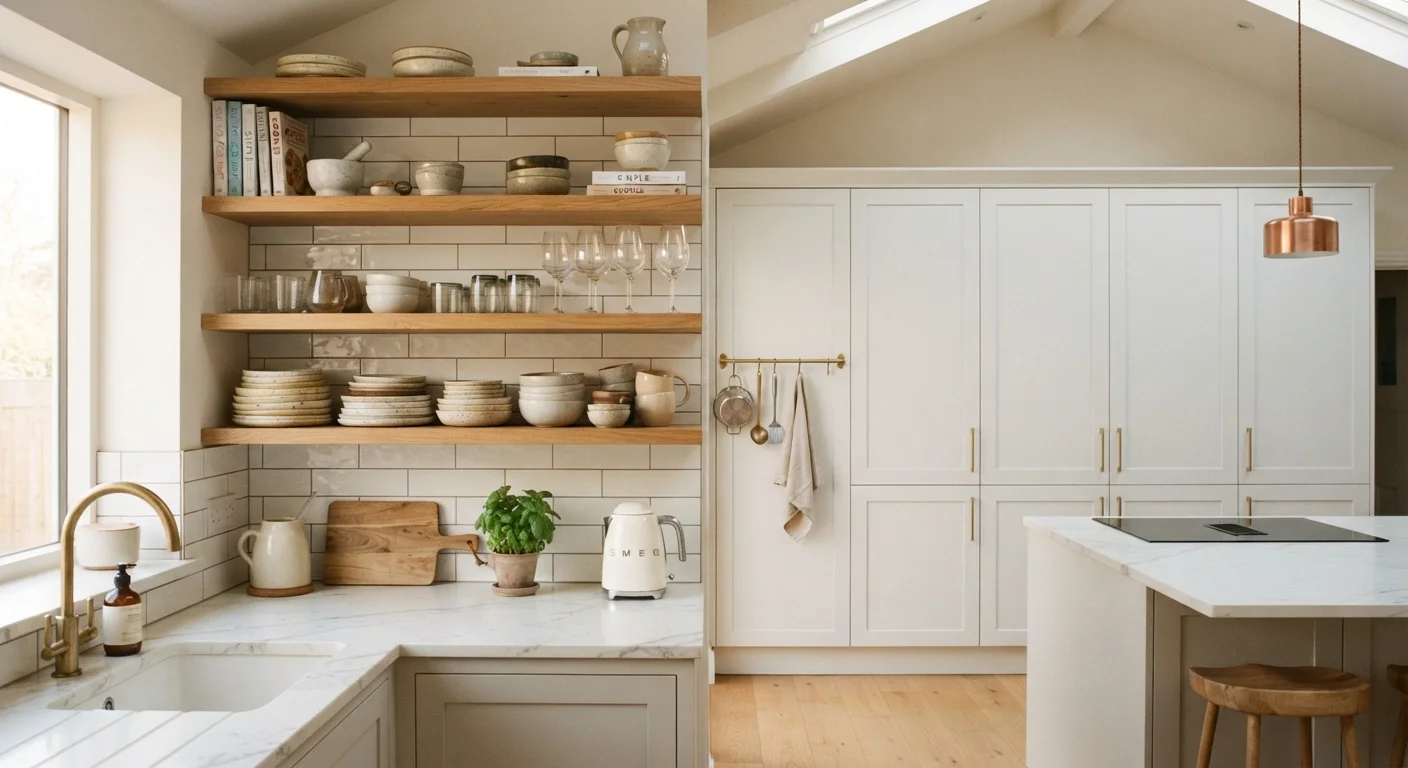
- Kitchens: Closed cabinets generally outperform open shelves due to cooking-related grease and steam. A common hybrid approach reserves open shelving for frequently used items like everyday glasses or a small dish collection, while bulk pantry items and seldom-used cookware stay behind closed doors.
- Bathrooms: Closed vanity cabinets are practical for toiletries and medications. Open shelving works well for towels and decorative items but requires consistent restocking and folding to look intentional.
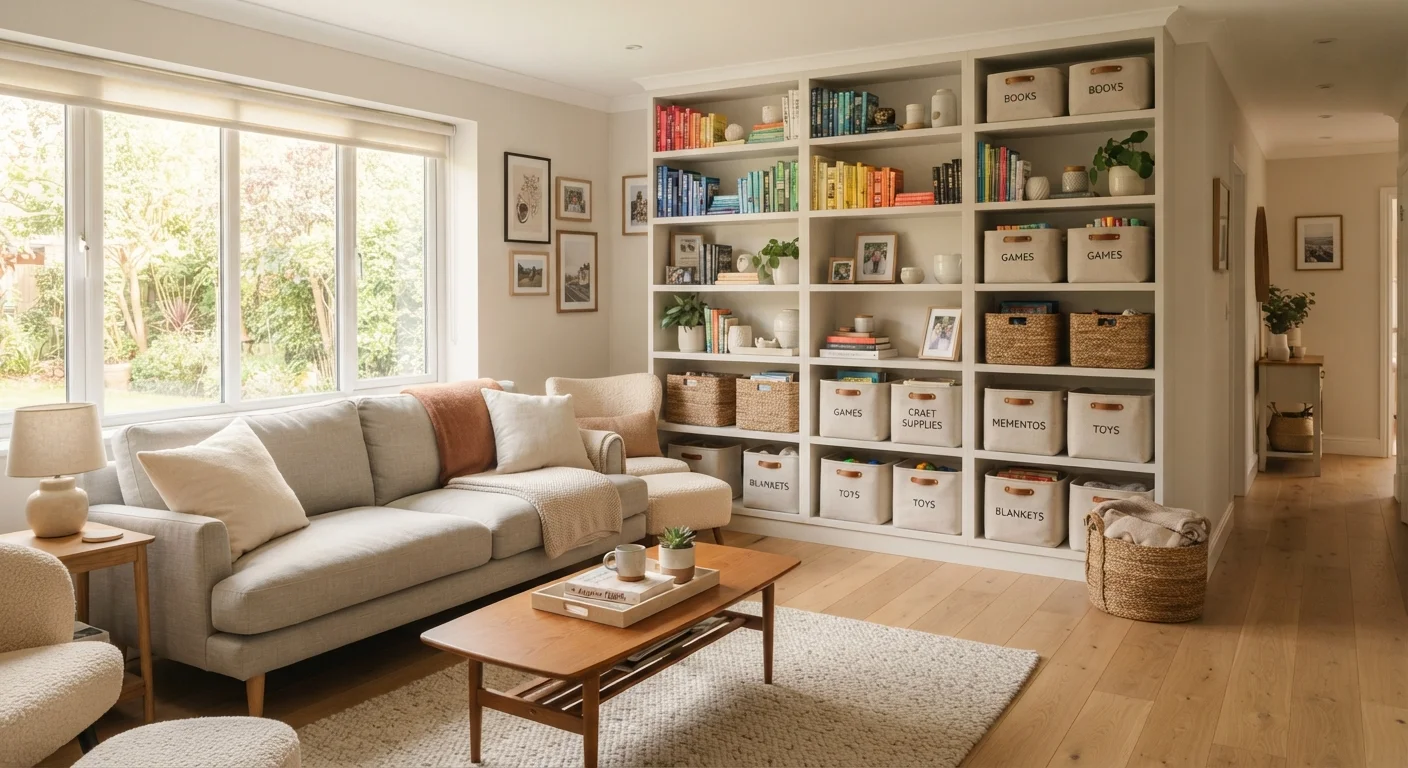
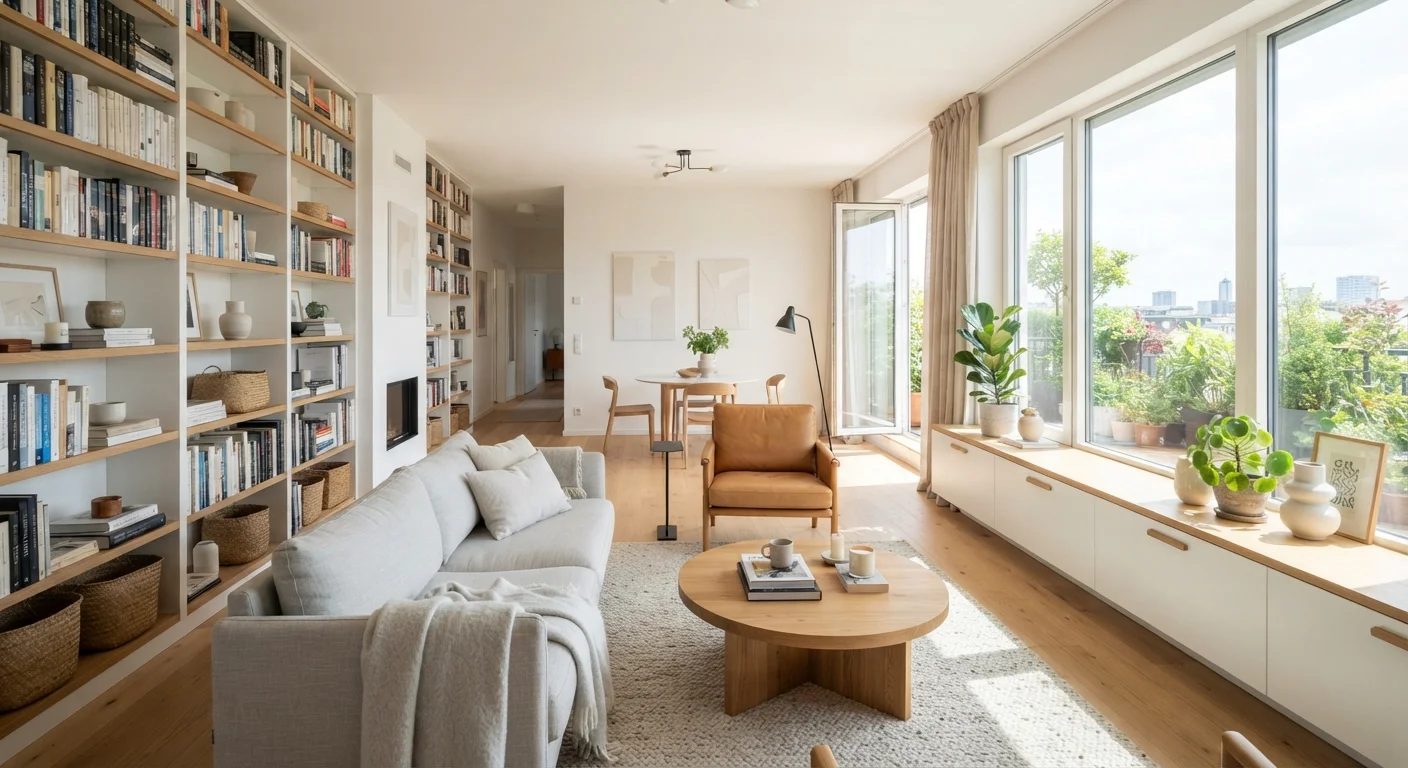
- Living rooms and home offices: Open shelving shines here, especially for books, plants, and curated objects. Since there's less moisture and grease, dust is the primary maintenance concern rather than sticky residue.
- Laundry rooms and utility spaces: Closed cabinets or a combination of open utility shelves with doors on lower sections tends to work best for hiding cleaning products and irregular items.
If maximizing every inch is a priority, consider how vertical versus horizontal storage strategies interact with both open and closed configurations - ceiling-height cabinets, for instance, combine closed storage with maximum vertical use.
A Note on Structural Considerations
Installing wall-mounted open shelving or upper cabinets requires anchoring into wall studs or using appropriate wall anchors rated for the load. Heavy items - cast iron cookware, large book collections - can exceed the safe load rating of standard shelf brackets. If you're unsure about your wall type or load capacity, consult a qualified contractor before installation. Improperly anchored shelving is a safety risk, not just a cosmetic one.
Making a Hybrid Approach Work
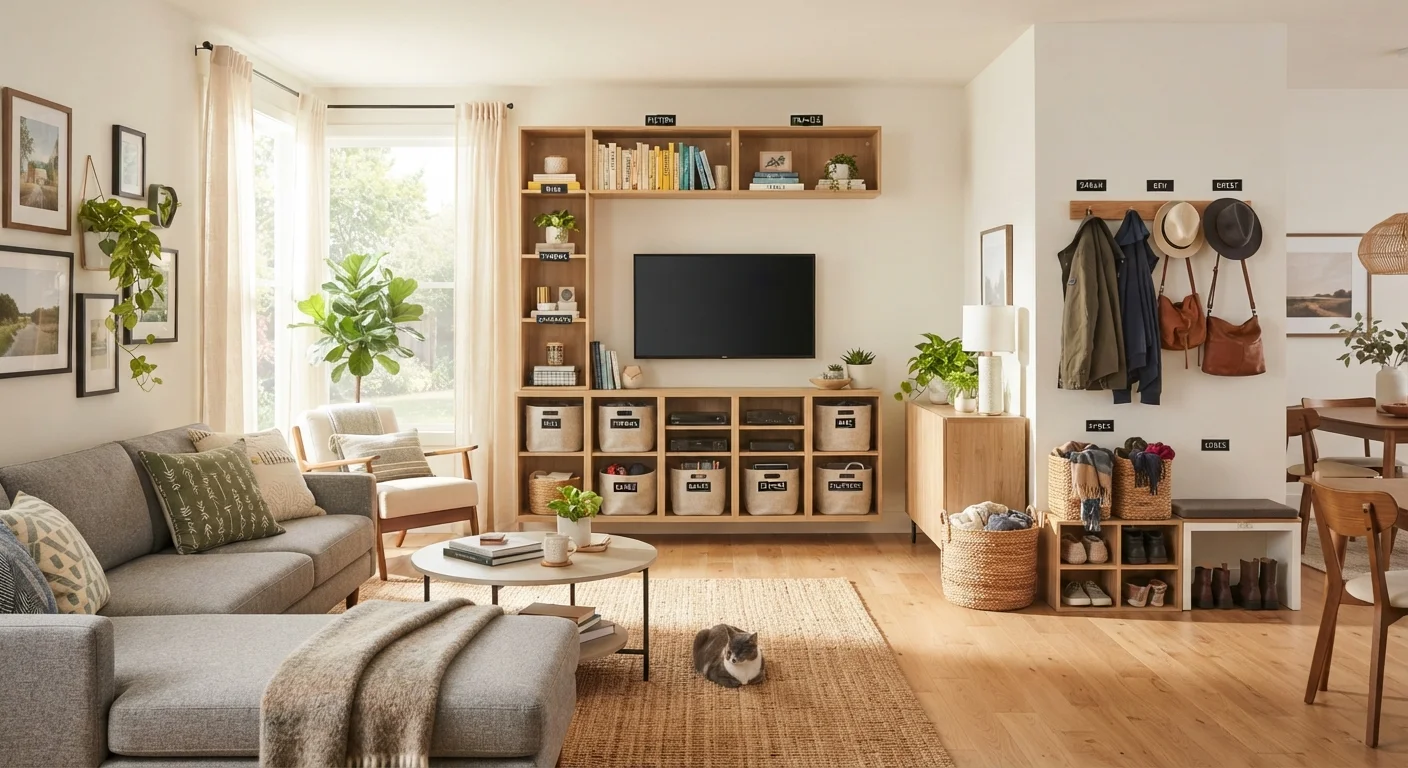
Most well-organized homes use a blend of both systems rather than committing entirely to one. The practical rule of thumb: use open shelving for items you want quick access to and are proud to display, and closed cabinets for everything else.
In kitchens, this might mean open shelves for everyday dishes and closed drawers for utensils, cleaning supplies, and pantry staples. In a home office, open shelves can house reference books and a few meaningful objects, while a closed credenza handles paperwork, cords, and supplies you don't want to see constantly.
If your home is compact, the visual weight of closed cabinets can feel oppressive, while open shelving maintains a sense of airiness. Small-space organization strategies often lean toward a careful hybrid - enough closed storage to hide clutter, enough open shelving to prevent the room from feeling boxed in.
Ultimately, the best storage system is the one your household will actually maintain. Choosing closed cabinets when you realistically need fast, frequent access to many items will lead to frustration. Choosing open shelving when no one in the house has the bandwidth to keep surfaces tidy will add visual stress rather than relieve it. Start with honest self-assessment, then design around it.