A practical, season-by-season checklist to help you audit your belongings, clear out what you no longer need, and stay ahead of clutter.
Key Takeaways
Decluttering every three months prevents clutter from quietly accumulating into an overwhelming backlog.
Each season brings distinct categories to review - from outerwear and sports gear to pantry staples and paperwork.
Sorting items into donate, discard, relocate, and keep categories speeds up decisions significantly.
Combining decluttering with seasonal home maintenance makes both tasks more efficient.
Consistency matters more than perfection - even a partial quarterly audit beats doing nothing.
Why a Quarterly Cadence Works
Most clutter doesn't arrive all at once - it drifts in gradually, one unused gadget or outgrown piece of clothing at a time. By the time it becomes visible, sorting through it feels like a major project. A quarterly rhythm breaks that cycle.
Reviewing your belongings every three months aligns naturally with seasonal life changes: wardrobes rotate, outdoor furniture comes in and out, kids' activity gear shifts, and pantry supplies turn over. These natural transition points give you a built-in reason to open drawers and closets you might otherwise ignore for months.
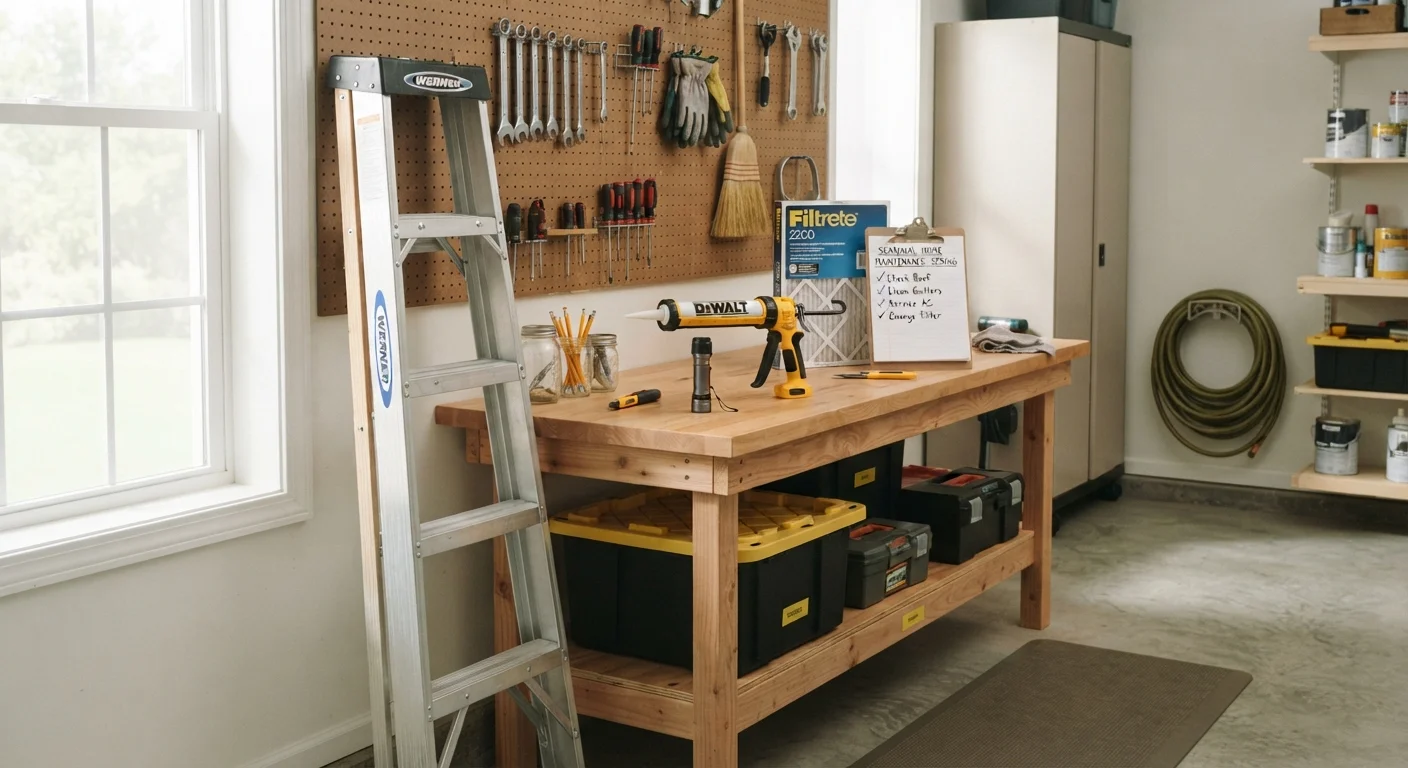
If you already run through a seasonal home maintenance checklist, stack your declutter session on the same weekend. The overlap is efficient - you're already moving through the house systematically. For a deeper look at popular sorting methods before you begin, compare decluttering approaches to find the system that suits your decision-making style.
Closets & Clothing
Pull out the season's outerwear, footwear, and accessories and try on anything you're uncertain about before deciding to keep it.Must
Discard worn-out shoes, single socks without matches, and clothing with stains or damage that you've never bothered to repair.Must
Donate clothing in good condition you haven't worn in the past 12 months, being honest about whether your lifestyle has actually changed.Should
Rotate off-season items to higher shelves or under-bed storage to free up accessible space for what you'll actually reach for.Should
Kitchen & Pantry
Check expiration dates on all pantry staples, spices, canned goods, and condiments, discarding anything past its date.Must
Clear out duplicates - unused gadgets, mismatched containers without lids, and specialty tools used fewer than twice in the past year.Should
Audit your freezer by removing unlabeled bags and items older than three months that are unlikely to be used.Should
Consolidate partial boxes and bags of dry goods into airtight containers to reduce waste and shelf clutter.Nice to have
Garage, Shed & Outdoor Gear
Sort seasonal sports and outdoor equipment, discarding broken items and donating gear that no longer fits your household's activities.Must
Review tools and hardware - return borrowed items, discard duplicates, and dispose of dried-out paint or expired chemicals through your local hazardous-waste program.Must
Store or retrieve seasonal items such as holiday decorations, camping gear, or patio furniture covers based on the upcoming season.Should
Group like items together in clearly labeled bins so the garage doesn't become a catch-all zone again.Should
Paper & Digital Clutter
Shred or recycle old mail, expired coupons, outdated instruction manuals, and receipts older than your return window.Must
File or scan important documents - warranties, tax records, insurance policies - and discard duplicates.Must
Delete unused apps, clear your phone's camera roll of redundant screenshots and blurry photos, and unsubscribe from email lists you never read.Nice to have
Bathrooms & Medicine Cabinet
Remove expired medications and dispose of them through an approved take-back program - do not flush or bin them.Must
Discard opened beauty and skincare products older than their period-after-opening symbol indicates, typically 6-24 months.Should
Pare back the collection of travel-size toiletries and hotel freebies to only what you realistically use.Nice to have
Kids' Rooms & Shared Spaces
Review toys, books, and games quarterly - children outgrow items quickly, and donation keeps them in use rather than collecting dust.Must
Sort completed school projects, artwork, and papers, keeping a curated selection and recycling the rest.Should
Audit shared living spaces for items that have no clear owner or designated place and assign them one before they become permanent fixtures.Should
What to Do With Everything You Pull Out
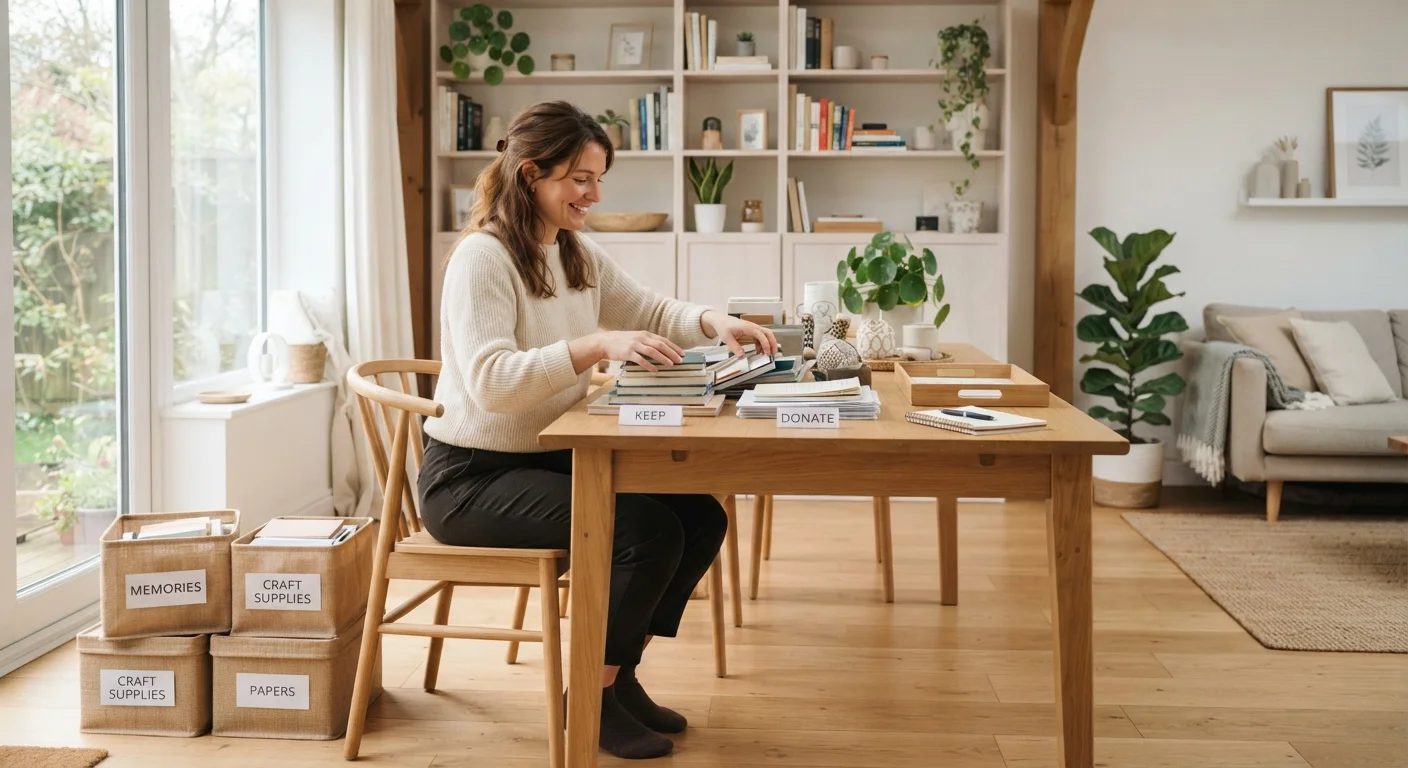
Speed up decisions by keeping four labeled boxes or bags nearby: Donate, Discard, Relocate (belongs elsewhere in the house), and Keep. The goal isn't perfection - it's moving items off the fence and into a category within seconds.
Required
Cardboard boxes or reusable bins (×4)
Label one each for Donate, Discard, Relocate, and Keep to speed up sorting decisions room by room.
Required
Permanent marker and masking tape
Quickly label boxes, storage containers, and bags so nothing ends up back in the wrong place.
Required
Document shredder
Safely destroy personal information from old mail, financial statements, and expired documents before recycling.
Optional
Donation bags (heavy-duty)
Keep clothing and soft goods separated from hard items so donations are ready to drop off without repackaging.
Optional
Smartphone inventory app
Photograph and log valuables being donated for insurance or tax-record purposes before items leave the house.
Items in good condition that you haven't used in over a year are strong donate candidates. Expired, broken, or single-use items with no clear future use belong in the discard pile. Anything you're keeping should have a designated home before you close the drawer.
Don't Declutter on Behalf of Others
When sorting shared spaces, only make decisions about your own belongings. Discarding or donating another household member's items without their input - even with good intentions - can damage trust and create conflict. Loop in everyone affected before removing shared items, and give children age-appropriate say over their own belongings.
Hazardous Items Need Special Handling
Old paint, batteries, fluorescent bulbs, electronics, and expired medications should never go straight into household trash or recycling. Contact your local municipality or check Earth911.com for approved drop-off locations and take-back programs. Improper disposal can carry environmental or legal consequences.
Once you've sorted a room or category, schedule donations within the same week. Bags left sitting in a hallway have a habit of migrating back into closets. Staying organized after the initial sort is its own skill - these habits for maintaining an organized home can help you build routines that stick.
Home & Living Editorial Team is the collective byline for our editorial team and contributor network. Articles published under this byline or an editorial pen name are researched, written, and reviewed according to our editorial standards for clarity, consistency, and independence before publication.
The content provided on our blog site traverses numerous categories, offering readers valuable and practical information. Readers can use the editorial team’s research and data to gain more insights into their topics of interest. However, they are requested not to treat the articles as conclusive. The website team cannot be held responsible for differences in data or inaccuracies found across other platforms. Please also note that the site might also miss out on various schemes and offers available that the readers may find more beneficial than the ones we cover.