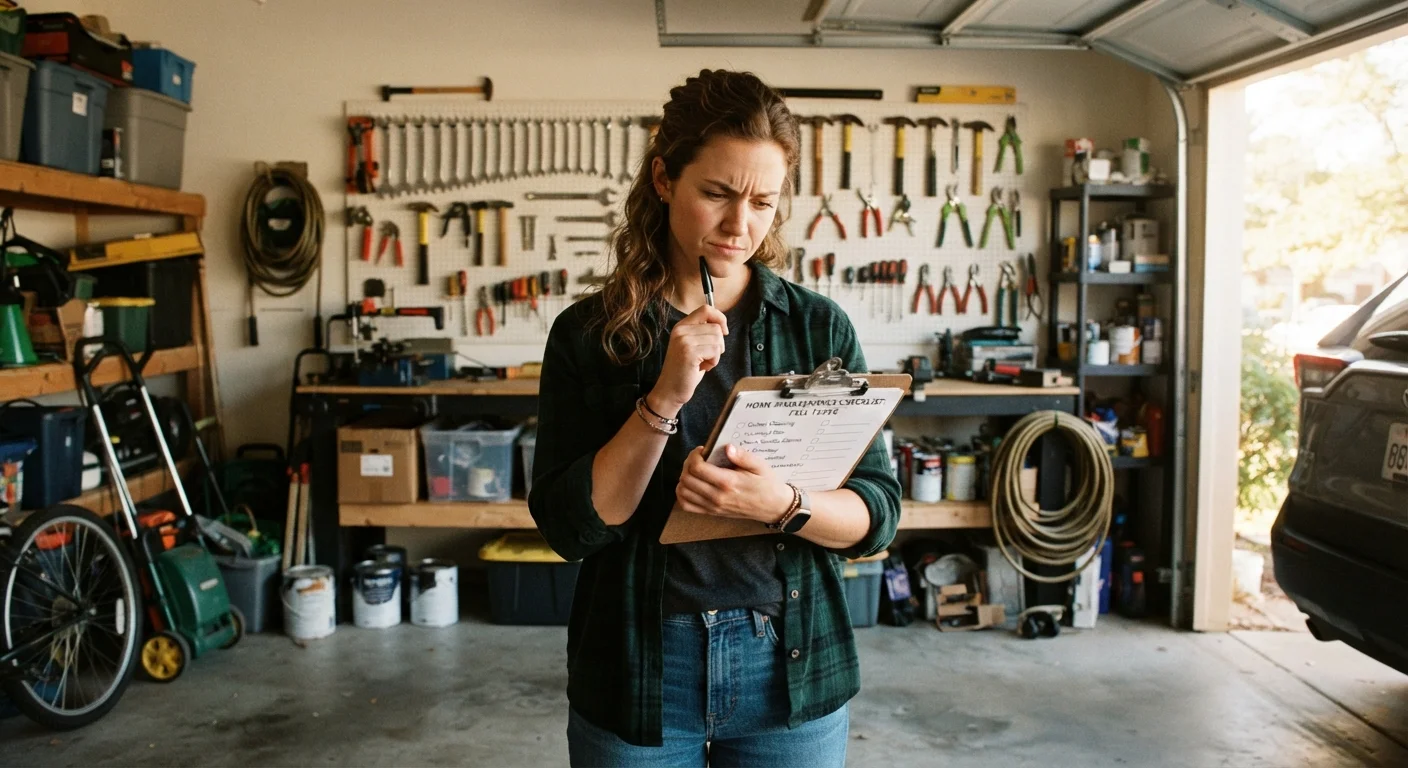
A quarterly checklist covering the essential inspections, cleanings, and tune-ups that keep a home running safely year-round.
Key Takeaways
Quarterly maintenance prevents small issues from turning into expensive repairs over time.
Most tasks require only basic tools and no licensed professional, but some - like electrical or gas work - always do.
Seasonal timing matters: what you inspect in spring differs meaningfully from what you check in fall.
Permits or professional help are required for certain structural, electrical, and gas-related tasks.
Pairing this checklist with a seasonal declutter routine keeps your home organized and well-maintained.
Why a Quarterly Schedule Works
Homeownership rewards consistency. A quarterly maintenance routine - roughly aligned with each new season - ensures you're always one step ahead of weather-related wear, hidden leaks, and aging systems. Rather than reacting to problems, you're preventing them.
If you're still finding your footing with the basics, our first-year homeowner roadmap covers the broader picture of what new owners often miss. And if you're already noticing things you've been delaying, common deferred tasks to address explains exactly why sooner is almost always cheaper than later.
Use the checklist below every three months - ideally at the start of each season - and pair it with a seasonal declutter pass to make the most of your time at home.
Interior Systems (Every Quarter)
Replace HVAC air filters - standard 1-inch filters typically need changing every 1-3 months depending on household dust and pet dander levels.Must
Test all smoke detectors and carbon monoxide alarms by pressing the test button, and replace any batteries that are low.Must
Inspect under sinks in the kitchen and bathrooms for signs of moisture, slow drips, or discoloration on cabinet floors.Must
Run water in any infrequently used drains (guest bathrooms, basement utility sinks) to prevent trap evaporation and sewer gas entry.Should
Check that all GFCI outlets in kitchens, bathrooms, garages, and outdoors reset and trip properly using the test/reset buttons.Should
Exterior and Roof (Every Quarter)
Walk the full perimeter of your home and look for new cracks in the foundation, gaps around window frames, or damaged caulking that could allow water intrusion.Must
Clear gutters and downspouts of debris, and confirm downspouts direct water at least 4-6 feet away from the foundation.Must
Visually inspect the roof from the ground using binoculars - look for missing, curled, or cracked shingles, and check that flashing around chimneys and vents appears intact.Must
Check exterior caulking around doors, windows, and penetrations (pipes, conduit), and re-apply where it has cracked or pulled away.Should
Look for peeling paint, rot, or soft spots on wood siding, trim, fascia, or deck boards.Should
Spring-Specific Tasks (Q2)
Inspect window and door screens for tears or bent frames, and repair or replace them before mosquito season begins.Should
Check the driveway and walkways for winter frost-heave damage - fill cracks in concrete or asphalt before water widens them further.Should
Service or test your air conditioning system - change the filter, clear debris from the outdoor condenser unit, and schedule a professional tune-up if the system hasn't been serviced in over a year.Must
Flush the water heater to remove sediment buildup, which can reduce efficiency and shorten the appliance's lifespan.Nice to have
Summer-Specific Tasks (Q3)
Inspect the attic for signs of heat-related moisture, pest entry, or inadequate insulation - excessive heat can accelerate shingle damage from the inside.Should
Check exterior hose bibs and irrigation systems for leaks or pressure issues; inspect sprinkler heads for misalignment.Should
Test your garage door's auto-reverse safety feature by placing a 2x4 flat on the ground in the door's path - it should reverse immediately on contact.Must
Fall-Specific Tasks (Q4)
Have your heating system professionally inspected and serviced before the first cold snap - this applies to furnaces, boilers, and heat pumps.Must
Drain and shut off exterior hose bibs before the first hard freeze to prevent pipe bursting.Must
Inspect weatherstripping on all exterior doors and replace any that is compressed, torn, or no longer sealing properly.Should
Have your chimney and fireplace inspected and cleaned by a certified chimney sweep if you use a wood-burning fireplace or stove.Must
Winter-Specific Tasks (Q1)
Check attic insulation and ventilation to ensure there is no ice dam risk - ice dams form when heat escapes unevenly and cause water to back up under shingles.Should
Locate and label your main water shut-off valve so you can act quickly if a pipe bursts.Must
Inspect exposed pipes in unheated spaces (garage, crawl space, basement) and confirm any pipe insulation is intact.Must
Keep cabinet doors under kitchen and bathroom sinks open during extreme cold snaps to allow warm air to reach pipes along exterior walls.Nice to have
Tools and Supplies to Have on Hand
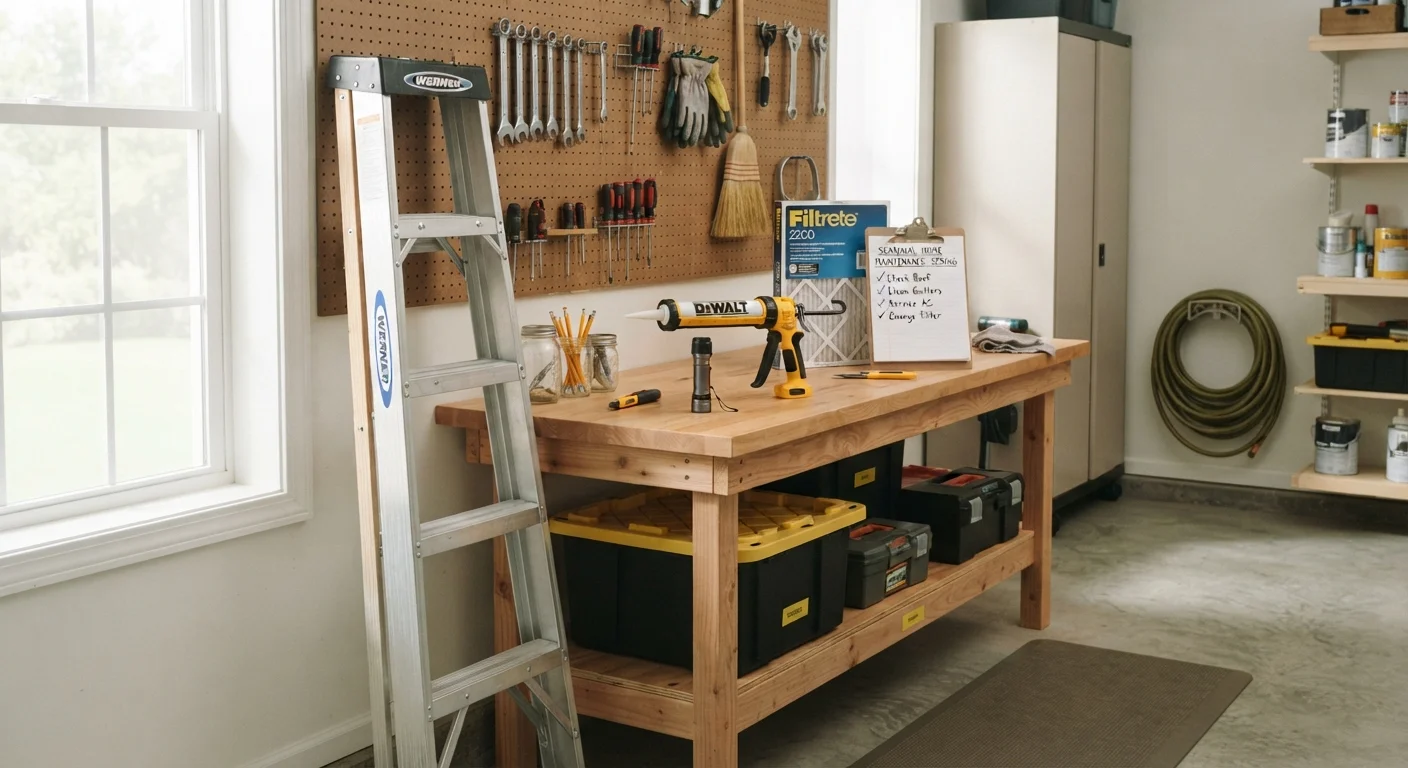
You don't need a fully stocked workshop to complete this checklist. A small set of reliable tools will cover most quarterly tasks. For anything involving your electrical panel, gas lines, or structural elements, always contact a licensed professional - these are not DIY categories regardless of skill level.
Required
Flathead and Phillips Screwdrivers
Used to open HVAC filter housings, outlet covers, and access panels during inspection tasks.
Required
Flashlight or Headlamp
Essential for inspecting crawl spaces, attics, under sinks, and other low-light areas.
Required
Caulking Gun and Silicone Caulk
Used to seal gaps around windows, doors, and exterior penetrations to prevent water and air infiltration.
Required
Binoculars
Allows safe roof inspection from the ground without requiring ladder access.
Required
Ladder (6-foot step ladder minimum)
Needed to safely access gutters, exterior light fixtures, and some attic hatches.
Required
Replacement HVAC Filters
Keep at least one correctly sized filter on hand so quarterly replacements don't get skipped.
Optional
Non-contact Voltage Tester
Allows you to confirm power is off before investigating an electrical issue - never touch wiring without one.
Never DIY Electrical, Gas, or Structural Repairs
Inspection is safe - intervention is a different matter. If your quarterly walkthrough reveals a suspected gas leak, a tripped breaker that won't reset, foundation cracking that has worsened, or roof decking damage, stop and call a licensed professional. These systems can cause serious injury, structural failure, or fire when handled incorrectly. Your local building department can help you confirm when a permit is required.
A Note on Permits and Professional Help
Many of the tasks in this checklist are genuinely homeowner-friendly. But several maintenance categories - particularly HVAC servicing beyond filter changes, any work touching gas appliances, and repairs to roofing or structural components - may require permits or licensed contractors depending on your municipality. Always check local building codes before starting work that goes beyond inspection and cleaning.
Carbon monoxide (CO) is colorless and odorless - there is no warning without a working detector. Test CO alarms every quarter alongside smoke detectors, and replace units that are more than 5-7 years old (check the manufacture date on the back). The U.S. Consumer Product Safety Commission recommends at least one CO detector on every level of your home, including outside sleeping areas.
Home & Living Editorial Team is the collective byline for our editorial team and contributor network. Articles published under this byline or an editorial pen name are researched, written, and reviewed according to our editorial standards for clarity, consistency, and independence before publication.
The content provided on our blog site traverses numerous categories, offering readers valuable and practical information. Readers can use the editorial team’s research and data to gain more insights into their topics of interest. However, they are requested not to treat the articles as conclusive. The website team cannot be held responsible for differences in data or inaccuracies found across other platforms. Please also note that the site might also miss out on various schemes and offers available that the readers may find more beneficial than the ones we cover.