What Minimalism Actually Means at Home
Minimalism, as a home-organizing philosophy, means intentionally keeping only what you use, need, or genuinely value - and creating systems that prevent excess from creeping back in. It's not about bare white walls or owning fewer than 100 things. It's about reducing the friction that comes from managing more stuff than your space or routine can comfortably handle.
For young homeowners feeling the squeeze of limited square footage or chaotic schedules, the appeal is obvious. But before committing to a significant overhaul, it helps to understand exactly what you're trading - and what you're trading it for. If you're also weighing different decluttering frameworks, the decluttering methods comparison breaks down which systems work best for different personality types.
The Real Advantages
The benefits of a more minimal home aren't just aesthetic - they're functional and measurable.
Easier, faster daily cleaning and tidying
Fewer objects on surfaces means less to move, dust, or reorganize. Many minimalist households report measurably shorter weekly cleaning routines.
Reduced decision fatigue around the home
When everything has a place and there's less overall, decisions about where things go - and whether to keep something new - become simpler and faster.
Lower ongoing cost of maintaining possessions
Fewer items means fewer things to repair, replace, store, or insure. Over time this can translate to real savings, particularly on storage and replacements.
Calmer visual environment linked to lower stress
Environmental psychology research suggests that cluttered visual fields are associated with elevated stress responses - a less-loaded room can support a more restful mindset.
Easier to keep a home guest-ready
A home with less stuff requires less frantic tidying before guests arrive, reducing a common source of household anxiety.
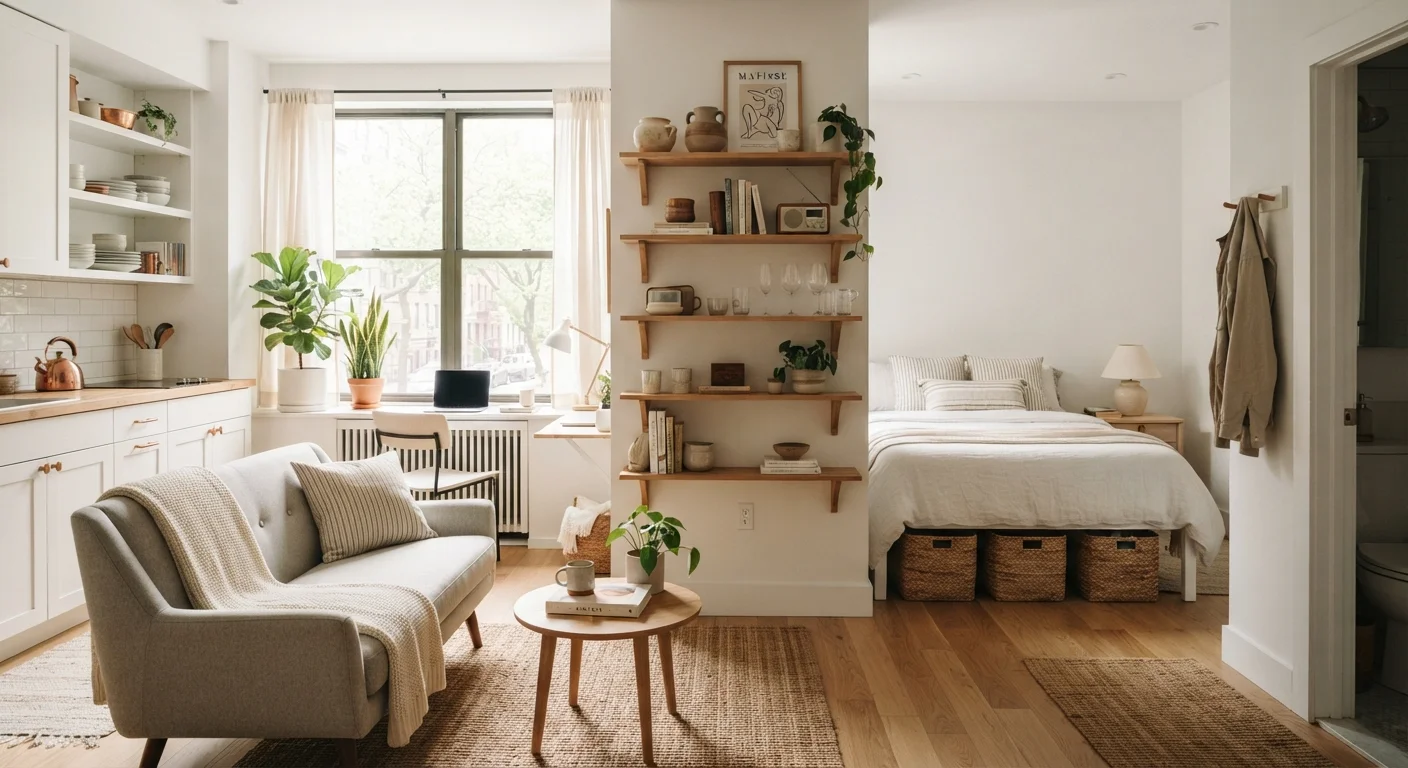
Reduced visual clutter has a documented effect on stress levels, with research in environmental psychology suggesting that disordered environments can contribute to elevated cortisol. Practically speaking, a home with fewer items is faster to clean, easier to navigate, and simpler to maintain. If you live in a compact space, these gains are amplified - see how the principles connect with small-space organizing strategies for apartment dwellers.
The Honest Disadvantages
Minimalism has a reputation for solving problems, but it introduces its own friction points - especially in shared households or during the transition period.
Transition requires significant time and effort
Sorting through years of accumulated belongings is genuinely labor-intensive. Most households underestimate how many hours the initial process takes.
Can conflict with housemates' or family members' needs
A minimalist standard applied unilaterally in a shared home creates resentment. People have different functional needs and emotional attachments to their possessions.
Hobby and family gear rarely fits minimalist standards
Sports equipment, craft supplies, children's toys, and tools serve genuine purposes. Eliminating them in the name of aesthetics often creates practical inconvenience.
Risk of regret after discarding useful items
Aggressive decluttering sessions can lead to removing things you later need, requiring re-purchase at cost. A slower, more deliberate process reduces this risk.
Upfront costs before long-term savings materialize
Donation runs, storage solutions, and organizational tools may require spending before the financial benefits of owning less begin to show.
Can become a source of new anxiety if taken too far
For some people, rigid minimalist rules create stress about new purchases or guests bringing items into the home - replacing one type of anxiety with another.
One underappreciated challenge is the social dimension. When you share a home, your minimalism isn't everyone's minimalism. Imposing a pared-back standard on housemates or partners who don't share that preference creates conflict rather than calm. Organizing a home with multiple people requires compromise, and rigid minimalism rarely allows for it.
The Transition Costs People Don't Talk About
Getting to a minimalist home isn't free - in time, money, or emotion. Many people underestimate the hours required to sort through accumulated belongings, decide what stays, and find appropriate ways to donate, sell, or dispose of what goes. If you're selling items rather than donating, that process adds weeks. Storage solutions - bins, drawer organizers, new shelving - can involve meaningful upfront costs before you see savings downstream.
Start With One Room, Not the Whole House
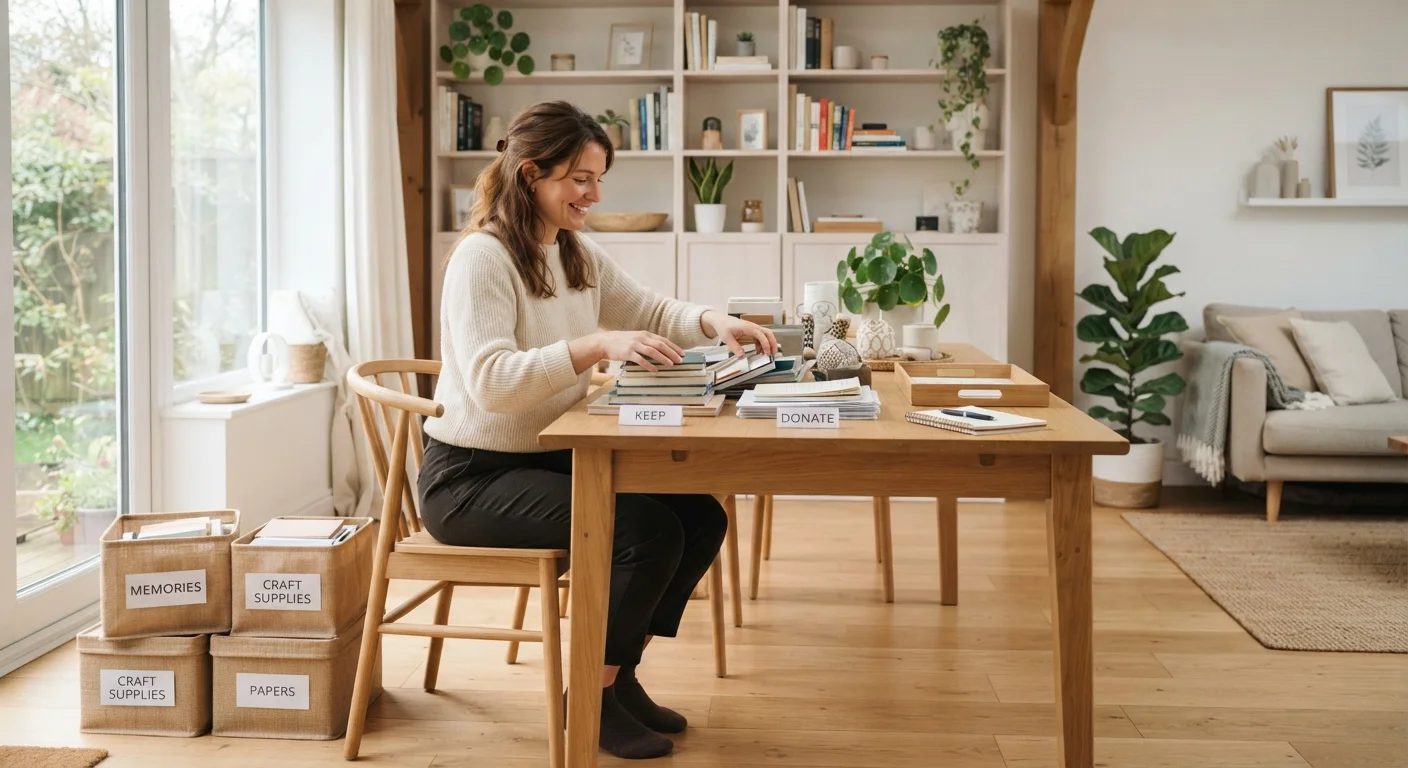
Attempting to minimize an entire home in one effort is a reliable path to burnout and regret. Choose one room or category - clothing, kitchen gadgets, books - and complete that before expanding. This builds the decision-making muscle gradually and gives you a finished space to reference as motivation. Most people find the process becomes faster and less emotionally taxing with practice.
There's also an emotional cost. Possessions often carry memory or meaning, and discarding them requires real decision-making energy. Spreading the process across several weekends - rather than attempting a single marathon session - tends to produce better results and less regret.
Finding a Version That Works for Your Life
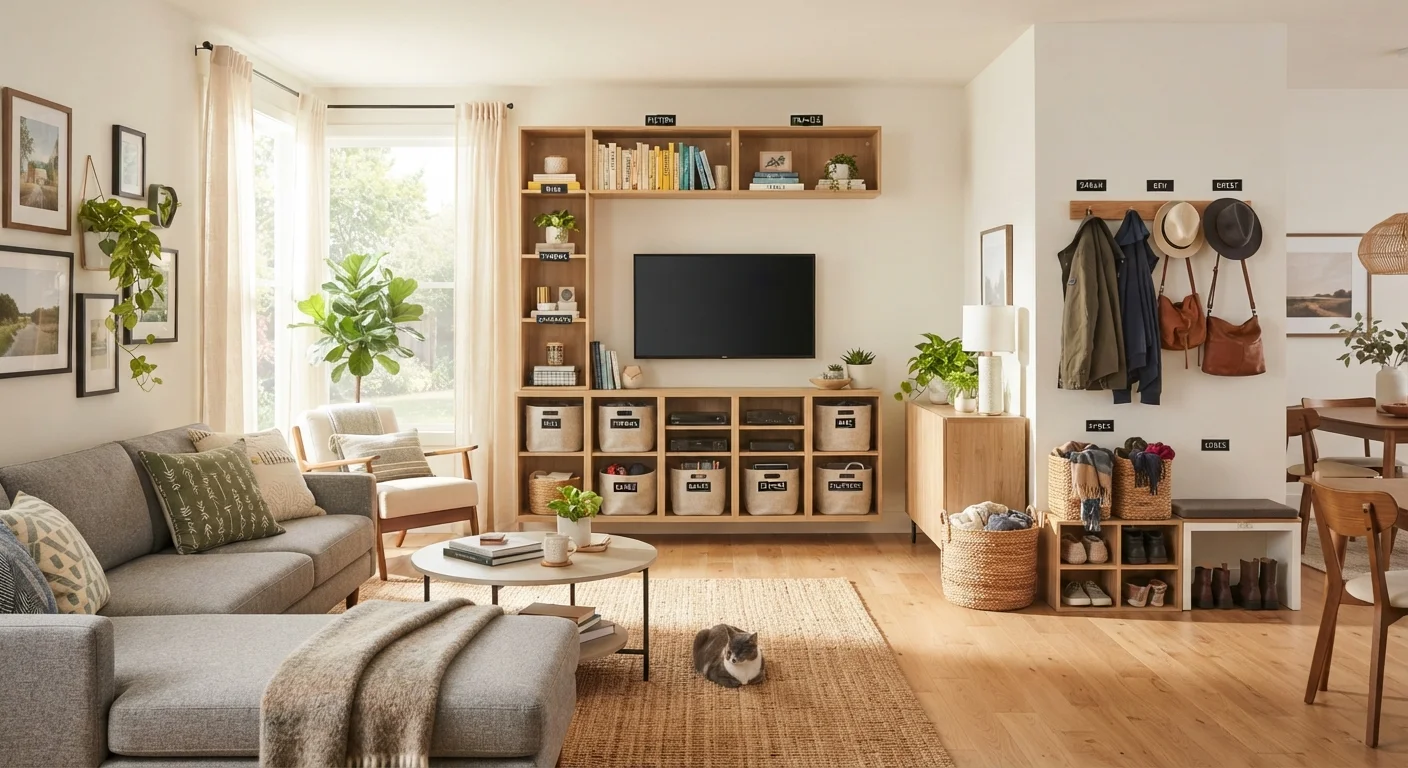
Minimalism doesn't have to be binary. A practical middle ground works for many households: focus on high-friction areas first - entryways, kitchen counters, and bathroom surfaces - where clutter tends to accumulate and affect daily routines most directly. Leave spaces tied to hobbies or children largely intact, since stripping those areas of necessary gear creates inconvenience without meaningful benefit.
80%
Items in typical homes rarely or never used
Organizational researchers commonly cite estimates that the majority of household possessions are used infrequently, though exact figures vary by study and household type.
40%
Reduction in housework with less clutter
A study referenced by the National Soap and Detergent Association suggested that eliminating clutter could reduce the time spent on housework by roughly 40 percent.
Periodic reassessment matters more than a one-time purge. Building a habit of reviewing what comes into your home - rather than periodically clearing out what's accumulated - is what sustains a less-cluttered environment long term. This kind of intentional consumption also tends to align naturally with broader financial habits; general guidance on managing everyday spending is available through budgeting basics if that's a parallel goal.