What Each Path Actually Is
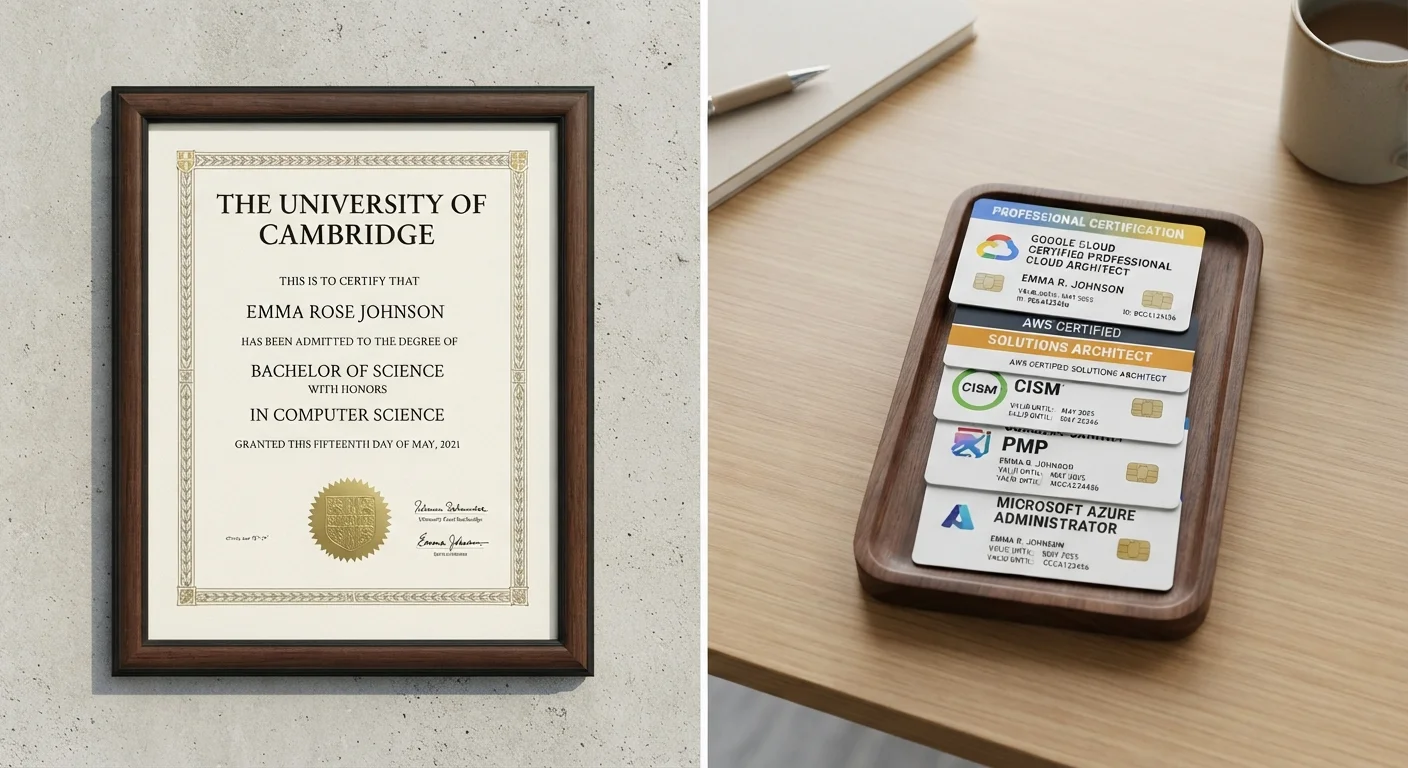
Before comparing the two, it helps to be precise about what each term means. A traditional degree - typically an associate, bachelor's, or graduate-level award - is granted by an accredited college or university after completing a structured, multi-year curriculum. Degrees are broad by design: they combine general education requirements with a major field of study and are governed by regional or national accreditation standards.
Stackable credentials are shorter-form qualifications - certificates, certifications, badges, or diplomas - structured so that each one can build on the last. The "stackable" concept means that completing credential A can count toward credential B, which may eventually apply to a larger qualification or even articulate into a degree program. For a plain-language breakdown of the terminology involved, see our Online Certificates and Credentials glossary.
The key structural difference: degrees are comprehensive and fixed in scope, while stackable credentials are modular and additive.
Head-to-Head: Cost, Time, and Recognition
The most immediate practical differences show up in three areas: what you pay, how long it takes, and how widely the credential is recognized.
| Criterion | Stackable Credentials | Traditional Degrees |
|---|---|---|
| Typical time to complete | Weeks to 12 months | 2-4+ years |
| Average cost range | Hundreds to low thousands | Tens of thousands |
| Curriculum structure | Modular, targeted | Broad, fixed sequence |
| Employer recognition | Varies by field and issuer | Broadly recognized baseline |
| Renewal required | Usually yes (periodic) | No |
| Applies to licensed professions | Rarely on its own | Often required |
| Stackability toward further study | Often - by design | Limited articulation |
On cost, the gap is substantial. A four-year degree at a public university carries average total costs well into the tens of thousands of dollars. Individual stackable credentials can range from a few hundred to a few thousand dollars - though costs vary widely depending on the awarding body and field. It's worth noting that not all stackable credentials carry the same employer recognition, so cost alone isn't a reliable indicator of value. Our article on online certificates vs. accredited certifications explains why the type of credential matters as much as the topic it covers.
36%
U.S. adults with a bachelor's degree or higher
According to U.S. Census Bureau data, roughly one in three American adults holds at least a four-year degree, leaving a substantial portion of the workforce reliant on alternative credentials.
1 in 4
Job postings dropping degree requirements
Research from Burning Glass Institute and others has found a measurable share of employers have removed four-year degree requirements from postings previously requiring them, particularly in technical roles.
~$11,000
Average in-state public university annual tuition
The College Board's Trends in College Pricing reports consistent annual tuition figures at public four-year institutions, not including room, board, or fees.
On recognition, traditional degrees still hold a broader default advantage across industries - but that advantage is narrowing in technical fields such as information technology, cybersecurity, healthcare support, and skilled trades, where employers increasingly prioritize demonstrated competency over credential type.
Career Outcomes: Where Each Credential Earns Its Keep
Career outcomes depend heavily on where you want to work, not just what you earn. Stackable credentials tend to perform well in fields with defined skills frameworks - IT certifications in networking or cloud platforms, healthcare credentials in medical coding or phlebotomy, or project management credentials recognized across industries. In these contexts, a well-recognized certification from an established body can carry real hiring and salary weight.
Traditional degrees remain the expectation - or the legal requirement - in licensed professions and in management pipelines at many large organizations. Graduate degrees are also commonly required for advancement in research, academia, and some clinical roles.
Importantly, the two are not mutually exclusive. Many professionals pursue stackable credentials alongside or after a degree to stay current or pivot within their field. If you're weighing two credentials against each other within the same field, the framework for choosing between certifications can help you apply a structured decision process.
One additional consideration: stackable credentials require ongoing maintenance. Most certifications have renewal cycles tied to continuing education. See how credential renewal works to understand what staying compliant actually involves.
Micro-Credentials: A Related but Distinct Category
Micro-credentials are sometimes grouped with stackable credentials, but they occupy a narrower slice of the landscape - typically covering a single skill or competency rather than a job-role pathway. Their value is genuinely mixed depending on the issuer and industry. For a balanced look, see our realistic assessment of micro-credentials.