
Why Credit Report Errors Happen — and Why They Matter
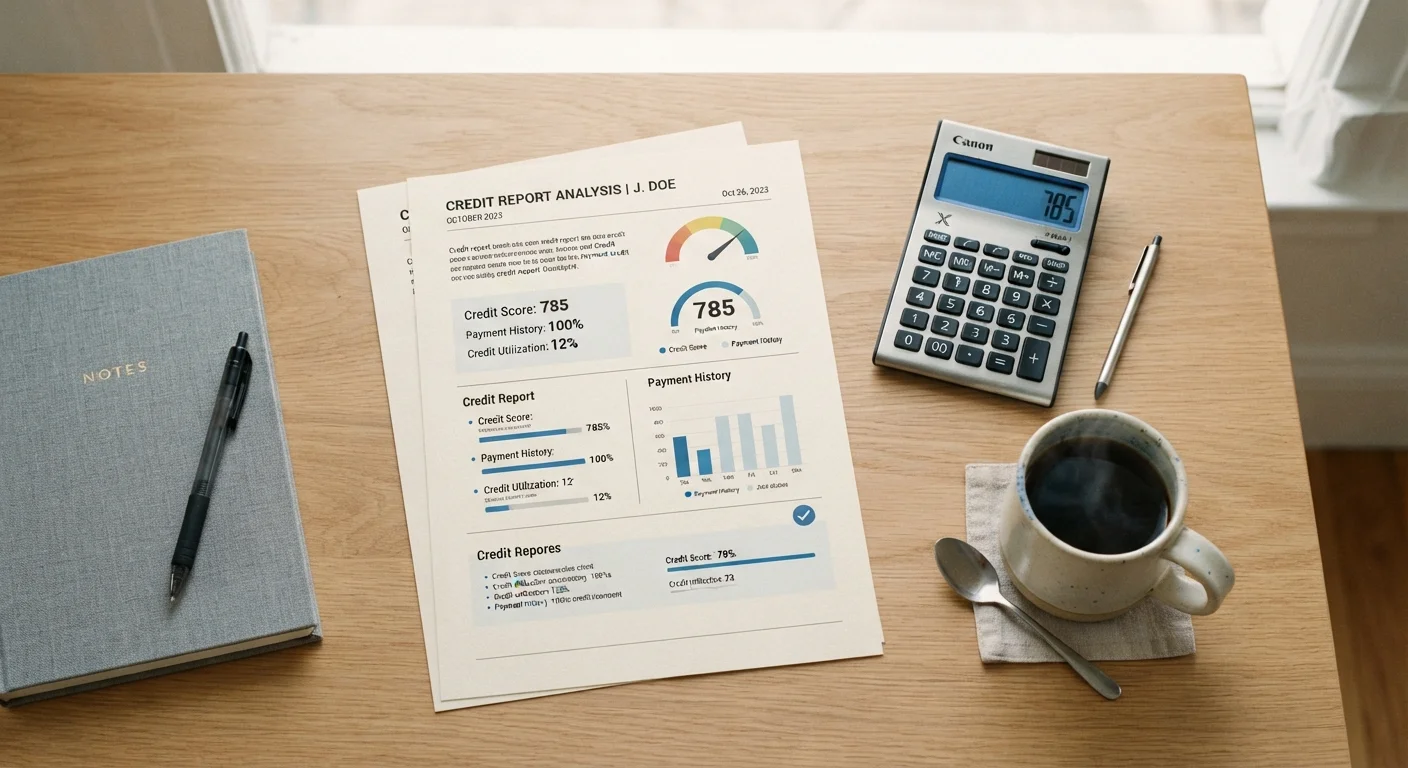
Credit reports are generated by combining data from lenders, collection agencies, and public records. With that many moving parts, errors are more common than most people expect. A study by the Federal Trade Commission found that roughly one in five consumers had an error on at least one of their credit reports — and that some of those errors were significant enough to affect creditworthiness.
Errors can take several forms: an account that doesn't belong to you (sometimes a sign of identity theft), a late payment incorrectly reported, a balance that doesn't match your records, or a negative item that should have aged off your report. Even a small inaccuracy can lower your credit score, which directly affects the interest rates you're offered on mortgages, auto loans, and credit cards.
If you're uncertain how errors interact with your overall score, common credit score myths are worth reviewing before you dive into the dispute process.
What you will need
How to Dispute a Credit Report Error: Step by Step
The dispute process has a defined legal framework under the Fair Credit Reporting Act (FCRA). Following the steps carefully — and in the right order — gives your dispute the best chance of success.
Pull your credit reports from all three bureaus
Visit AnnualCreditReport.com — the only federally authorized source — to request your reports from Equifax, Experian, and TransUnion. Review each report separately, since information can differ across bureaus. Look for accounts you don't recognize, incorrect personal information, duplicate entries, and any negative items that seem outdated.
Document the specific error with supporting evidence
For each error you identify, gather documentation that contradicts the reported information. This might include bank statements showing an on-time payment, a letter from a creditor acknowledging a mistake, or account closure confirmations. Be specific: note the account name, account number, and exactly what is wrong (e.g., "balance reported as $2,400 — actual balance is $0 as of account closure").
Submit a formal dispute to the relevant bureau
Each bureau has an online dispute portal, a mailing address, and a phone line. Filing online is the fastest method. When submitting, clearly explain the error, reference the specific account, and attach digital copies of your supporting documents. If mailing, send documents via certified mail with return receipt so you have proof of delivery.
- Equifax: equifax.com/personal/credit-report-services/credit-dispute
- Experian: experian.com/disputes/main.html
- TransUnion: transunion.com/credit-disputes/dispute-your-credit
Dispute the error with the original data furnisher
In addition to contacting the bureau, write to the creditor or lender that supplied the incorrect information. Under the FCRA, data furnishers are also required to investigate disputes. Include the same documentation you submitted to the bureau. This parallel approach can accelerate corrections and creates an additional paper trail.
Track the investigation timeline and follow up
Bureaus must complete their investigation within 30 days of receiving your dispute (45 days if you submit additional information mid-investigation). Mark your calendar and follow up if you haven't received a response within that window. The bureau must notify you of the result in writing and provide a free updated report if changes were made.
Set a Reminder to Re-Check Your Report
After a successful dispute, check the corrected bureau report again within 30–60 days to confirm the fix persists. Some data furnishers inadvertently re-report old information in their next update cycle, which can cause a corrected error to reappear. Catching this quickly means you can escalate without starting from scratch.
Once an error is corrected, keep an eye on your report going forward. Errors can sometimes reappear if the original data furnisher continues sending incorrect information. And if you're planning to apply for new credit soon, our pre-application checklist can help you confirm your profile is in order before you submit.
What Happens After You File — and What to Do If You're Denied
Once you submit a dispute, the bureau must investigate within 30 days (or 45 days if you provide additional information after filing). They'll contact the data furnisher — typically your lender or creditor — who must also investigate and respond. If the furnisher confirms the error or fails to respond, the item must be corrected or deleted.
You'll receive written notification of the outcome. If the bureau rules in your favor, your report will be updated and you can request a free copy of the revised report. If your dispute is rejected, you have options: you can add a 100-word consumer statement to your file explaining your side, re-dispute with additional documentation, file a complaint with the Consumer Financial Protection Bureau (CFPB), or consult a consumer law attorney.
Beware of Credit Repair Companies
Many companies advertise the ability to "remove" negative information from your credit report for a fee. Legitimate negative items cannot legally be removed before they age off — typically seven years for most derogatory marks, ten for bankruptcies. No company can do anything for you that you cannot do yourself for free through the FCRA dispute process. The CFPB advises consumers to be skeptical of any service that promises guaranteed results or charges upfront fees.
It's also worth noting that the dispute process applies separately to each bureau. An error appearing on your TransUnion report won't automatically be corrected on your Equifax or Experian report — you may need to file with multiple bureaus. Similarly, making changes to one account doesn't affect related decisions, such as whether to close unused cards. For more context on how account-level decisions affect your overall profile, see why closing a credit card can hurt your score.