
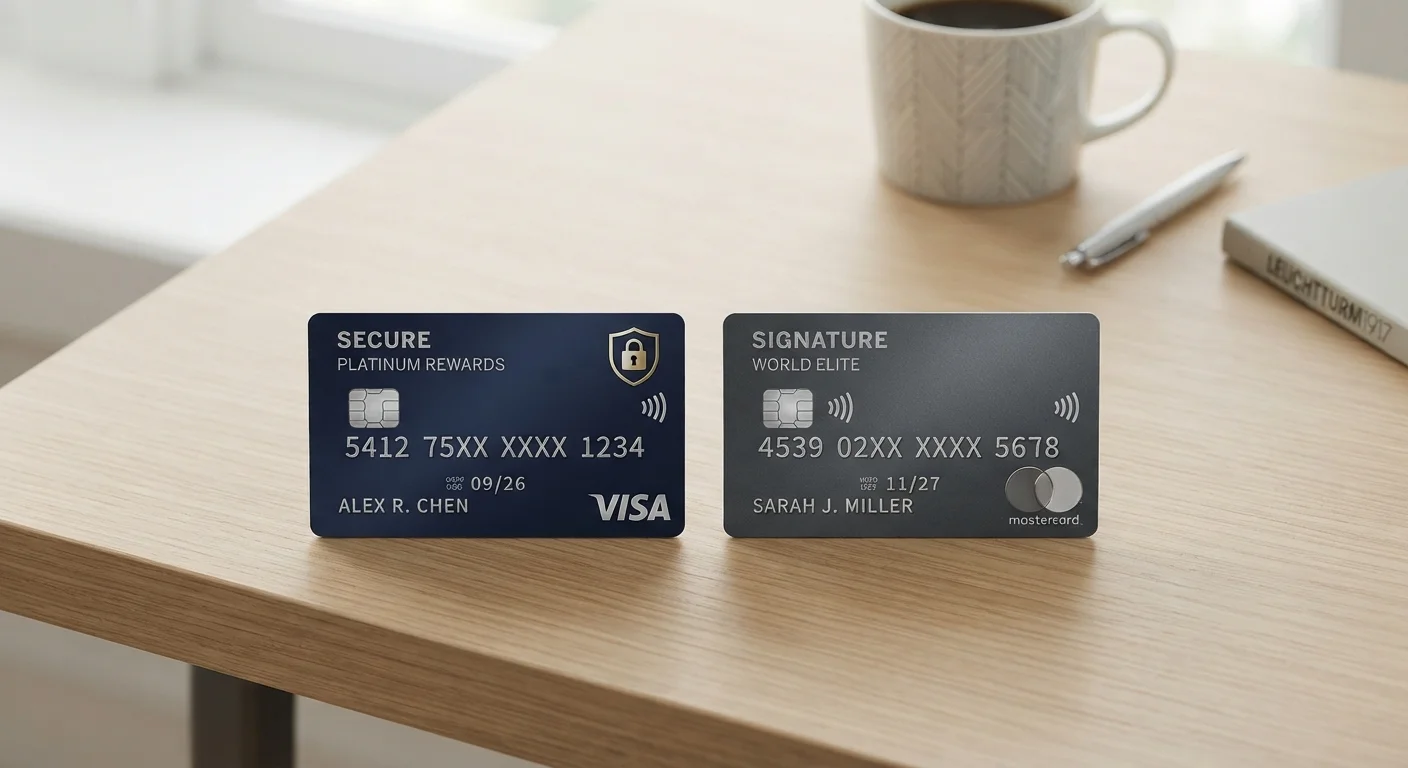
What Makes a Card 'Secured' or 'Unsecured'?
The core distinction between these two card types comes down to collateral — specifically, whether the lender requires one before extending credit to you.
A secured credit card requires you to make a cash deposit upfront, typically ranging from $200 to $500 or more. That deposit is held by the issuer and generally becomes your credit limit. If you stop making payments, the issuer can use that deposit to cover the balance. Because the lender's risk is minimized, secured cards are available to people with thin or damaged credit histories.
An unsecured credit card requires no deposit. Instead, the issuer evaluates your creditworthiness — your credit score, payment history, income, and existing debt — and extends a credit line based on that assessment. This is the format most people picture when they think of a traditional credit card.
Both types report your payment activity to the three major credit bureaus (Equifax, Experian, and TransUnion), which means both can influence your credit score — for better or worse — depending on how you use them.
| Criterion | Secured Credit Card | Unsecured Credit Card |
|---|---|---|
| Deposit required | Yes — typically $200–$500+ | No deposit required |
| Credit score needed | None or very low | Fair to excellent (varies) |
| Credit limit | Usually equals deposit amount | Determined by creditworthiness |
| Annual fees | Often higher relative to limit | Ranges from $0 to significant |
| Rewards programs | Rare or minimal | Commonly available |
| Reports to credit bureaus | Yes | Yes |
| Path to upgrade | Can graduate to unsecured | Starting point; no upgrade path |
How Each Card Fits Into Your Credit Journey
Where you fall in your credit history largely determines which card is accessible — and which makes the most strategic sense.
If you're just getting started, a secured card is one of the most effective tools available. As explained in our guide to building credit from scratch, establishing a payment history is the single most important factor in your credit score. A secured card used responsibly — keeping balances low and paying on time every month — can generate that history within months.
Once your score improves, many issuers will offer to "graduate" your secured card to an unsecured account and return your deposit. This transition is worth tracking: after 12 to 18 months of consistent use, it's reasonable to contact your issuer about upgrading. Note that closing the secured card outright rather than upgrading it could affect your score — our article on why closing a credit card can hurt your score explains the mechanics in detail.
For borrowers with an established credit profile, unsecured cards offer more flexibility: higher credit limits, lower fees, and access to rewards programs. However, higher limits also mean more room to accumulate debt if spending habits aren't controlled. Our piece on signs you may be over-relying on credit outlines the warning patterns worth watching.
35%
Payment history share of FICO score
According to FICO, payment history is the single largest factor in your credit score calculation, making consistent on-time payments critical regardless of card type.
30%
Credit utilization share of FICO score
FICO data shows that amounts owed — particularly your utilization ratio — account for 30% of your score, meaning keeping balances low matters on both secured and unsecured cards.
~45M
Americans with no or thin credit files
The Consumer Financial Protection Bureau (CFPB) has estimated that tens of millions of Americans are credit invisible or have insufficient credit history to generate a mainstream credit score.
Before applying for either card type, consider reviewing the pre-application checklist to understand how a new inquiry and account will affect your existing credit profile.
This article is for general informational and educational purposes only. It does not constitute personalized financial or credit advice. Consult a licensed financial professional for guidance specific to your situation.