Why 'Enrichment' Is More Than a Buzzword
The word enrichment gets used loosely in pet care — sometimes it simply means handing a dog a chew toy. In practice, the concept is grounded in behavioral science and describes a deliberate effort to meet an animal's cognitive, sensory, and instinctual needs alongside their basic physical ones.
Animals in the wild spend most of their waking hours solving problems: locating food, navigating territory, reading social signals, and responding to environmental change. Domestic pets live in stable, resource-rich homes, but their brains haven't changed to match. When those problem-solving drives have nowhere to go, behavioral issues follow — chewing furniture, excessive barking, overgrooming, or anxiety.
Understanding enrichment as a concept, rather than a product category, helps owners see it as part of everyday care. It's woven into how you feed, exercise, and interact with your pet — not something bolted on separately. See how enrichment fits into the broader picture in The Complete Owner's Handbook to Daily Pet Care Routines.
The Five Categories of Enrichment
Breaking enrichment into categories makes it far easier to spot gaps in your current routine.
5
Core enrichment categories recognized in animal care
Sensory, cognitive, feeding/foraging, social, and physical enrichment are the framework used by many accredited zoos and applied animal behaviorists to evaluate captive animal welfare.
~70%
Of behavior problems linked to unmet behavioral needs
Veterinary behaviorists broadly recognize that a significant majority of common behavioral complaints — destructiveness, anxiety, repetitive behaviors — have a component rooted in insufficient mental stimulation or unmet instinctual needs.
- Sensory enrichment engages smell, sight, sound, taste, and touch. For dogs, this might be a walk that prioritizes sniffing over pace. For cats, it could be a window perch overlooking a bird feeder.
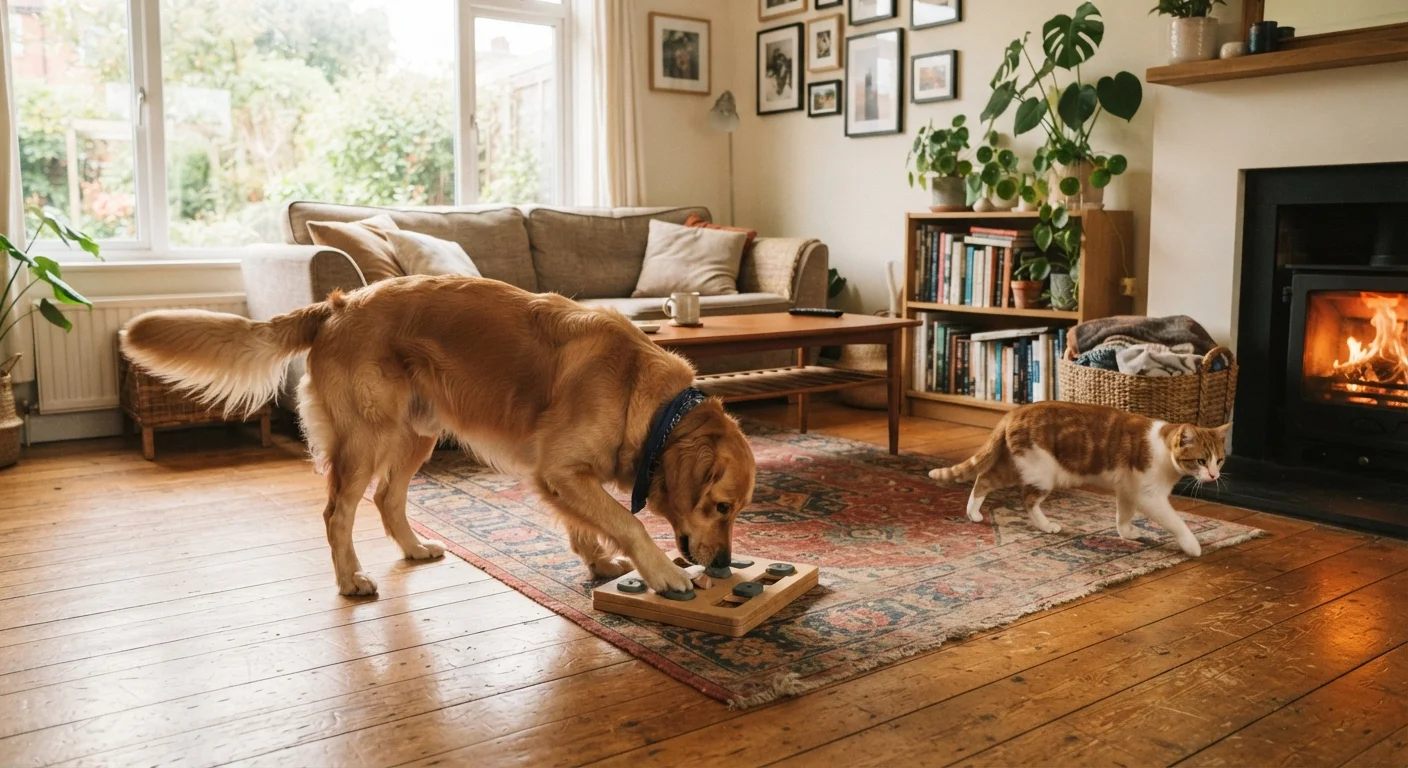
- Cognitive enrichment presents problems to solve. Puzzle feeders, hide-and-seek games, and training sessions all fall here. Even a few minutes of teaching a new cue challenges a pet's brain in ways that prevent boredom.
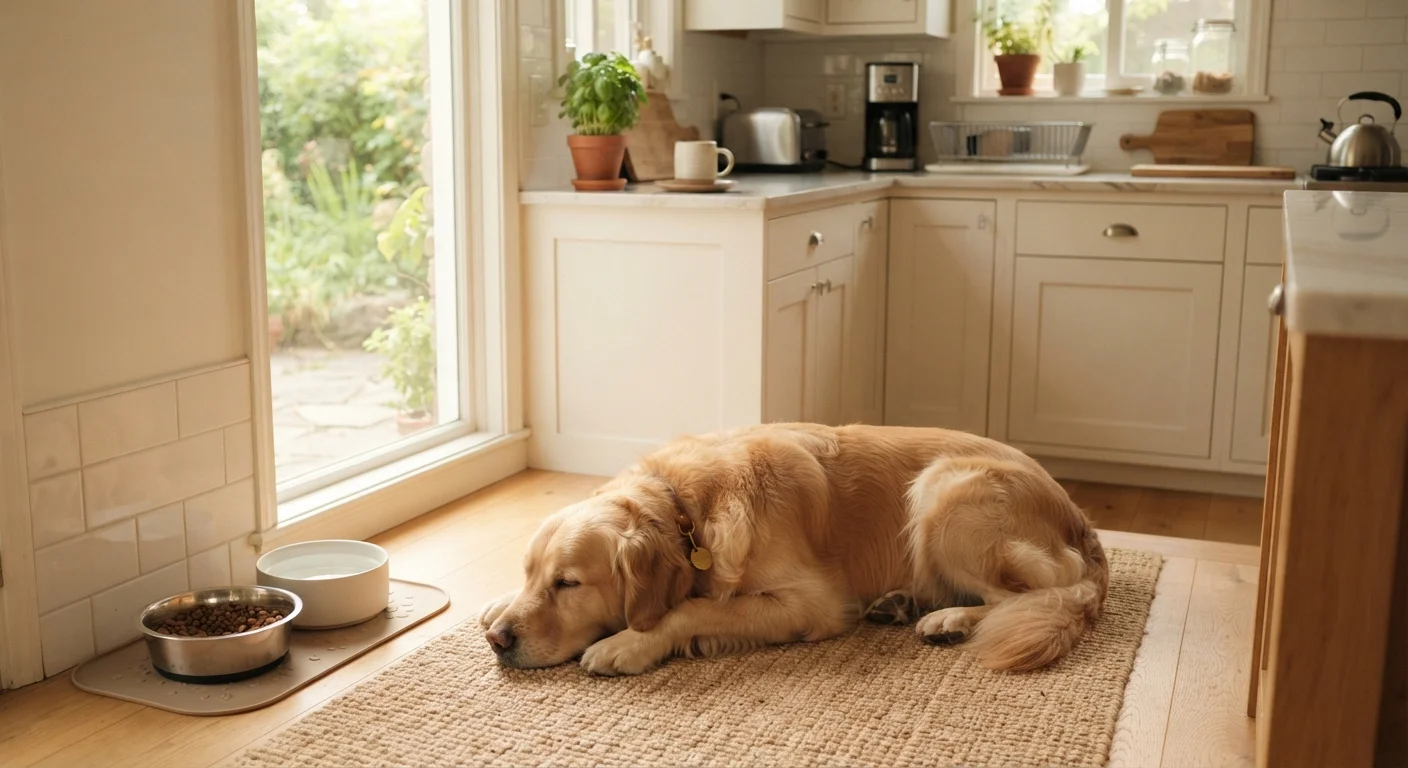
- Feeding and foraging enrichment slows down and complicates how food is delivered. Scatter feeding on grass, stuffed food toys, or lick mats replace a bowl that empties in thirty seconds with an activity that takes minutes and engages natural foraging behavior.
- Social enrichment covers interaction with people, other animals, or novel objects. Quality one-on-one time, structured play, and — where appropriate — socialization with other pets all count.
- Physical enrichment addresses the need for movement and varied physical experience. This overlaps with exercise but also includes things like textured surfaces, climbing structures for cats, or digging areas for dogs.
Most pets benefit from variety across all five categories rather than a heavy focus on just one. Structured playtime vs. free play illustrates how different activity types serve different enrichment functions.
How to Spot an Enrichment Deficit
Pets rarely communicate boredom or frustration directly. Instead, owners typically notice it indirectly through behavior changes. Common signals include:
- Repetitive, seemingly purposeless behaviors (pacing, spinning, overgrooming)
- Destructive activity — chewing, scratching, or digging in unwanted places
- Attention-seeking that escalates (excessive barking or vocalizing)
- Lethargy or disengagement even when physically healthy
These behaviors are not personality flaws. They are adaptive responses from an animal whose environment isn't meeting its needs. Before attributing a behavior problem to stubbornness or temperament, it's worth asking whether the pet's daily routine offers enough variety and mental engagement. Signs Your Pet's Daily Routine Is Actually Working outlines the behavioral cues that confirm a routine is genuinely serving your animal.
Building Enrichment Into a Realistic Daily Routine
Sustainable enrichment doesn't require elaborate setups or significant expense. The key is intention and consistency — designing small habits that deliver mental stimulation throughout the day.
Start With One Change, Not Ten
Owners often feel pressured to overhaul their pet's routine overnight. A more effective approach is to pick one enrichment category that's clearly missing — usually feeding/foraging — and build a consistent habit around it for two weeks before adding another layer. Small, repeated actions produce more lasting results than ambitious plans that don't stick.
Practical starting points include:
- Use mealtime as enrichment time. Replace one bowl meal per day with a foraging method — scatter feeding, a food toy, or a puzzle feeder. This alone addresses both cognitive and foraging categories.
- Reframe the daily walk. Allow your dog at least part of every walk to sniff and explore at their own pace rather than maintaining a brisk heel. A fifteen-minute sniff-led walk is often more mentally satisfying than a thirty-minute pace-walk.
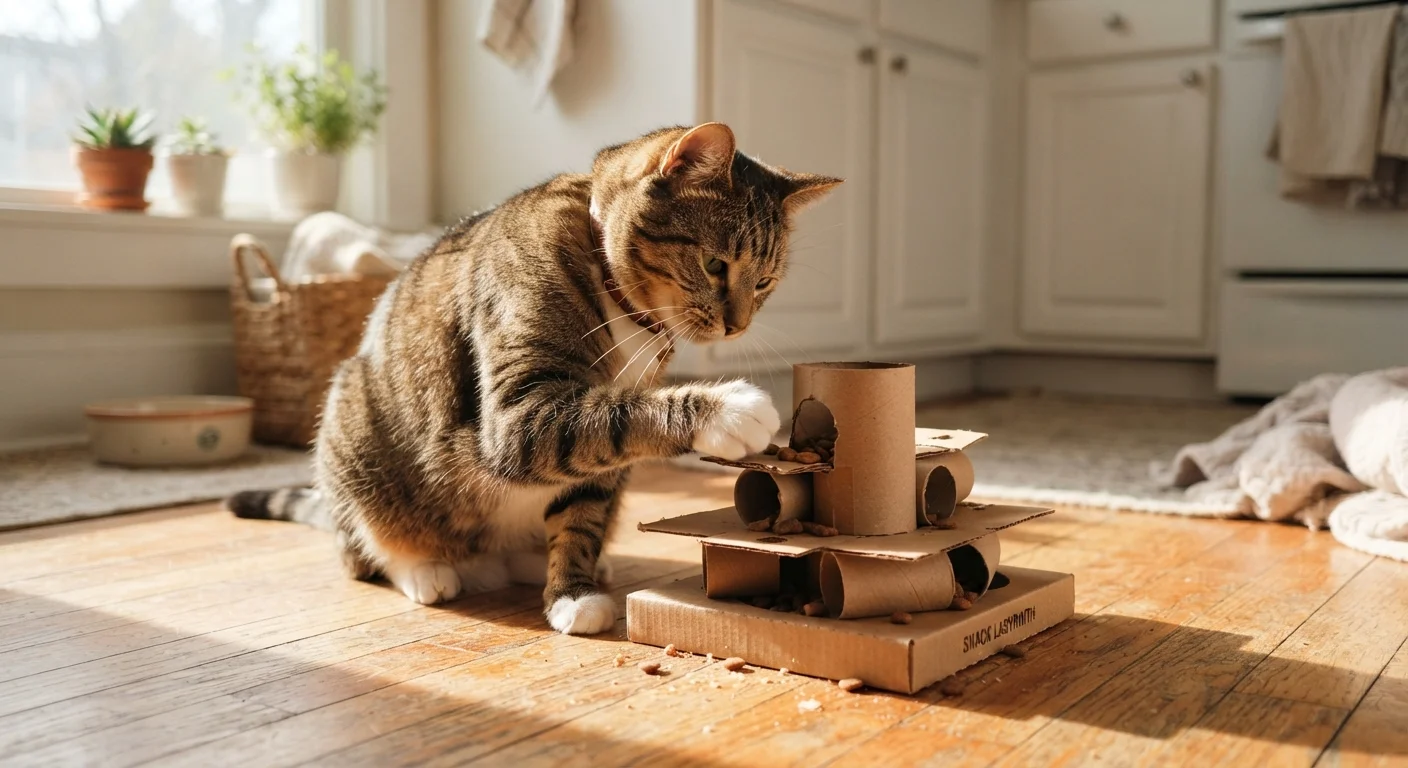
- Rotate novelty. New smells, new textures, and new objects engage curiosity without requiring new purchases. Rotating which toys are accessible, or introducing a cardboard box, costs nothing.
- Embed training into transitions. Asking for a simple behavior before feeding, going outside, or receiving attention builds cognitive engagement into moments that already happen every day.
This approach aligns with ethical pet ownership, which recognizes behavioral needs as fundamental rather than optional. For a full structure you can adapt, the Daily Pet Care Checklist for Busy Homeowners shows how enrichment moments slot into even hectic schedules.
This article is for general informational purposes only. If your pet is showing significant behavioral changes, consult a licensed veterinarian or a certified animal behaviorist for personalized guidance.