Why Booking Timing Actually Matters
Most travelers fall into one of two camps: they book the moment inspiration strikes, or they wait until the last minute hoping for a deal. Both approaches carry real risks. Book too early on a tight itinerary and you may lock in non-refundable costs before your plans are solid. Wait too long and you'll face higher prices, limited inventory, or sold-out experiences you can't replace.
The better approach is understanding what factors actually drive pricing and availability for each component of a trip — then booking each one at the right time for its category. There's no single universal answer, but there are reliable patterns you can use as a framework.
Before diving in, see The Anatomy of a Well-Planned Trip for context on how booking fits into the broader planning sequence.
| Domestic flight sweet spot | 1–3 months before departure (General industry guidance; varies by route and season) |
| International flight sweet spot | 3–6 months before departure (General industry guidance; varies by destination) |
| Lodging for peak destinations | 3–6 months ahead (Especially for national parks, major events, summer beach towns) |
| Popular tours and experiences | Book as soon as dates are confirmed (Small-group and ticketed experiences sell out earliest) |
| Last-minute booking risk window | Within 4–6 weeks of departure (Prices and availability typically decline significantly) |
| Event-driven travel lodging | Book immediately upon date confirmation (Inventory compresses rapidly around festivals and major events) |
Flights, Lodging, and Tours: General Timing Ranges
Flights: Domestic flights are generally well-priced when booked roughly one to three months in advance. For international travel, three to six months ahead is a common sweet spot cited by travel researchers, though this can vary significantly by destination, season, and airline. Prices typically rise sharply within four to six weeks of departure as carriers fill remaining seats at a premium. Booking very far in advance — more than nine or ten months out — doesn't always guarantee savings and can limit your flexibility if plans change.
Lodging: Hotels and vacation rentals operate differently from flights. Popular properties in high-demand destinations (national parks, major city events, peak summer beach towns) can sell out three to six months in advance. For standard urban travel during off-peak periods, one to two months ahead is often sufficient. Boutique properties and unique rentals with limited inventory warrant earlier action than large chain hotels.
Tours and Experiences: Guided tours, cooking classes, popular museum time slots, and similar ticketed experiences are the most commonly overlooked booking category. Highly sought-after experiences — think small-group wildlife tours or landmark site reservations — can sell out months ahead. For any experience you'd be genuinely disappointed to miss, book it as soon as your travel dates are confirmed.
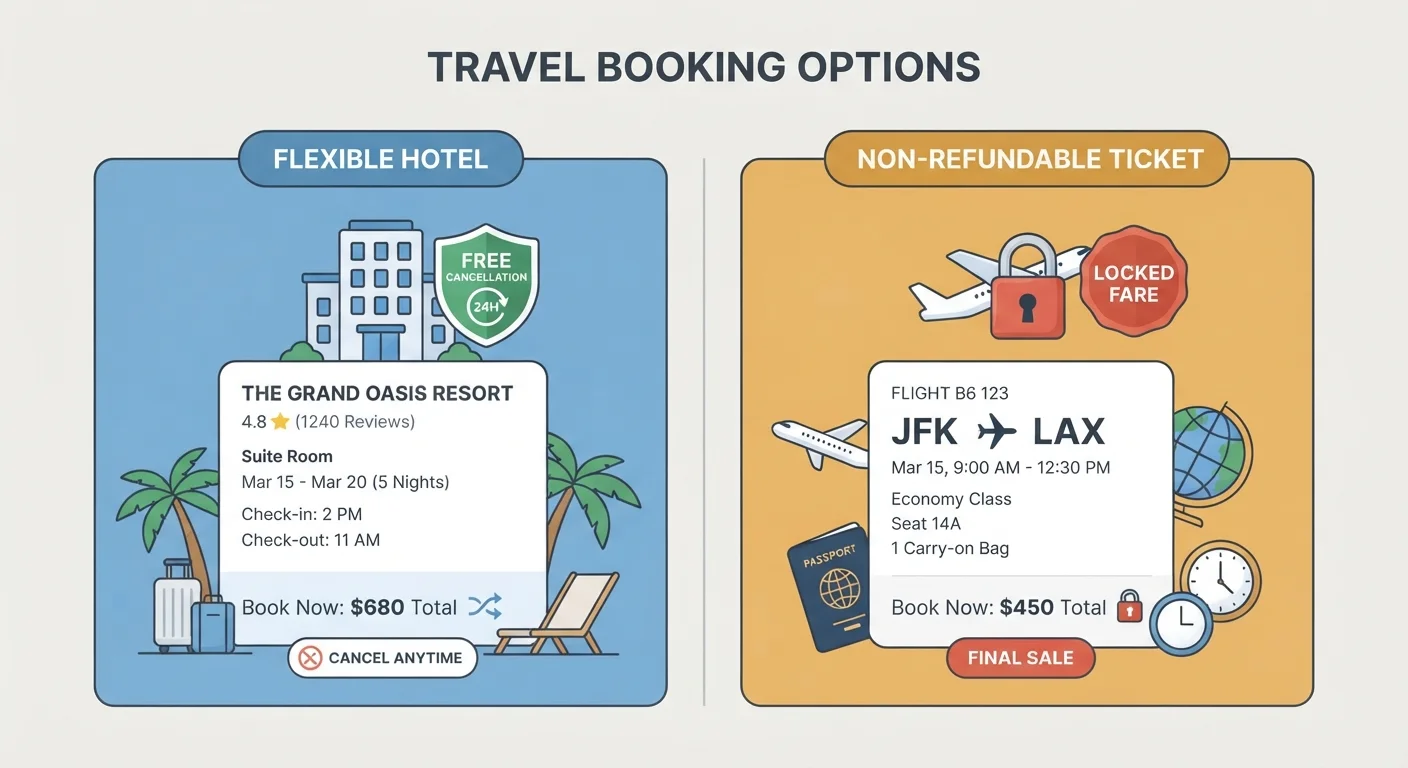
When evaluating whether to lock in a price early, it's worth understanding the trade-offs involved. Flexible bookings vs. non-refundable rates covers what that decision actually costs you in each direction.
Prices Change — Verify Before You Book
Airfare and lodging prices fluctuate based on algorithms, demand signals, and inventory levels that shift constantly. The timing ranges in this article reflect general patterns, not guaranteed pricing outcomes. Always verify current availability and pricing through official airline, hotel, or tour operator channels before making any booking decision.
Variables That Shift the Timeline
The ranges above are starting points, not rules. Several factors can compress or extend the ideal booking window considerably:
- Seasonality: Peak travel seasons — summer in Europe, the holidays in Hawaii, ski season in Colorado — compress availability and raise prices faster. During these windows, book closer to the earlier end of any range.
- Destination popularity: Trending or limited-access destinations (certain national parks, remote islands, UNESCO sites with timed entry) behave more like concert tickets than standard travel bookings.
- Group size: Booking for four or more people narrows your options faster. Hotels and tours with limited capacity fill proportionally quicker when you need multiple spots simultaneously.
- Event-driven travel: If your trip coincides with a major local event — a festival, conference, or sporting event — treat lodging availability as extremely tight from the moment you commit to the dates.
Thinking through these variables is a core part of building a well-structured trip plan before any money changes hands. And once you've landed on timing, make sure your budget accounts for all the costs that follow — Travel Budgeting From Zero is a practical starting point.