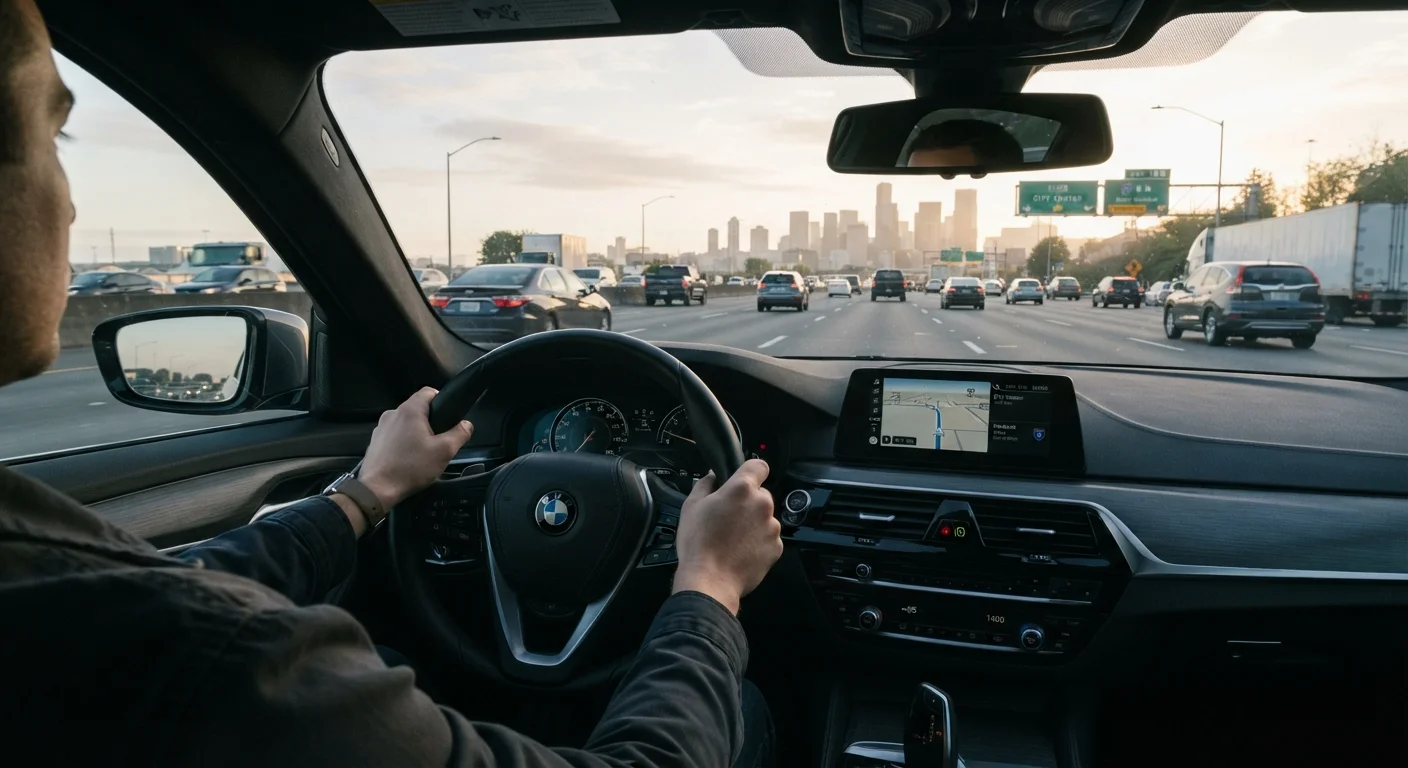
Why Distracted Driving Myths Are Dangerous
Distracted driving is one of the most preventable causes of traffic fatalities in the United States, yet many drivers remain confident they're handling it fine. That confidence is largely built on myths - persistent beliefs that research has repeatedly contradicted. Understanding what distraction actually does to your brain and reaction time is the first step toward making smarter decisions behind the wheel.
The myths below aren't fringe ideas. They're things most drivers believe. If any of them sound familiar, the correction that follows matters more than you might expect.
Myth
Hands-free phone calls are basically as safe as not using a phone at all.
Fact
Hands-free calling still imposes significant cognitive distraction that reduces your ability to process the road ahead.
The distinction between handheld and hands-free is a legal one in most states - it is not a safety guarantee. Research from the AAA Foundation for Traffic Safety found that hands-free phone conversations create a measurable mental workload that causes drivers to miss visual cues, even when their eyes are forward. This is called inattention blindness: your eyes are open, but your brain isn't fully registering what's in front of you. A passenger conversation tends to be safer partly because passengers naturally pause when traffic demands attention - a phone caller can't see what you're dealing with and doesn't adjust.
Myth
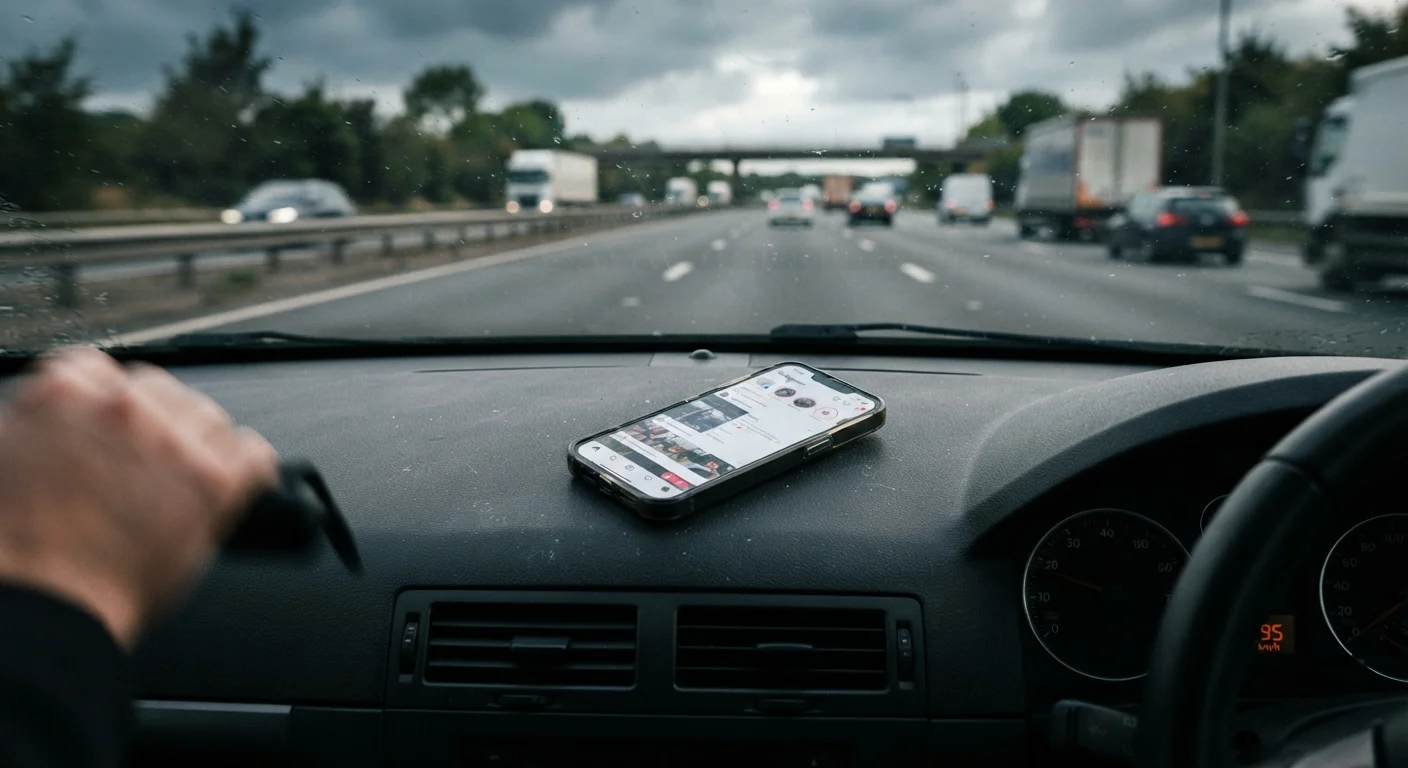
A quick two-second glance at your phone isn't really that risky.
Fact
At highway speeds, two seconds of eyes-off-road covers roughly the length of a basketball court - enough time for traffic conditions to change completely.
At 55 mph, your vehicle travels about 161 feet in two seconds. Research from the Virginia Tech Transportation Institute found that taking your eyes off the road for just two seconds doubles your crash risk. The problem is compounded by the fact that most drivers underestimate how long a glance actually takes, especially when reading or composing a text. What feels like a quick peek frequently lasts three to five seconds. That's closer to 400 feet of travel with effectively no driver input.
Myth
Texting is more dangerous than other distractions - eating or changing the radio is basically fine.
Fact
Any activity that takes your eyes, hands, or attention away from driving is a form of distracted driving with real risk consequences.
Distraction is generally grouped into three types: visual (eyes off road), manual (hands off wheel), and cognitive (mind off driving). Texting is especially dangerous because it combines all three simultaneously. But eating, adjusting climate controls, and interacting with in-dash systems all qualify as distracted behavior. NHTSA data has consistently identified these secondary tasks as contributing factors in crashes. Texting gets the most attention - rightly - but treating other distractions as acceptable creates its own blind spot.
Myth
Experienced drivers can multitask more safely because they've developed better instincts.
Fact
Driving experience does not meaningfully improve the brain's ability to divide attention between driving and a secondary task.
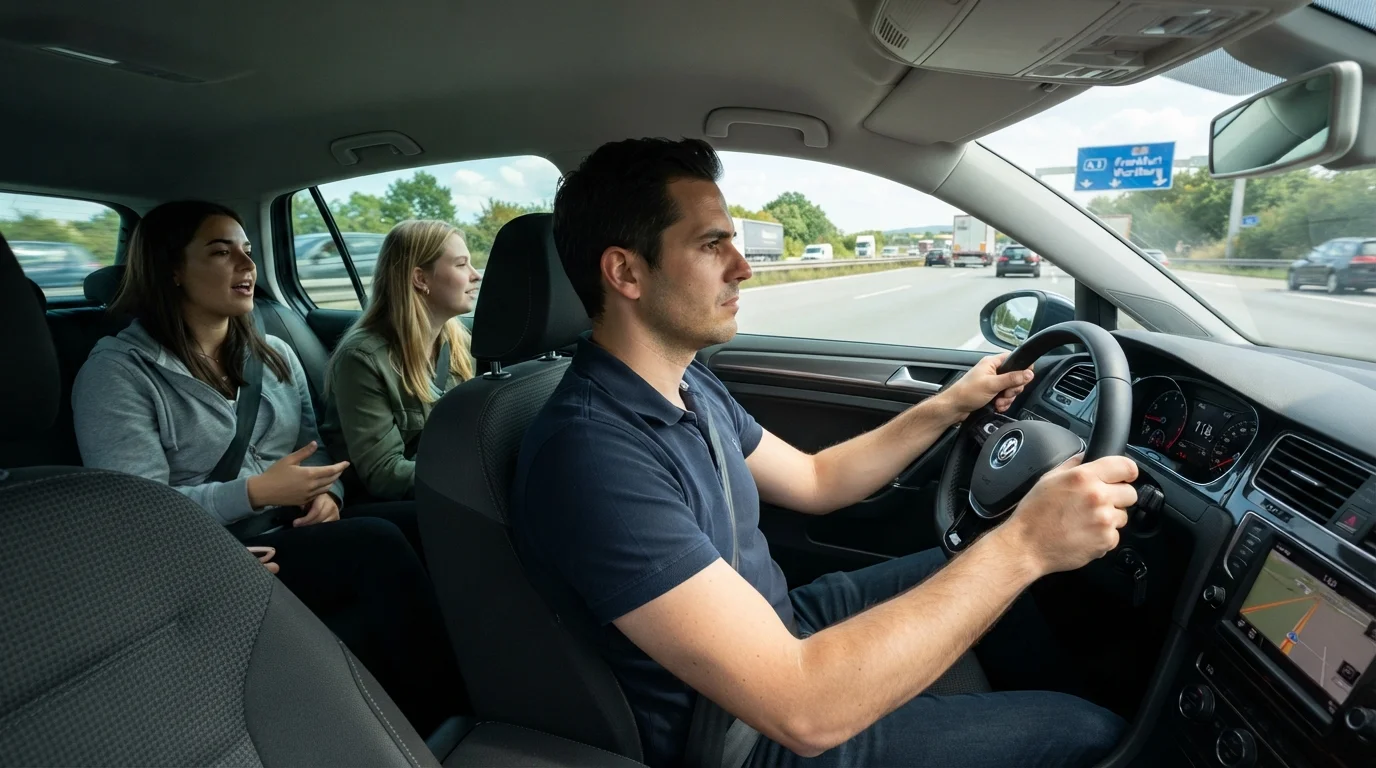
Experience builds pattern recognition and smoother mechanical operation, but it doesn't expand cognitive bandwidth. The human brain processes attention as a limited resource - when it's directed at a phone or conversation, less is available for the road. Studies consistently show that self-reported driving skill has little correlation with actual performance during distracted conditions. In fact, drivers who believe they're more capable of multitasking tend to engage in riskier behavior. This is similar to how driving with passengers changes your risk profile - confidence in your routine can cause you to underweight real hazards.
Myth
Using voice-to-text is safe because you're not actually looking at your phone.
Fact
Voice-to-text still demands significant cognitive attention, and composing or reviewing messages audibly keeps your mind off the driving task.
AAA Foundation research rated voice-to-text as among the most cognitively demanding in-vehicle tasks tested - more demanding than listening to the radio or even talking on a hands-free call. The mental effort of dictating, listening to playback, and correcting errors pulls attention away from driving even when no screen is involved. It also gives drivers a false sense of safety because their hands are on the wheel and eyes are forward. That reassurance doesn't reflect what's actually happening in the brain.
What the Data Actually Shows
~3,000
Distraction-related traffic fatalities per year (U.S.)
The NHTSA has reported roughly this figure in recent years, though experts note distraction is likely undercounted in crash reports.
2x
Crash risk increase from a 2-second glance away
According to Virginia Tech Transportation Institute research on naturalistic driving behavior.
27x
Increased crash risk when texting while driving
The Virginia Tech Transportation Institute found texting raised crash risk dramatically compared to undistracted driving.
The statistics on distracted driving aren't abstract - they translate directly into stopped cars, missed braking windows, and collisions that happen before a driver even registers the hazard. According to the National Highway Traffic Safety Administration (NHTSA), distraction was reported as a factor in thousands of fatal crashes annually in recent years.
Overconfidence is a documented problem. Studies in traffic psychology show that drivers who rate themselves as above-average tend to underestimate their own risk exposure. If you're certain you can multitask safely behind the wheel, that certainty is worth examining. For a broader look at how habits and self-assessment go wrong, see our piece on self-improvement myths that may be slowing you down.
Building better driving habits starts with honest awareness. Our guide to defensive driving habits that reduce your risk on the road pairs well with what you've read here - it covers the practical techniques that help you stay ahead of hazards rather than reacting to them.
No Level of Distraction Is a Safe Default
There is no evidence-supported threshold below which distracted driving becomes acceptably safe. Even brief, seemingly minor distractions compound risk - especially in complex traffic environments or at higher speeds. If a task can wait until you've stopped the vehicle, it should. Developing that habit consistently is one of the most concrete safety choices a driver can make.