Why Passengers Change the Equation
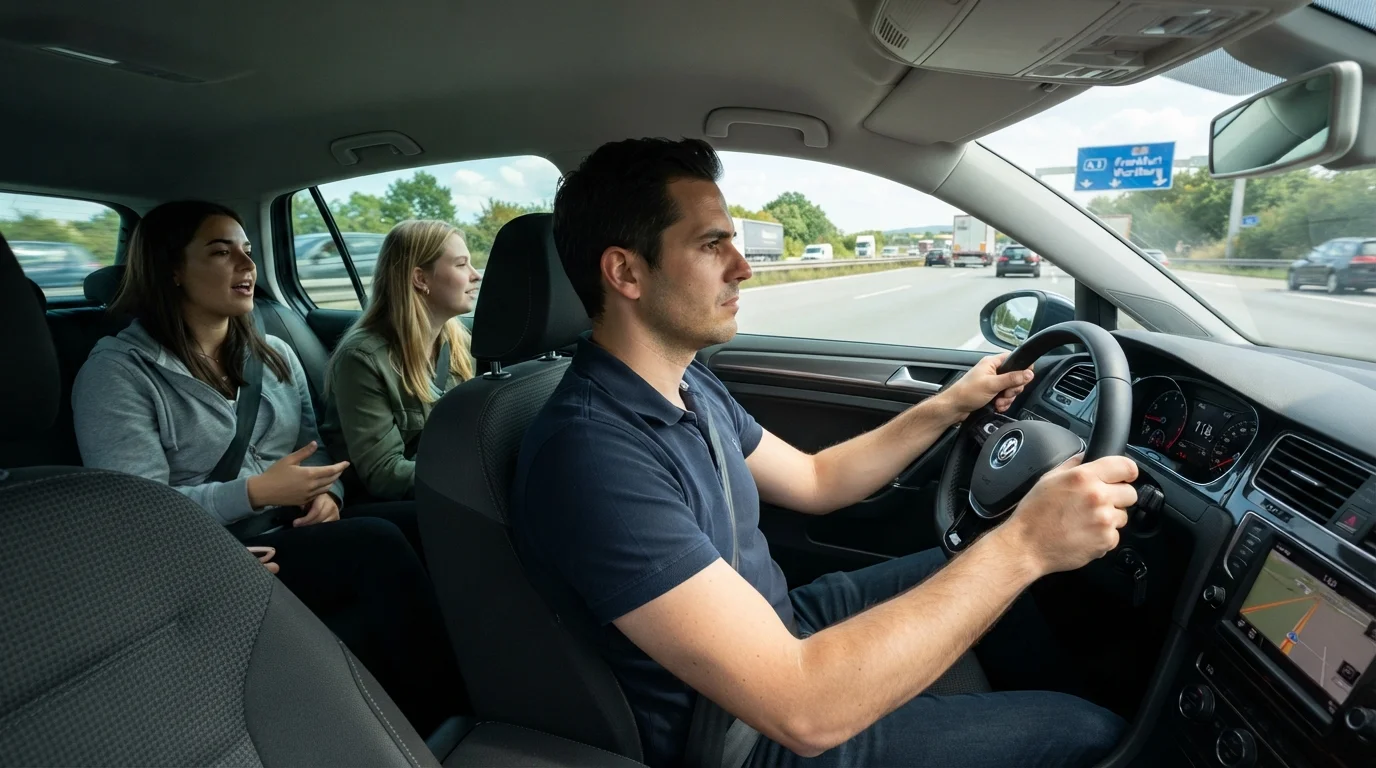
Most drivers intuitively know passengers can be distracting - but the underlying mechanics are worth understanding clearly. When you add another person to your car, you're not just adding weight. You're adding social obligation, auditory input, and a competing claim on your attention that your brain has to manage alongside everything else on the road.
Driving is already a high-demand cognitive task. You're continuously scanning mirrors, processing speed, managing lane position, and anticipating what other drivers might do. Add a conversation - even a relaxed one - and you're splitting that mental bandwidth. This is sometimes called cognitive tunneling: your brain prioritizes the social interaction and subtly reduces the resources dedicated to environmental awareness.
This isn't a character flaw - it's how human attention works. Understanding it is the first step toward managing it. See how distraction more broadly affects risk in our piece on distracted driving myths.
4x
Teen crash risk increase with multiple passengers
According to the AAA Foundation for Traffic Safety, teen drivers are roughly four times more likely to be involved in a fatal crash when carrying multiple teen passengers versus driving alone.
58%
Teen crash deaths involving distraction or passengers
NHTSA data indicates that a significant share of teen driver fatalities involve some form of distraction, with passenger presence being a consistently cited contributing factor.
~10-15%
Increase in stopping distance with full passenger load
Vehicle braking engineers and physics testing consistently show that a fully loaded vehicle requires meaningfully more distance to stop compared to a solo driver, especially at higher speeds.
The Risk Is Not Evenly Distributed
The passenger effect doesn't hit all drivers equally. NHTSA data and decades of crash research point to a consistent pattern: younger, less experienced drivers face the greatest increase in risk with passengers aboard, particularly when those passengers are peers the same age.
The social dynamics at play matter enormously. With peer passengers, drivers - especially teens - are more likely to speed, accept risky gaps in traffic, or feel pressure to demonstrate skill. This is why most graduated driver licensing (GDL) laws in the U.S. include passenger restrictions for new license holders. These laws exist because the data behind them is strong, not because regulators are being overly cautious.
More experienced adult drivers aren't immune, but the risk profile is different. For them, the main challenge shifts from social pressure to sustained inattention - long highway trips where passenger conversation gradually erodes focus without the driver noticing.
“Passengers, especially peers, change the social environment inside the vehicle. Drivers feel observed and judged, and that perception shifts their behavior - often toward higher risk - in ways they may not consciously recognize.”
— AAA Foundation for Traffic Safety, Research organization focused on traffic safety data and driver behavior
Physical Changes You Should Account For
Beyond attention, passengers affect how your car physically performs. Three adults and a loaded trunk can add 500 pounds or more to a vehicle's operating weight. That has real consequences:
- Longer stopping distances: Braking performance degrades with added weight. If you normally maintain a two-second following gap, consider extending it when carrying a full load - especially at highway speeds. Our article on tailgating and stopping distances explains the physics in detail.
- Reduced handling agility: Heavier vehicles respond more slowly to steering input and are more susceptible to sway during lane changes or evasive maneuvers.
- Tire and fuel load: Extra weight accelerates tire wear and increases fuel consumption. These aren't safety emergencies, but they're worth knowing - especially on long trips.
Adjusting your speed and following distance when the car is loaded isn't timid driving - it's accurate driving, grounded in how physics actually works.
Practical Habits That Actually Help
Knowing the risks is useful. Changing your habits because of them is what actually moves the needle.
Set expectations before you move. If you're driving a group, it's reasonable to briefly establish that you'll need focus - especially in unfamiliar areas, heavy traffic, or at night. Most passengers will respect this without pushback. Combine this awareness with the broader principles covered in our guide on defensive driving habits.
Designate a co-pilot. On road trips, assign a front-seat passenger to handle navigation, music changes, and any communication with rear passengers. This funnels interruptions through one person and reduces the number of simultaneous demands on you.
Pause complex tasks at complex moments. Merging onto a busy freeway, navigating an unfamiliar interchange, or driving in poor weather all require your full attention. It's fine to say, mid-conversation: "Give me a second - I need to focus here."
Don't let social comfort breed complacency. Familiar passengers - close friends, family - can paradoxically increase risk because the social dynamic feels relaxed. Familiarity doesn't reduce the cognitive cost of conversation. Stay calibrated regardless of who's in the car.
Pre-Trip Habit: Quick Ground Rules
Before pulling out of the driveway with a full car, take 30 seconds to let passengers know you'll need quiet during tricky stretches - merging, navigating, or bad weather. Frame it as your preference, not a lecture. Most people will comply without issue, and you'll drive with noticeably less pressure.