Hydroplaning: When Your Tires Lose the Road
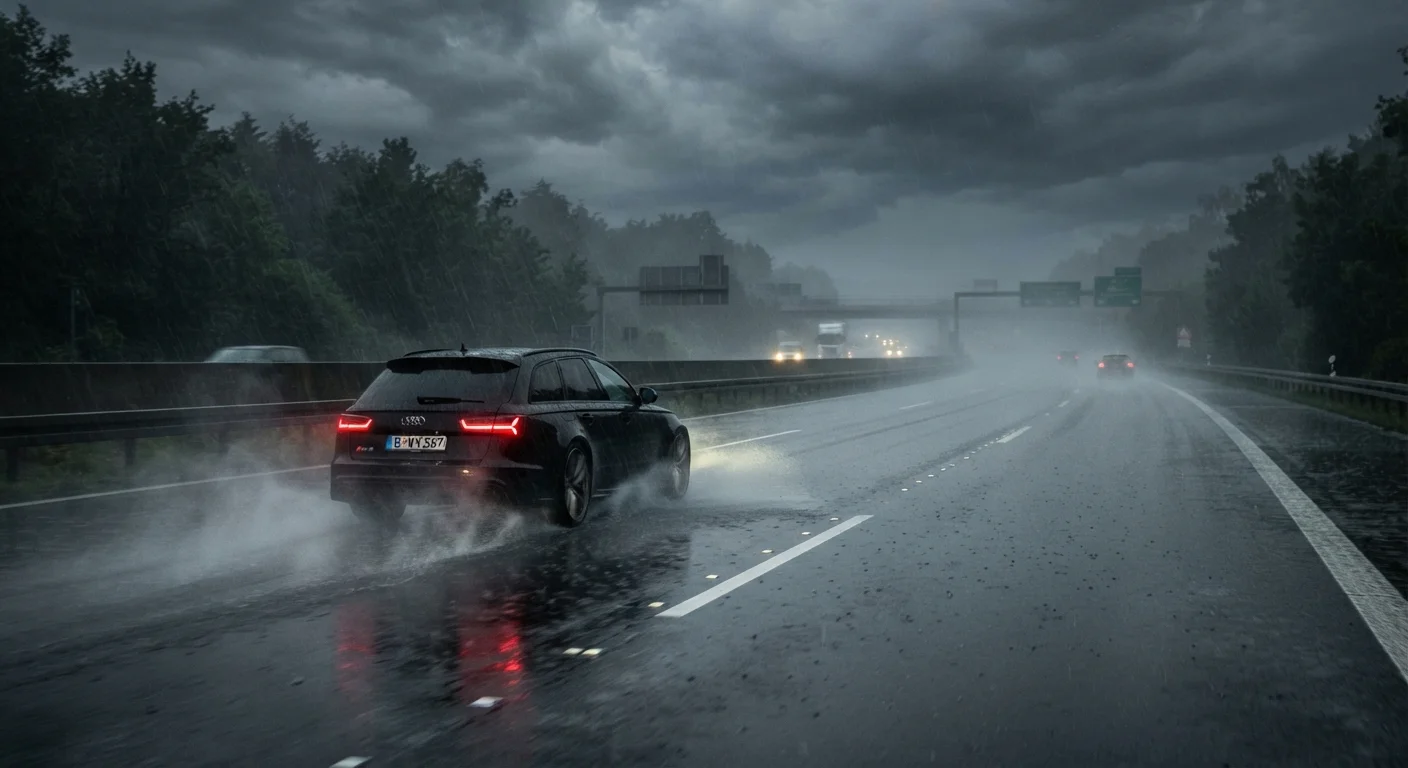
Hydroplaning happens when water accumulates in front of your tires faster than it can be displaced, lifting the tire off the pavement. At that moment, your car is essentially floating - steering inputs and braking have little effect until contact is restored.
It most commonly occurs at speeds above 35 mph on wet roads, especially if your tires are worn or underinflated. Wide tires and older tread compounds can also increase vulnerability.
What to do: Ease off the accelerator smoothly - don't stomp the brakes. Keep the wheel pointed in your intended direction of travel. In a vehicle without anti-lock brakes (ABS), avoid braking entirely until you feel traction return. In a car with ABS, gentle, steady brake pressure is acceptable. The episode typically lasts only a second or two.
Prevention matters more than reaction. Maintaining proper tire pressure and replacing tires before tread drops below 4/32 of an inch significantly reduces hydroplaning risk. Slowing down in heavy rain - even if it feels excessive - keeps your tires in contact with the road. See our guide to essential car fluids for context on how tire and brake system health work together.
Check Tire Tread Before Every Rainy Season
Worn tires are the leading vehicle-side factor in hydroplaning. Use a quarter inserted into the tread groove - if you can see above Washington's head, your tread is at or below 4/32 of an inch, the point where wet-weather grip begins to deteriorate noticeably. Don't wait for tires to hit the legal minimum before replacing them.
Black Ice: The Hazard You Don't See Coming
Black ice is a thin, nearly transparent layer of ice that forms on road surfaces - usually on bridges, overpasses, shaded stretches, and intersections where water pools and refreezes. It gets its name because it blends with the dark pavement beneath it, making it nearly invisible until you're already on it.
Temperature is the biggest tell. When the air is at or near freezing (32°F / 0°C) and pavement is wet, black ice conditions are possible. Early morning and late evening are the most dangerous windows, when road temperatures are lowest.
What to do if you hit it: Do not panic-brake or crank the wheel. Both actions can send the car into a spin. Instead, keep the wheel straight, ease off the accelerator, and let the car slow naturally. If you begin to skid, steer gently in the direction you want the front of the car to go - a technique called counter-steering. Stay calm; overcorrection causes more accidents than the ice itself.
All-wheel drive gives drivers false confidence on ice. It helps you move, but it doesn't help you stop. Winter tires - which use a softer rubber compound and different tread patterns - make a measurable difference in both braking and cornering on icy surfaces. Pairing seasonal tires with careful preparation is covered in our seasonal car maintenance checklist.
When to Pull Over in Winter Conditions
If you feel the road is consistently slippery and traffic is moving unpredictably, pulling off at a rest area, gas station, or well-lit parking lot is a valid choice. Waiting 30-60 minutes for road crews to treat a stretch of highway is far preferable to risking a crash. Never stop on the shoulder of a highway unless it's a genuine emergency.
Fog: Navigating When Visibility Collapses
Dense fog reduces visibility to a fraction of normal - sometimes to just a few car lengths. The danger isn't only what you can't see ahead; it's also that other drivers can't see you. Speed becomes critically dangerous because stopping distances remain the same even as your visible runway shrinks.
Lighting matters enormously. Use low-beam headlights, not high beams - high beams reflect off fog particles and actually reduce your forward visibility while blinding oncoming drivers. If your vehicle has dedicated rear fog lights, use them. Running lights alone are insufficient.
What to do: Slow down more than feels necessary. Follow the guideline that you should be able to stop within the distance you can see. Increase your following distance substantially - rear-end collisions are the most common fog-related crash type. Turn off distracting audio so you can hear what you can't see. If fog is severe enough that driving safely becomes impossible, pull well off the road, turn off your headlights (so drivers don't follow your lights thinking you're moving), and activate your hazard lights while stationary.
Fog driving shares a lot in common with night driving - both reduce your visual window and demand lower speeds. Our night driving guide covers how experienced drivers adapt their habits when visibility is compromised.
The Principles That Apply to All Three
Each of these conditions is different, but they share a common thread: your car's safety systems - ABS, traction control, stability control - are tools, not guarantees. They work within the limits of physics. Tires that are worn, improperly inflated, or wrong for the season will underperform even with every electronic aid activated.
~70%
Weather-related crashes involving wet pavement
According to the Federal Highway Administration, wet pavement accounts for approximately 70% of weather-related traffic crashes annually in the U.S.
~900
Annual U.S. deaths from fog-related crashes
The Federal Highway Administration estimates fog contributes to roughly 38,700 crashes and around 900 fatalities per year on U.S. roads.
35 mph+
Speed at which hydroplaning risk increases sharply
Tire and road safety research consistently identifies speeds above 35 mph as the threshold where hydroplaning becomes a significant risk on wet roads.
Slow down before the hazard, not during it. Speed management is the single most effective thing a driver can do before entering known adverse conditions. Give yourself more space. Make fewer sudden moves. If conditions deteriorate significantly, pulling off the road is a legitimate, responsible choice - not a failure.
Building these instincts takes practice and awareness. Our defensive driving overview walks through the broader mindset that makes each of these responses more natural under pressure.
This article is for general educational purposes only. Always follow your local traffic laws and consult a qualified driving instructor or safety professional for personalized guidance. Road conditions vary widely - exercise your own judgment based on actual conditions at the time of driving.