Why Night Driving Is Genuinely Riskier
According to the National Safety Council, traffic fatality rates are roughly three times higher at night than during the day - even though fewer vehicles are on the road. The core problem is visual: human eyes are not optimized for low-light conditions. Your depth perception, peripheral vision, and ability to distinguish color and contrast all decline significantly after dark.
Standard low-beam headlights typically illuminate about 160 feet ahead. At 60 mph, your stopping distance - including reaction time - can exceed 240 feet. That gap is called overdriving your headlights, and it means you may not be able to stop in time for a hazard you can only just see. This physics problem is present every time you drive at highway speeds after sunset.
For more on how anticipation and gap management affect safety in any condition, see our guide to defensive driving habits.
“Darkness is the great equalizer on the road - it removes the visual information that experienced drivers rely on most. Speed, following distance, and attention all need recalibrating the moment the sun goes down.”
— National Safety Council, U.S. nonprofit organization focused on eliminating preventable deaths and injuries
Best Practices for Safer Night Driving
Adjusting your behavior after dark isn't about being overly cautious - it's about matching your habits to what your eyes and vehicle can actually do. The following practices reflect guidance from traffic safety researchers and driver education standards.
Reduce your speed below the posted limit on unlit roads
Speed limits are set for typical conditions, which assume adequate visibility. After dark, your ability to detect hazards is reduced, so the same speed that felt safe at noon may leave you with inadequate stopping distance at midnight.
Use high beams proactively on unlit roads - and switch them off correctly
Many drivers underuse high beams out of habit or forget to activate them on dark stretches. High beams roughly double your effective sight distance. The rule of thumb: switch to low beams when within 500 feet of an oncoming vehicle, or when following another vehicle closely.
Keep your windshield and headlight lenses clean
A dirty windshield scatters oncoming headlight glare into a diffuse haze, dramatically reducing contrast. Yellowed or oxidized headlight lenses can cut light output by more than 50%, according to AAA research.
Increase your following distance at night
Stopping distances don't change after dark, but your ability to perceive the lead vehicle's brake lights and road hazards beyond it does. A larger gap buys you the extra reaction time that reduced visibility takes away. Tailgating is dangerous in daylight - at night it becomes even more so.
Scan further down the road and use the edge markings as a guide
Looking close to your hood narrows your effective field of view and gives you less time to react. Shifting your gaze toward the furthest point illuminated by your headlights and using road edge markings as a guide helps you stay oriented and detect hazards earlier.
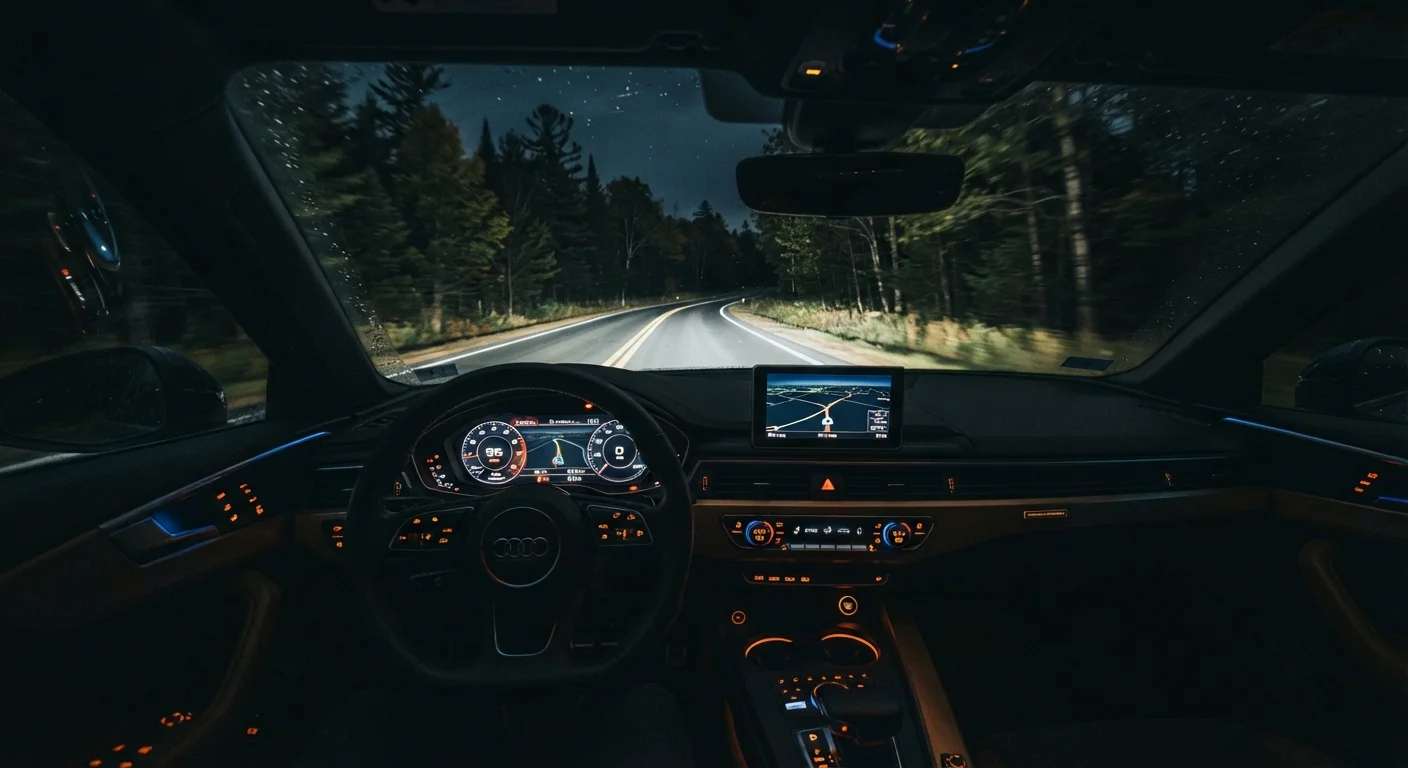
Dim your dashboard and instrument lighting
Bright interior lights reduce your eyes' adaptation to darkness, a process called dark adaptation. A dimmer cabin helps your eyes stay more sensitive to the low-contrast environment outside the vehicle.
Quick Actions You Can Take Tonight
Some night-driving improvements don't require a behavior change at all - just a few minutes of maintenance or preparation before you pull out of the driveway.
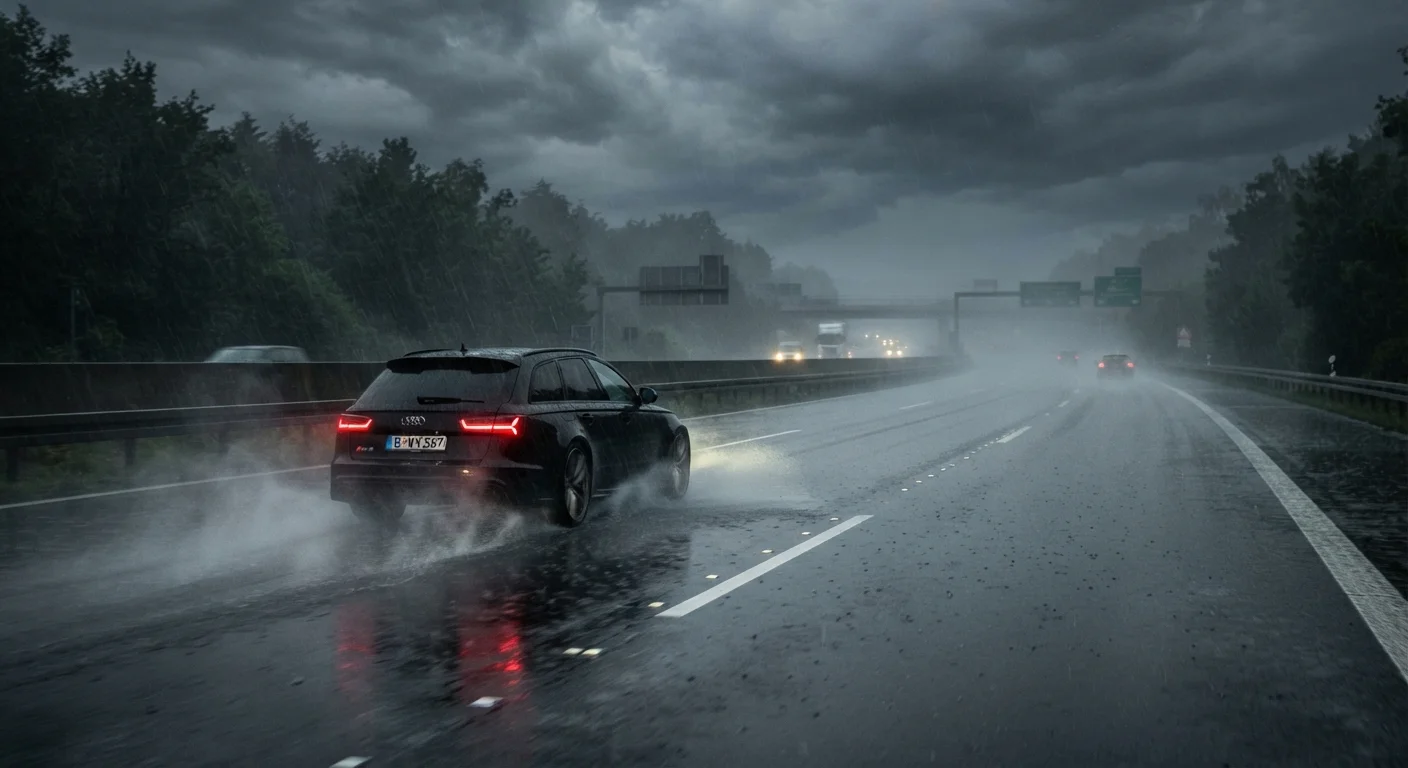
Night driving shares risk factors with other challenging conditions. If rain, fog, or ice are also in the picture, the stakes rise further - our article on driving through fog, ice, and hydroplaning risks covers how to adapt in those scenarios.
Managing Fatigue and Attention After Dark
Darkness doesn't just limit what you can see - it signals your brain that it's time to sleep. Melatonin production increases after sunset, reaction times slow, and microsleeps (brief, involuntary lapses in consciousness lasting 1-4 seconds) become a real risk, especially on monotonous highway stretches.
Warning signs include heavy eyelids, drifting within your lane, missing exits, or difficulty remembering the last few miles. If any of these occur, pulling over safely at a rest stop or well-lit public area is the appropriate response. Caffeine can provide short-term alertness, but it is not a substitute for sleep and should not be treated as one.
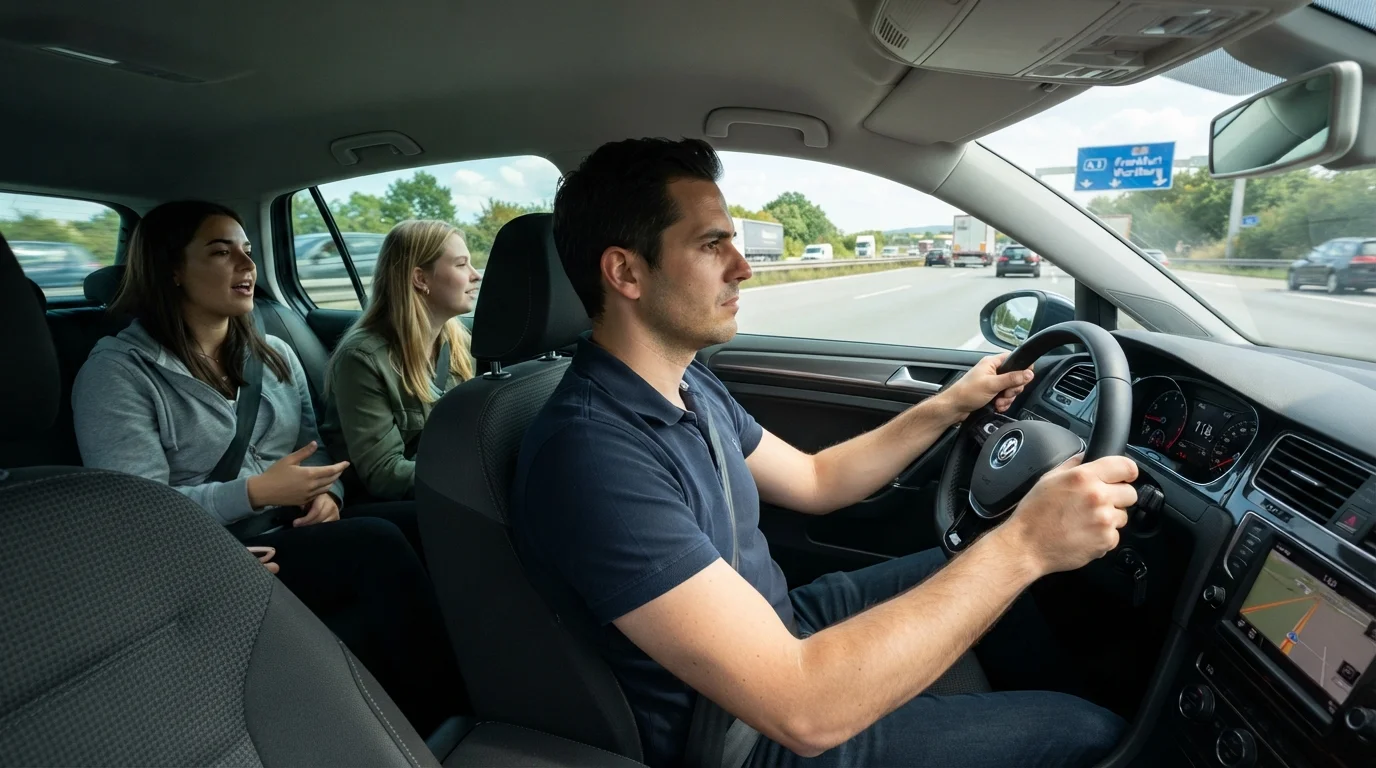
Passengers can also affect nighttime alertness in both directions - conversation can help keep you engaged, but distracting behavior raises crash risk. Our guide on driving with passengers explains how to manage that dynamic.
3x
Higher nighttime traffic fatality rate
According to the National Safety Council, fatal crash rates per mile driven are approximately three times higher at night than during daylight hours.
50%+
Headlight output lost to lens oxidation
AAA research found that significantly yellowed or clouded headlight lenses can reduce light output by more than half compared to new lenses.
This article is for general informational purposes only and is not a substitute for formal driver training. Always follow applicable traffic laws and consult qualified professionals for specific safety concerns.