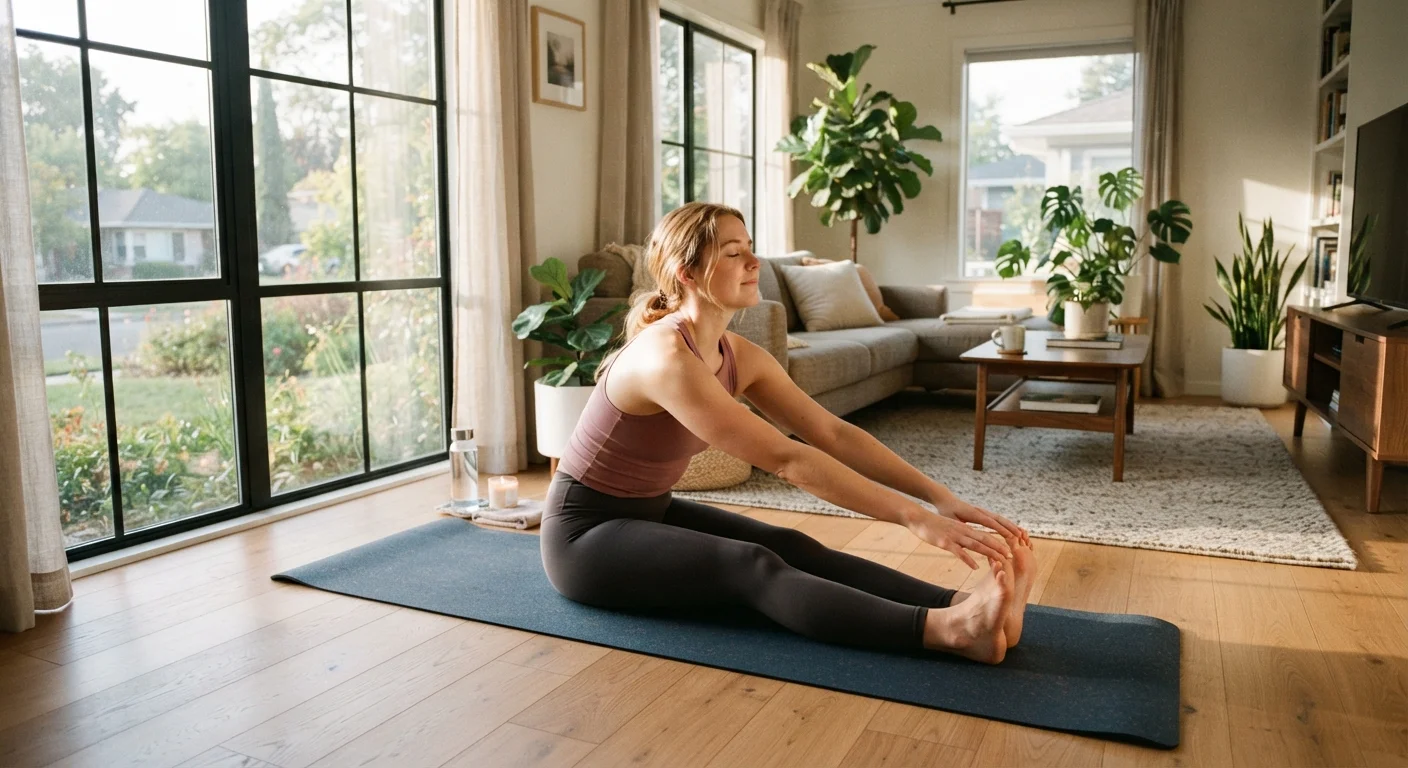

Why Renovations Derail Fitness (And Why That's Normal)
A home renovation upends almost everything: your floor plan, your daily rhythm, your stress levels, and often your sleep. It's no surprise that movement habits are among the first casualties. Rooms you once used for workouts are suddenly storage zones for lumber and tile samples. Your evenings, once reserved for a walk or yoga session, are now consumed by contractor calls and decision fatigue.
Recognizing this disruption as situational - not a personal failure - matters. Research consistently shows that life transitions are among the strongest predictors of exercise dropout. The goal during a renovation season isn't to maintain peak performance; it's to preserve the habit of moving so you don't face a cold restart when the dust settles. If you've ever navigated that kind of restart, you know how much harder it is - and our guide on returning to exercise after a long break walks through exactly why.
Best Practices for Staying Active During a Renovation
The following approaches are designed for real constraints: limited space, unpredictable schedules, and mental bandwidth that's already stretched thin.
Identify one cleared space - however small - and claim it as your movement zone
Having a dedicated physical anchor for exercise, even a 6×6-foot patch of hallway, reduces the mental friction of deciding where to work out. Without a default spot, the chaos of renovation makes it easy to indefinitely postpone movement.
Default to bodyweight movements that need zero equipment
Dumbbells and resistance bands may be boxed up or buried under renovation supplies. Bodyweight exercises - squats, push-ups, lunges, planks - are effective, well-studied, and require nothing but floor space. This removes the "I don't have my gear" excuse entirely.
Anchor activity to an existing daily ritual rather than scheduling it separately
During a renovation, open blocks of time disappear. Habit stacking - attaching movement to something you already do, like brewing coffee or brushing your teeth - makes consistency far more reliable than relying on motivation or a free calendar slot.
Keep outdoor walks as a non-negotiable daily minimum
Walking is among the most accessible and well-supported forms of physical activity, with benefits documented for cardiovascular health, mood, and cognitive function. During renovation stress, the mood regulation benefit alone makes it worth protecting.
Lower the bar deliberately rather than abandoning the habit
An all-or-nothing mindset leads to extended gaps in movement. Behavioral research suggests that doing a scaled-back version of a habit - even just five minutes - preserves the neural pathway and makes full resumption much easier once constraints lift.
Make the Most of Small Windows
One of the most effective mindset shifts during a renovation is moving away from the idea that exercise only counts if it lasts at least 30 minutes. Physical activity guidelines from the U.S. Department of Health and Human Services recognize that movement accumulated in shorter bouts throughout the day contributes meaningfully to health. This is the logic behind what researchers sometimes call "exercise snacking." See our deeper look at movement snacks and how they add up for practical ideas you can plug directly into a renovation schedule.
When the project wraps up and you're ready to rebuild a fuller routine, the framework in building a weekly exercise routine around a homeowner's schedule is a solid next step.
Don't Overlook Recovery and Stress
Physical activity and recovery are two sides of the same coin. During a renovation, stress hormones like cortisol can run elevated for weeks - which means prioritizing sleep and rest days isn't laziness, it's strategy. Skimping on recovery during an already taxing period can increase injury risk and worsen fatigue.
Renovation Work Itself Is Not a Workout Substitute
Carrying materials, painting, and light demo work do add incidental movement to your day, which has real value. However, these activities are inconsistent in intensity, often involve postures that increase injury risk, and shouldn't be counted as structured exercise. Think of renovation activity as a bonus, not a replacement for intentional movement.
If your outdoor space is intact even while interior rooms are torn up, that's an underused asset. Walks, yard circuits, and simple outdoor bodyweight work can all support fitness without needing a single clear indoor room. Using your backyard as a training ground offers practical ways to turn that space into a genuine fitness resource. And when you do carve out rest days, understanding active recovery at home can help you use them intentionally.
This article provides general health and wellness information for educational purposes only and is not a substitute for personalized advice from a qualified healthcare professional. Consult your doctor before beginning or significantly changing any exercise program.