The Drawer Isn't the Problem
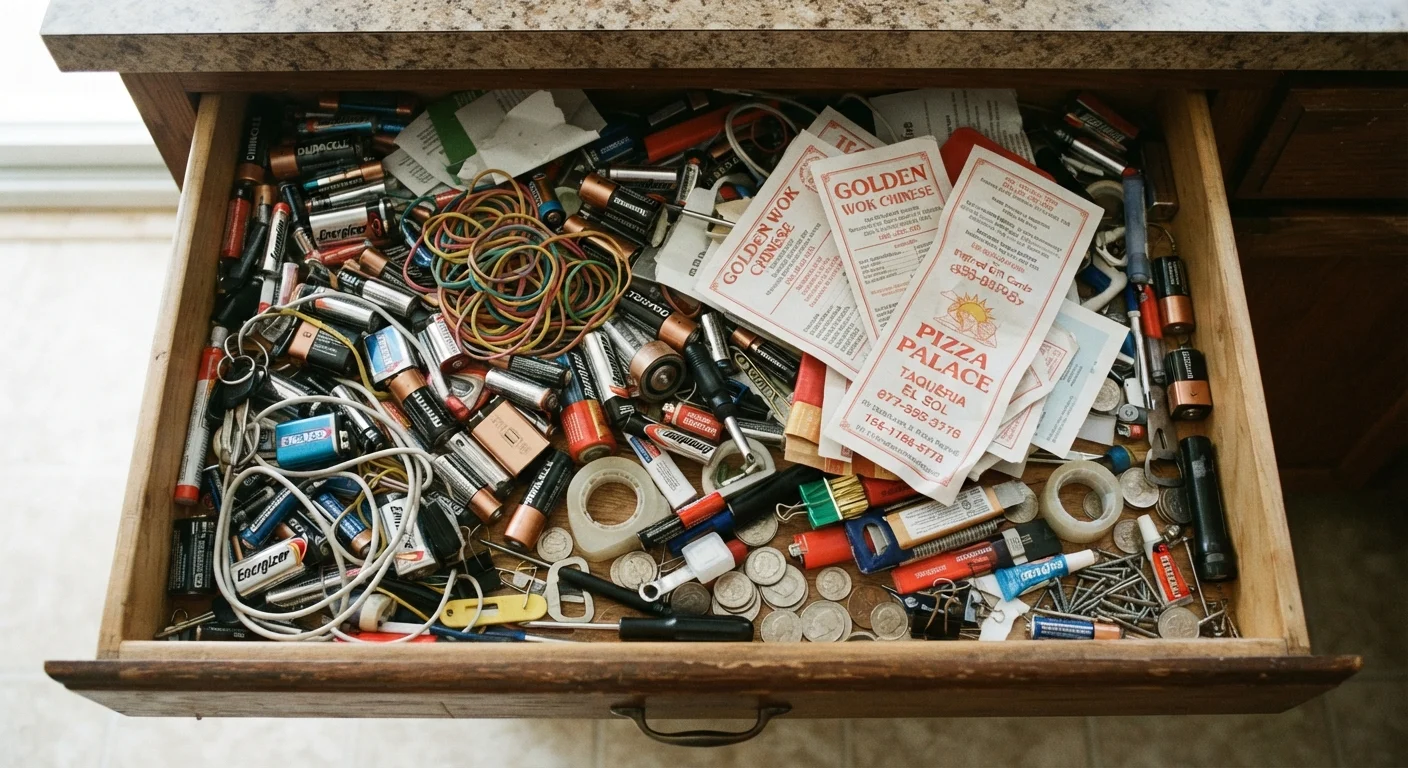
Nearly every home has one: a drawer, shelf, or basket where miscellaneous items collect until the chaos becomes impossible to ignore. You clean it out, feel briefly triumphant, and six weeks later it looks exactly the same. This cycle isn't a reflection of your character - it's a signal that your home lacks the right systems to handle certain categories of items.
Organization experts consistently point out that clutter accumulates fastest in spaces that have no clear, defined purpose. The junk drawer fills a real need - it absorbs things that don't yet have a home elsewhere. Until you address that underlying gap, no amount of decluttering will hold. As our guide on organization myths explains, adding more storage bins rarely solves the root problem.
What follows are the most common mistakes homeowners make when trying to tame the junk drawer - and what to do instead.
Purging without assigning permanent homes to displaced items.
Why it happens: Cleaning out the drawer feels like completion, so the harder follow-up step - figuring out where each category of item actually belongs - gets skipped.
Treating the junk drawer as a temporary holding zone with no defined contents.
Why it happens: Without a clear rule about what belongs in the drawer, every borderline item ends up there by default.
Organizing with containers before deciding what to keep.
Why it happens: Buying dividers and bins feels productive and motivating, but fitting clutter into attractive containers just makes the clutter harder to reconsider later.
Doing one large annual cleanout instead of short, regular resets.
Why it happens: Big organizing sessions feel more impactful, so smaller maintenance moments get postponed until the situation is unmanageable again.
Ignoring the clues that recurring items leave about missing storage elsewhere.
Why it happens: It's easier to keep dropping items into the drawer than to step back and ask why the same things keep appearing there.
Building a System That Actually Sticks
After you've cleared the drawer and identified the patterns, the next step is designing a sustainable structure. This doesn't require expensive organizers or a complete kitchen renovation. It requires honest answers to two questions: What does this drawer need to contain? and What will I actually put back in the right spot?
23 min
Average time lost daily searching for misplaced items
According to research from the National Association of Professional Organizers, the average American spends roughly 23 minutes per day looking for lost or misplaced objects.
80%
Of clutter caused by disorganization, not lack of space
Professional organizers widely cite this figure to illustrate that most household clutter is a systems issue, not a square-footage issue.
A functional junk drawer - yes, intentional junk drawers are legitimate - holds a tight, curated set of items used frequently but not daily: a few tools, batteries, a notepad, maybe a small flashlight. Everything else needs a dedicated home somewhere else in the house. High-traffic zones like entryways and kitchen counters often contribute overflow; the principles in managing high-traffic areas apply directly here.
Once the system is built, maintaining it is far easier than rebuilding it repeatedly. Think in terms of a two-minute rule: if an item takes less than two minutes to put away properly, do it immediately rather than setting it in the drawer as a placeholder. This single habit eliminates most of the slow creep that leads to overflow.
For broader momentum, sustaining organization after a declutter walks through the routines that keep a tidied home from sliding back. And if habit-building in general feels elusive, the psychology of why new habits collapse is worth understanding before you set any new organizing intentions.
Avoid Over-Organizing as a Stall Tactic
It's tempting to spend hours color-coding labels and researching the perfect drawer organizer before you've removed a single item. Over-engineering the system before you understand what actually needs to live there is a common stall tactic that leads to abandoned projects. Start with a simple sort, live with the basic structure for two to four weeks, and only then refine the setup based on real use patterns.