Setting Up Your Driving Position
Before the engine starts, your physical setup inside the vehicle matters more than most new drivers realize. A poor driving position reduces your control, strains your body, and limits your ability to react quickly.
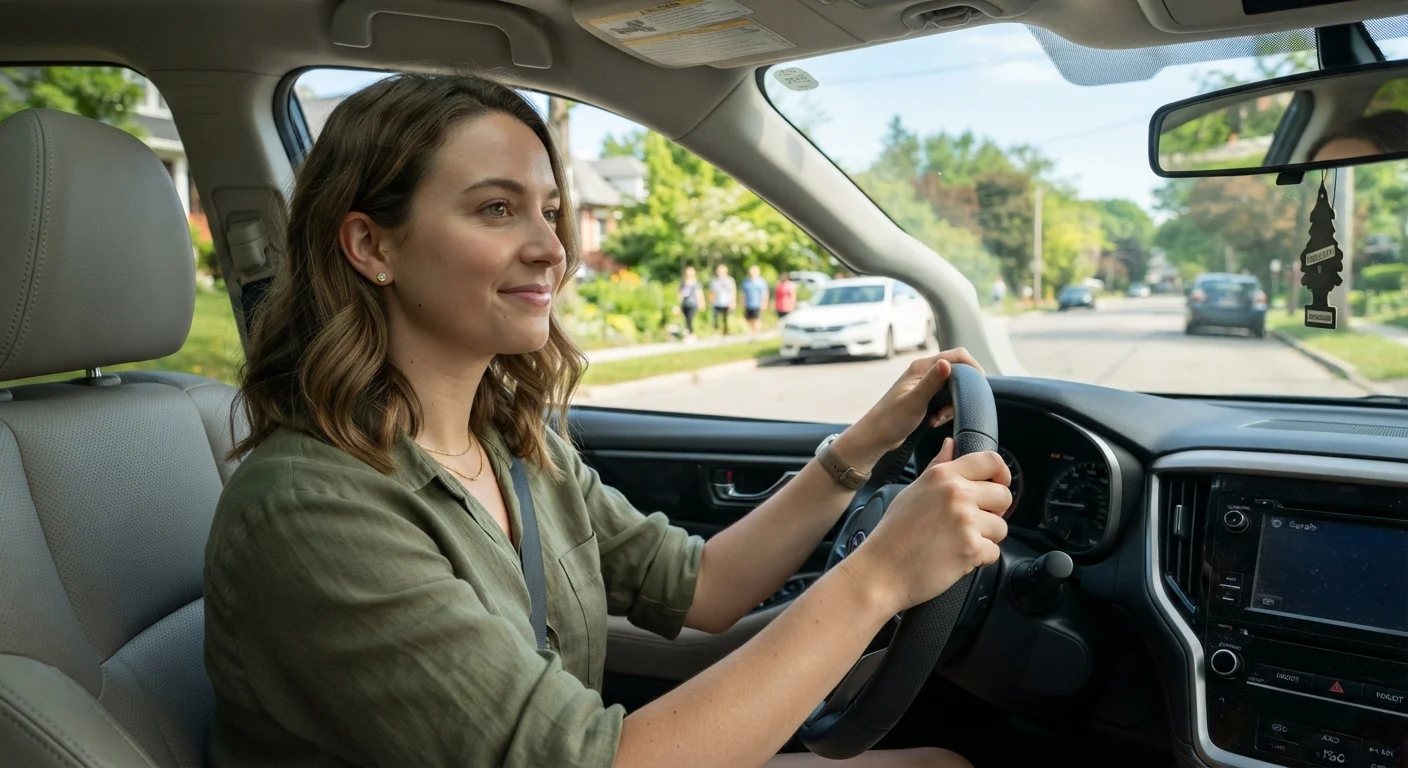
Adjust your seat so your feet can fully depress the clutch or brake pedal without stretching. Your arms should reach the steering wheel with a slight bend at the elbow - never a locked-out, stiff-arm position. Sit high enough to see over the hood comfortably.
For mirrors: set your side mirrors to minimize blind spots. Position each so the edge of your car barely appears in the inner corner. The center rearview mirror should cover the full rear window. No mirror eliminates blind spots entirely - always do a physical shoulder check before changing lanes.
Before every drive, run a quick check: seatbelt fastened, mirrors verified, parking brake released. Building this routine from day one makes it automatic. The pre-drive safety checklist is a useful companion habit to develop alongside your mirror routine.
Right of way
A legal rule that determines which driver has priority to move first in a given situation. Having the right of way does not mean other drivers will automatically yield - always confirm before proceeding.
Blind spot
The area around your vehicle that your mirrors cannot capture. Checking blind spots requires physically turning your head to look over your shoulder before changing lanes.
Three-second rule
A method for maintaining a safe following distance. Count three seconds between when the car ahead passes a fixed point and when you reach that same point. Increase this gap in poor weather.
Hazard lights
Flashing amber lights on all four corners of your vehicle that signal to other drivers that your car is stopped or in distress. Activate them immediately in a breakdown or emergency stop.
Yield
To give the right of way to another vehicle or pedestrian. Yielding means slowing or stopping to let someone else go first, as required by traffic law or road conditions.
The Rules of the Road Every New Driver Must Know
Traffic laws exist to create predictable behavior among strangers moving at speed. Understanding a few core concepts will cover the vast majority of situations you'll face early on.
Right of Way
At a four-way stop, the first vehicle to arrive goes first. If two vehicles arrive simultaneously, the one on the right has priority. At uncontrolled intersections, yield to traffic already in the intersection. Yielding when in doubt is always the safer choice - right of way is a legal framework, not a physical guarantee.
Speed and Following Distance
Posted speed limits are maximums, not targets. Conditions - rain, fog, school zones - often call for slower speeds. A commonly recommended following distance is the three-second rule: pick a fixed point ahead, and ensure at least three seconds pass between when the car in front passes it and when you do. Add more time in bad weather.
Intersections and Signals
A yellow light means prepare to stop, not accelerate through. Right turns on red are generally permitted after a full stop unless posted otherwise - but always yield to pedestrians and cross-traffic first. For freeway driving, understanding lane discipline early pays off; see our detailed breakdown of merging and lane change rules.
Practice the Three-Second Rule Until It's Automatic
Choose a highway overpass or road sign and count 'one-thousand-one, one-thousand-two, one-thousand-three' after the car ahead passes it. If you pass the same point before finishing the count, you're following too closely. In rain or reduced visibility, double it to six seconds. This simple habit can prevent rear-end collisions, which are among the most common crashes for new drivers.
Building Confidence in Traffic
Confidence behind the wheel comes from graduated exposure - not from throwing yourself into complex scenarios unprepared. Start in empty parking lots to practice smooth acceleration, braking, and turning. Move to quiet residential streets before tackling arterial roads.
Night driving introduces additional challenges: reduced visibility, glare from oncoming headlights, and greater fatigue risk. Once you're comfortable in daylight, learn how experienced drivers adjust after dark before driving at night regularly.
Distractions are the leading cause of accidents among new drivers. Put your phone away completely - not on silent, not face-down. Even a brief glance at a screen at 40 mph means traveling over 50 feet without looking at the road.
Route familiarity helps reduce cognitive load. For your first solo drives, use routes you've traveled before as a passenger. Save unfamiliar navigation for when basic vehicle control feels automatic, not effortful.
What to Do If Something Goes Wrong
Even experienced drivers encounter unexpected situations. Knowing how to respond calmly is as important as preventing problems in the first place.
Flat Tire While Moving
If a tire blows, do not slam the brakes. Grip the wheel firmly, ease off the accelerator, and steer straight while the car slows naturally. Pull safely off the road before stopping completely.
Roadside Breakdown
Signal early and pull as far off the traveled portion of road as possible. Activate hazard lights immediately. On a highway, stay inside the vehicle and call for help - exiting into live traffic is more dangerous than waiting. Keep a basic emergency kit in your trunk: jumper cables, a flashlight, a reflective triangle, and a phone charger.
Minor Collisions
Move vehicles out of traffic if drivable and it's safe to do so. Exchange insurance and contact information with the other driver. Document the scene with photos before moving anything. Notify your insurer promptly regardless of fault - delays can complicate claims.
Owning a car carries financial responsibilities that go beyond gas and insurance. New owners often underestimate ongoing costs. Our piece on surprise car ownership expenses and the broader car maintenance hub are solid next steps as you grow into ownership.
Never Rely Solely on Your Mirrors
Mirrors reduce blind spots but don't eliminate them. Always perform a physical shoulder check before changing lanes or merging, even if your mirrors appear clear. This is especially critical on multi-lane roads where motorcycles and cyclists can move quickly into gaps. Skipping this step is one of the most common causes of sideswipe collisions among new drivers.