
Why a Pre-Drive Check Is Worth Two Minutes of Your Time
Most vehicle problems don't appear without warning - they build gradually and show early signs that a quick walkaround can catch. A flat-in-progress, a cracked taillight, low washer fluid before a rainy commute: these are small catches that prevent bigger headaches.
This checklist is designed for everyday use, not just road trips. Whether you're new to driving or have years behind the wheel, running through these items consistently builds the kind of situational awareness that protects you, your passengers, and everyone else on the road. It pairs well with the broader habits covered in defensive driving techniques.
Below, items are grouped into logical phases: what you check outside the vehicle, then what you confirm once you're seated inside.
Don't Skip the Check When You're Running Late
The temptation to skip a walkaround grows when you're pressed for time - but that's often when you need it most. A tire that's been slowly losing air overnight or a brake light that burned out yesterday won't wait for a convenient moment. Build the check into your departure time, not after it.
What You'll Need
No specialized equipment is required for the core checks. A few items are worth keeping in your car permanently to make this routine even easier.
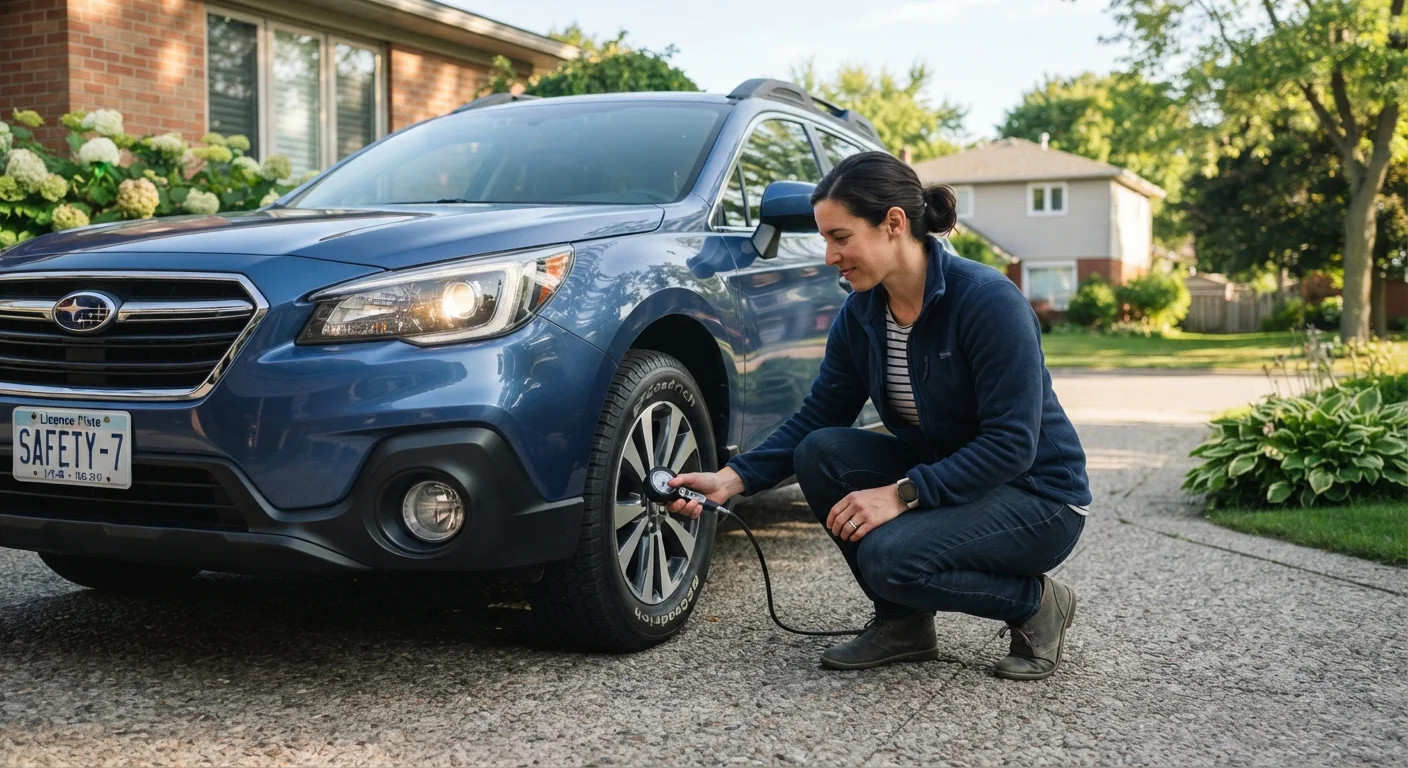
Tire pressure gauge
Accurately measure PSI in each tire - digital or analog both work; keep one in your glove box.
Flashlight or phone torch
Illuminate under the vehicle and around tires when checking in low-light conditions.
Windshield washer fluid (spare bottle)
Keep a small bottle in the trunk so you can top off the reservoir when it runs low.
Microfiber cloth
Quickly wipe mirrors and camera lenses clear of dust, rain spots, or condensation.
The Checklist
Work through these groups in order - exterior first, interior second. Each item takes seconds individually; the full routine rarely exceeds 10 minutes.
Exterior - Tires
Exterior - Lights and Signals
Exterior - Body and Environment
Under the Hood (Weekly or When Flagged)
Interior - Before You Start the Engine
Interior - After Starting the Engine
Brake Feel and Steering Response Matter Immediately
If your brake pedal feels spongy or sinks closer to the floor than usual, or if the steering pulls noticeably to one side, do not continue driving. These symptoms can indicate brake fluid loss or a tire or alignment problem that needs professional diagnosis before the vehicle is used. Pull over safely and contact a qualified mechanic.
If your check surfaces something that needs professional attention, the early warning signals guide can help you interpret what you're seeing and decide how urgent the fix is. Tracking minor repairs over time also ties directly into your annual car ownership budget.
Making It a Habit
The biggest obstacle to a pre-drive check isn't knowledge - it's consistency. Attaching the routine to an existing habit (unlocking the car, setting your bag down) makes it automatic faster. Start with just the exterior tire check if the full list feels like too much; any check is better than none.
For deeper vehicle literacy, review what your dashboard warning lights mean so you know which in-cabin alerts require immediate action versus a scheduled service visit. And if you want to keep your car in top shape across changing conditions, pair this daily habit with seasonal maintenance checks to address what temperature extremes do to tires, batteries, and fluids.
This checklist is for general informational purposes. For any vehicle issue you're unsure about - particularly brakes, steering, or fluid leaks - consult a qualified mechanic before driving.