Why Organizational Language Matters
Professional organizers don't just tidy - they build systems using a shared vocabulary of concepts that anyone can learn and apply. When you understand terms like zones, categories, flow, and labeling hierarchies, you stop making random decisions about where things go and start making intentional ones. That shift - from reactive to deliberate - is what separates a home that stays organized from one that reverts to chaos within weeks.
This reference guide defines the core concepts used by professional organizers. Bookmark it as a working reference whenever you're tackling a room, a closet, or a full home overhaul. For a room-by-room application of these concepts, see our complete walkthrough guide.
Zone
A designated area within a room assigned to a specific activity or category of items. Zoning aligns storage with usage patterns to reduce friction.
Category hierarchy
A structured grouping system where items are organized from broad top-level categories down to specific subcategories. It creates a predictable mental map for retrieval.
Drop zone
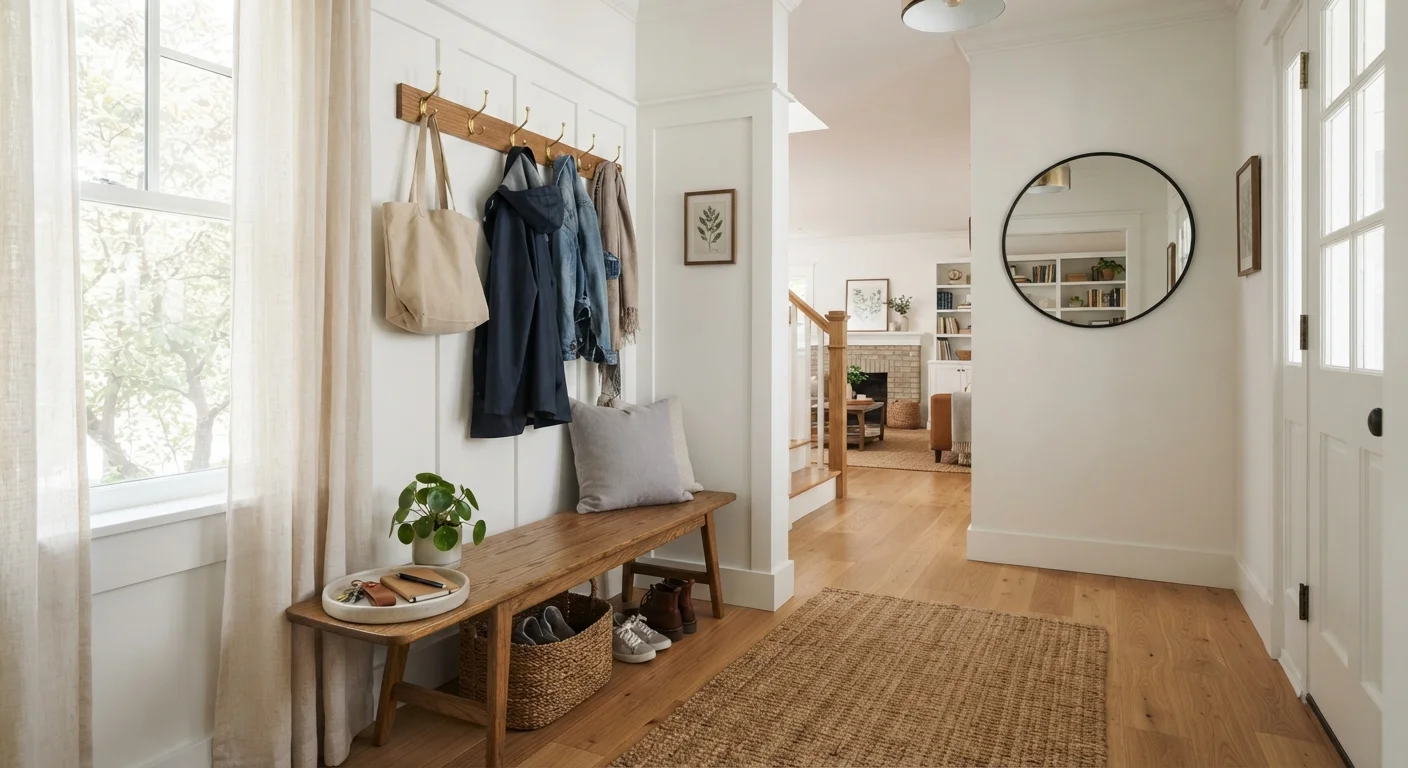
A transition area - typically near an entry point - designed to catch incoming items like keys, bags, and mail before they scatter into the home.
Flow
The natural path objects travel through a home, from arrival to use to storage. Good organizational design works with this path rather than against it.
Primary zone
A storage location for frequently used items, positioned for easy, immediate access - typically at eye level or arm's reach.
Color coding
An organizational method that assigns a specific color to a person, category, or zone, enabling quick visual identification without reading labels.
Seasonal purge
A periodic review - typically done once per season - where items are reassessed, removed, or relocated as household needs change.
Labeling hierarchy
The practice of labeling at multiple levels (container, shelf, zone) so that anyone in the household can locate and return items without guessing.
Zones: The Foundation of Functional Space
A zone is a designated area within a room dedicated to a specific activity or type of item. Zoning is the single most powerful organizing concept because it aligns where things live with where they're used. This reduces friction: you never hunt for scissors because they live in the crafting zone, not in a random junk drawer.
Common Zone Types
- Activity zones: Areas organized around what you do (cooking prep, homework, bill-paying).
- Item zones: Areas organized around what you store (cleaning supplies, medications, seasonal gear).
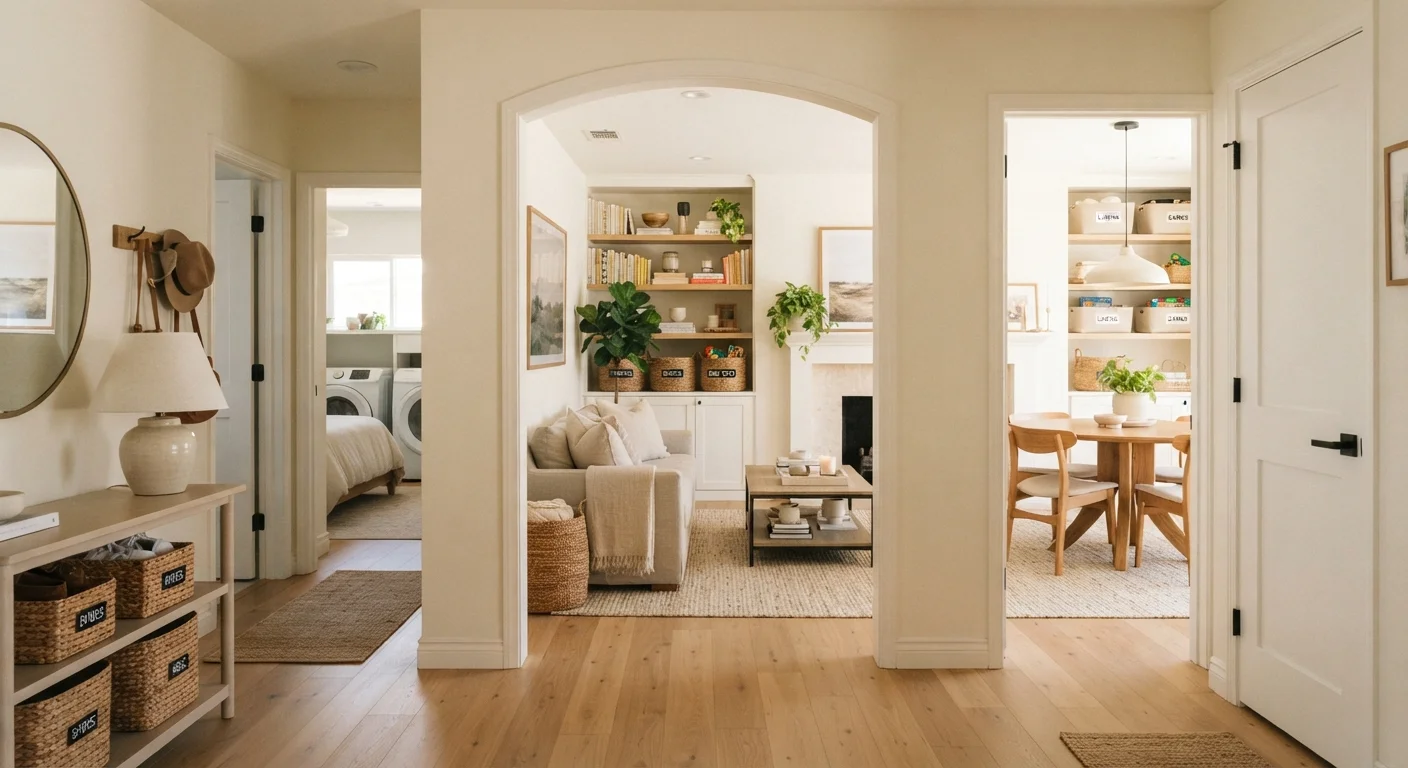
- Transition zones: Spaces designed to manage flow in and out of the home - entryways, mudrooms, and drop zones. See how these high-traffic areas work in our guide on high-traffic spaces that need dedicated systems.
When assigning zones, consider frequency of use: daily-use items belong in primary zones (eye level, easy reach); occasional items go in secondary zones (upper shelves, back of cabinets); rarely used items belong in deep storage.
| Core organizational units | Zones, categories, subcategories, items |
| Recommended daily reset time | 5 minutes (Commonly cited by professional organizers) |
| Primary zone placement | Eye level, arm's reach - for daily-use items |
| When to use temporary labels | During first 2-4 weeks of a new system |
| Seasonal purge frequency | Once per season (4x per year) |
| Most common labeling failure | Vague labels like "Miscellaneous" |
Categories, Subcategories, and Hierarchies
Once your zones are defined, you populate them using a category hierarchy. Grouping like items together isn't just tidiness - it creates a mental map your brain can reliably access under stress.
Building a Category Hierarchy
- Top-level category: Broad group (e.g., Kitchen Tools).
- Subcategory: Narrowed group within the top level (e.g., Baking Tools).
- Item level: Specific objects within the subcategory (e.g., measuring cups, spatulas).
Avoid over-categorizing. If a subcategory holds only two items, it may not warrant its own container or label. A useful rule: create a subcategory only when the items within it are retrieved together and stored together consistently.
In shared homes, agreeing on category names is essential - when two people use different mental models, the system breaks down. Our guide on organizing a home with multiple people addresses how to align those models as a household.
Labeling Systems: Making the Invisible Visible
A label is a communication tool. It tells every member of a household - including future-you - exactly where something lives and where it returns. Without labels, even the best organizational system relies entirely on memory, which is unreliable under stress or when other people are involved.
Labeling Approaches
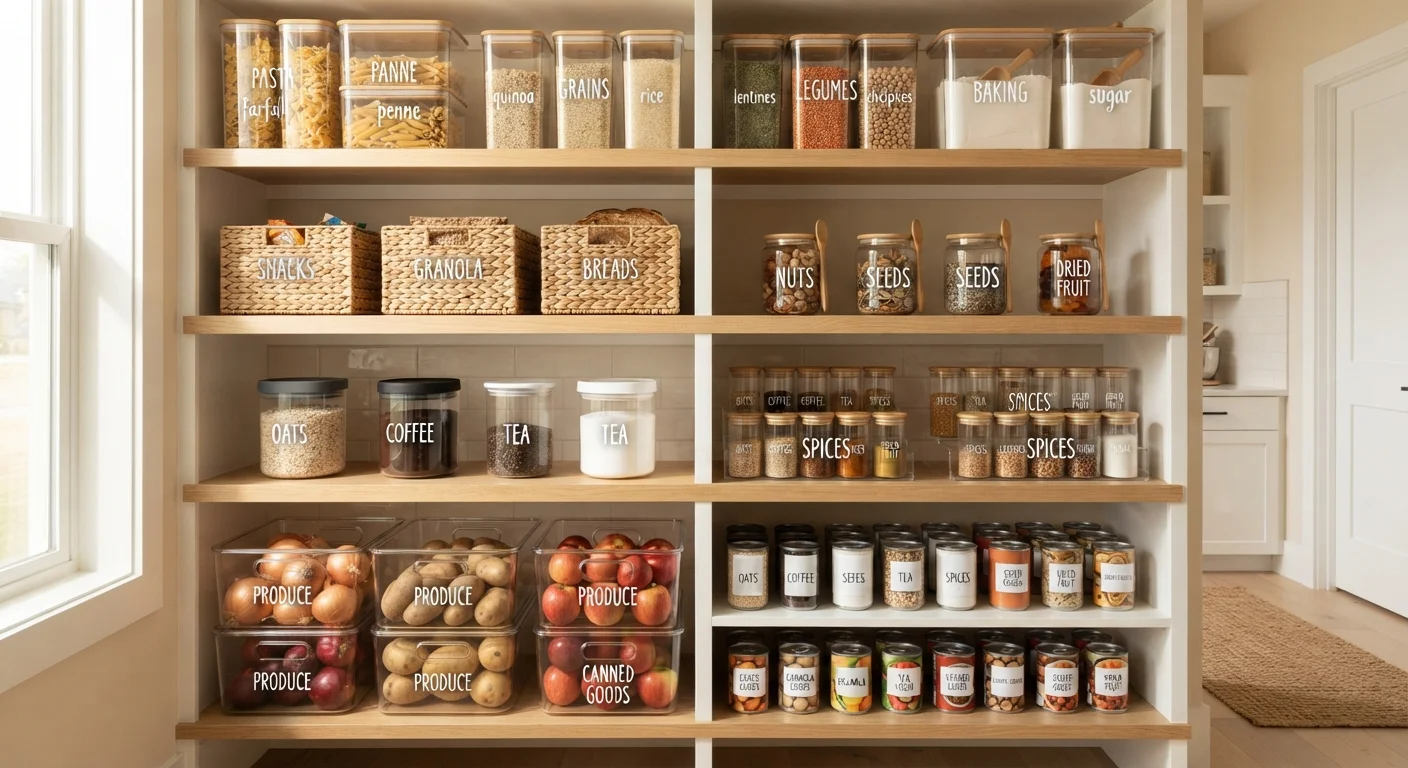
- Text labels: Clear, specific names work best for adults (e.g., "Batteries - AA/AAA" rather than just "Batteries").
- Icon or picture labels: Useful in homes with young children or in spaces where quick visual scanning matters.
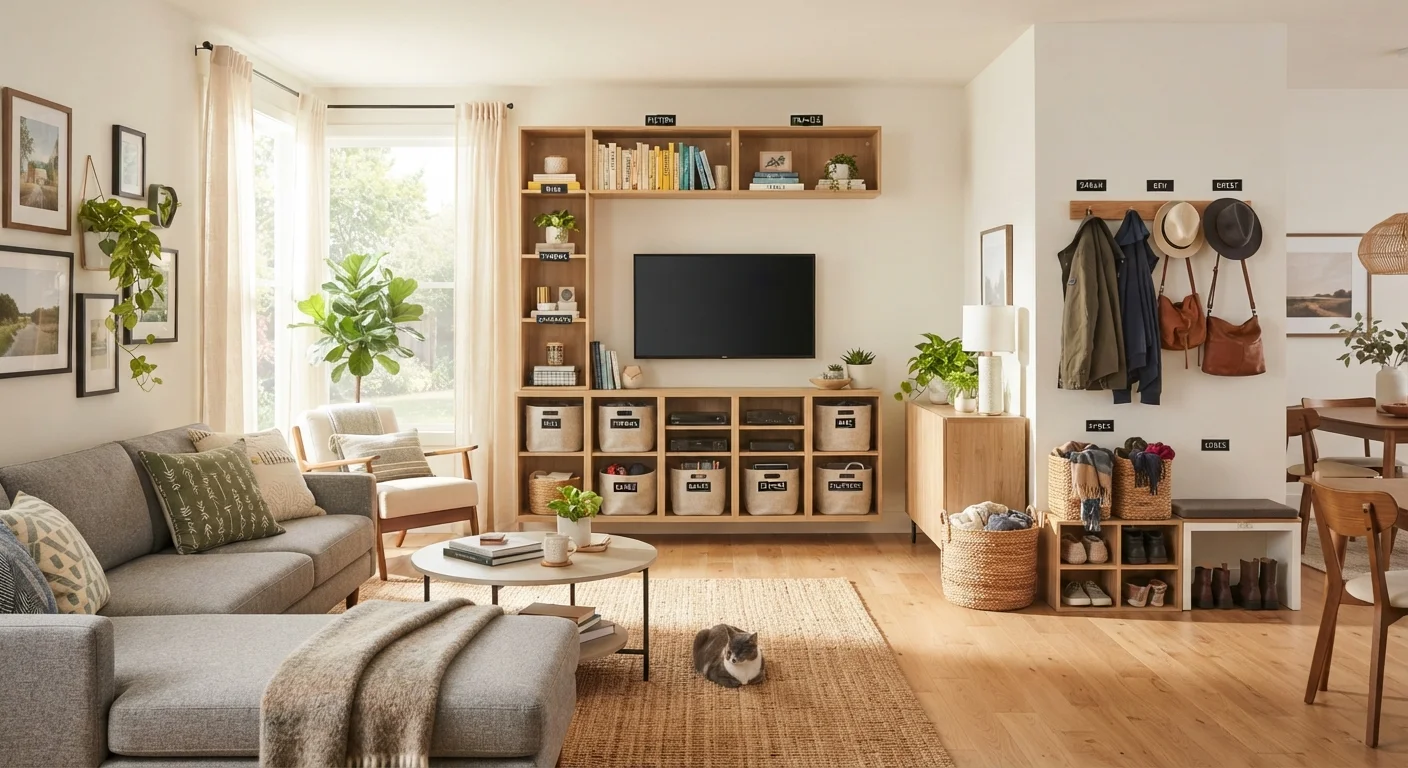
- Color coding: Assigning a color to a person, category, or zone creates an at-a-glance system - particularly effective in shared homes or for kids' belongings.
- Temporary labels: Use removable tape or erasable labels when a system is new and still being tested. Commit to permanent labels only once the placement feels right after several weeks of use.
Label containers, not just shelves. If a bin moves, the label moves with it. Avoid vague labels like "Miscellaneous" - this is where organizational systems go to die.
If you're setting up systems from scratch in a new home, our guide for first-time homeowners walks through the sequencing of these decisions.
Flow and Maintenance: Keeping Systems Alive
Flow refers to the natural path objects travel through your home - in through the front door, into use, and back to storage. An organized home designs storage around this flow rather than against it. When a system fights your natural habits, it fails.
Maintenance Rhythms
Even the best-designed system requires regular upkeep. Professional organizers commonly recommend three rhythms:
- Daily reset (5 minutes): Return items to their zones before the end of the day.
- Weekly audit (15-20 minutes): Scan zones for drift - items that have migrated outside their category or zone.
- Seasonal purge (1-2 hours): Reassess categories, remove items that no longer belong, and adjust zone boundaries as your life changes.
For households with limited square footage, flow design is even more critical - every inch of storage must be intentional. Our resource on organizing small spaces and compact homes covers how to apply these principles when space is tight.