Why Right-of-Way Rules Exist
Traffic would grind to dangerous chaos without a shared framework for deciding who moves first. Right-of-way rules are that framework - a set of legally enforceable conventions that reduce the need for drivers to negotiate every interaction from scratch. When everyone follows them, traffic flows predictably. When someone misunderstands or ignores them, the results can be serious.
According to the Federal Highway Administration, intersection-related crashes account for roughly 40 percent of all traffic collisions in the United States, and a large share involve a failure to yield. Understanding these rules isn't just a test-day concern - it's an everyday safety skill.
~40%
Of U.S. crashes occur at intersections
According to the Federal Highway Administration, intersection-related collisions represent approximately 40 percent of all traffic crashes nationwide.
3 in 10
Intersection crashes involve failure to yield
The Insurance Institute for Highway Safety (IIHS) identifies failure to yield as one of the most frequently cited driver errors in intersection collisions.
40%
Reduction in serious crashes at roundabouts
The IIHS reports that converting traditional intersections to roundabouts can reduce serious injury crashes by approximately 40 percent, in part due to clearer right-of-way rules.
Controlled vs. Uncontrolled Intersections
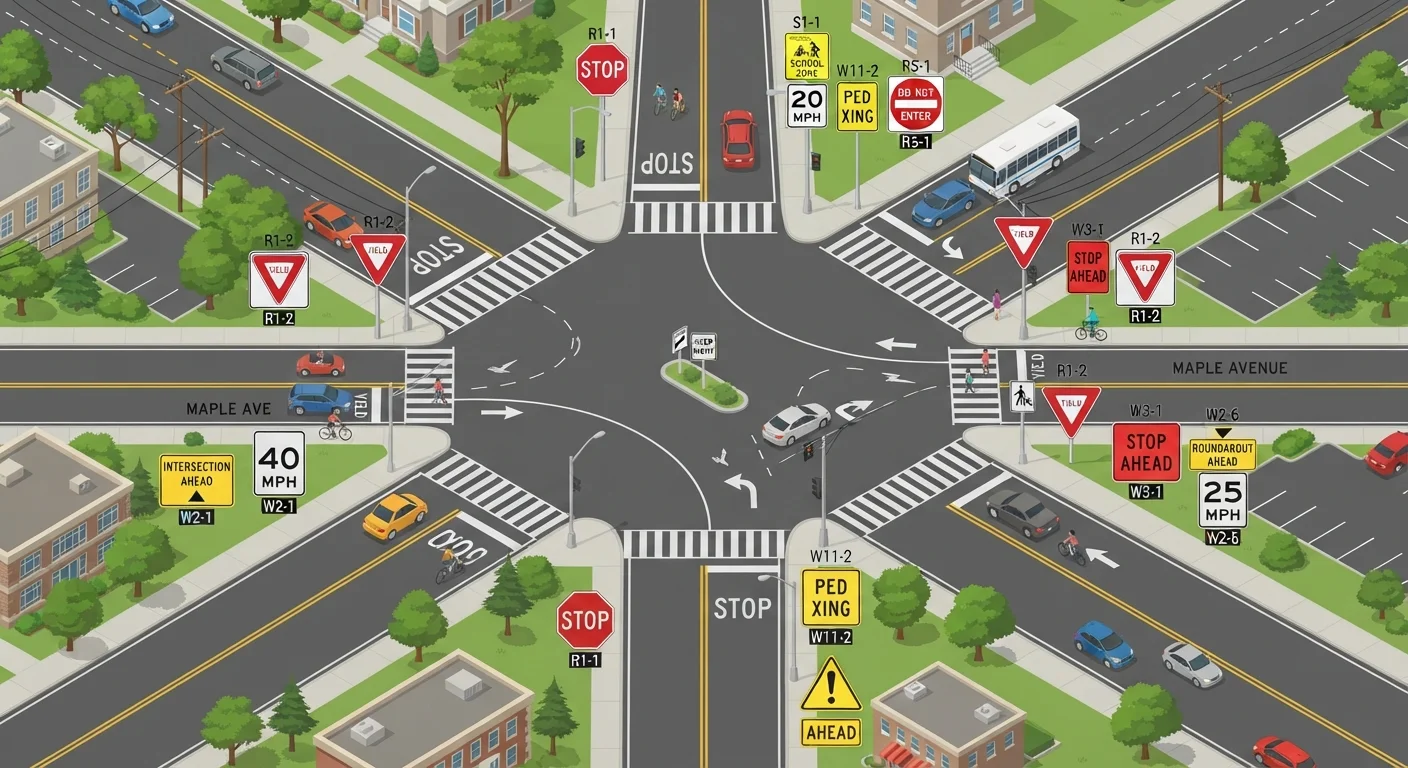
A controlled intersection uses signals, stop signs, or yield signs to assign priority. These are the most straightforward situations: obey the signal or sign, and proceed when it's your turn. Knowing what each sign shape and color means reinforces this - see our traffic sign shapes and colors quick reference for a handy recap.
An uncontrolled intersection has no signals or signs - common in residential neighborhoods and rural areas. Here, the rules require:
- Yield to vehicles already in the intersection. If another car is already crossing, wait.
- Yield to the driver on your right when two vehicles arrive simultaneously. This is the foundational tie-breaker.
- Proceed with caution even when you have priority. Never assume the other driver knows the rule.
Four-way stops follow a similar logic: first to stop, first to go. When arrival times are close, yield right.
Pedestrians, Cyclists, and Turning Vehicles
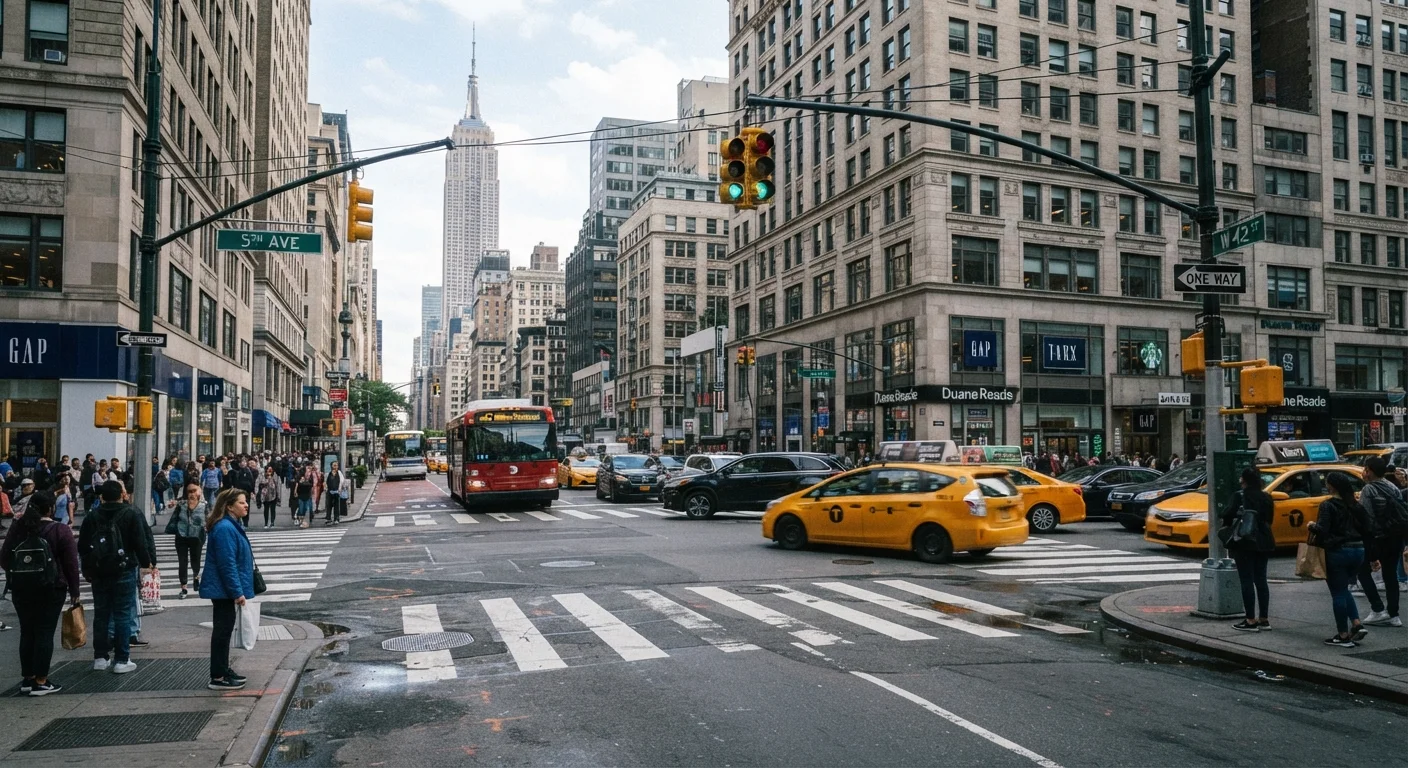
Pedestrians are among the most vulnerable road users, and right-of-way law reflects that. In nearly every U.S. state, a driver making a turn - whether left or right - must yield to pedestrians crossing in the crosswalk they're entering. This applies even when the driver has a green light.
Cyclists occupy a legally complex middle ground: they often have the same rights as vehicles on the road, which means they're entitled to the same right-of-way protections. At intersections, treat an approaching cyclist the way you would a car in the same position.
When Turning, Yield Before You Roll
Before completing any turn at an intersection - left or right - scan for pedestrians crossing in your intended path. A green light means you may turn when it's clear, not that the path is automatically clear. Building a habit of looking before turning is one of the simplest ways to avoid a preventable collision.
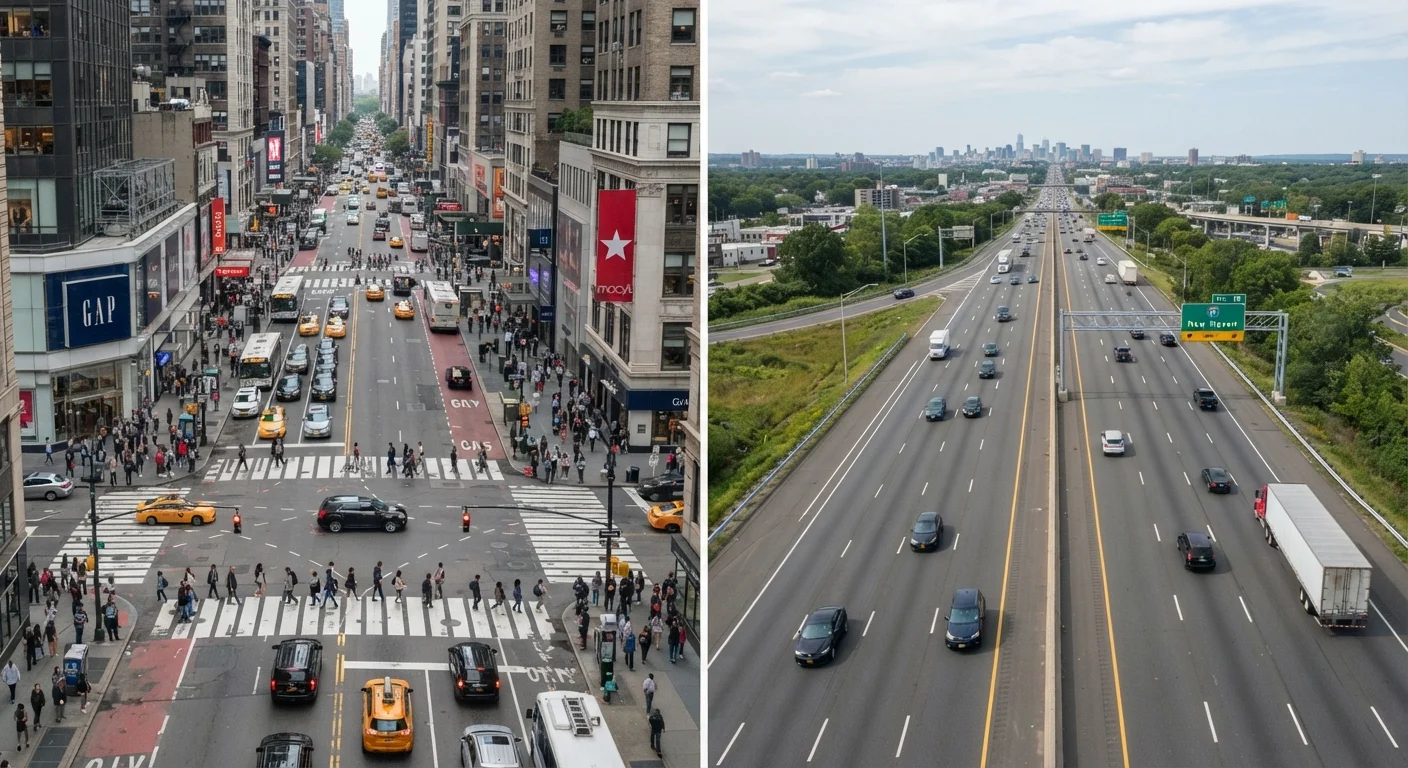
For a deeper look at how these dynamics play out at speed, our article on highway vs. city driving rules and risks breaks down how the environment changes what you need to watch for.
Merging, Roundabouts, and Special Situations
Merging onto a freeway is one of the most commonly misunderstood right-of-way scenarios. The merging driver always yields to through traffic - the on-ramp is your acceleration space, not a guaranteed entry point. Our guide on merging, yielding, and lane changes covers this in detail, including why the zipper merge works better than most drivers expect.
Roundabouts follow a clear rule: yield to circulating traffic already inside the roundabout before entering. Once you're in, you have priority over entering vehicles. If roundabouts still feel confusing, our dedicated explainer - roundabouts aren't complicated - demystifies the whole system.
Emergency vehicles supersede all other right-of-way rules. When a vehicle with active lights and siren approaches, pull to the right and stop until it passes. Failing to do so can carry significant legal penalties - see our article on rules with the steepest penalties for more context.
The Rule Behind the Rules
Right of way is a shared agreement, not a personal entitlement. Having it doesn't mean you proceed no matter what - it means the other party is expected to yield. If they don't, your legal priority won't prevent a collision. The practical rule: never claim the right of way at the cost of safety. Yield when in doubt, make eye contact when possible, and move only when you're certain the path is clear.
For new drivers still building this situational awareness, our foundational guide - getting behind the wheel for the first time - connects these rules to the full picture of early driving skills.